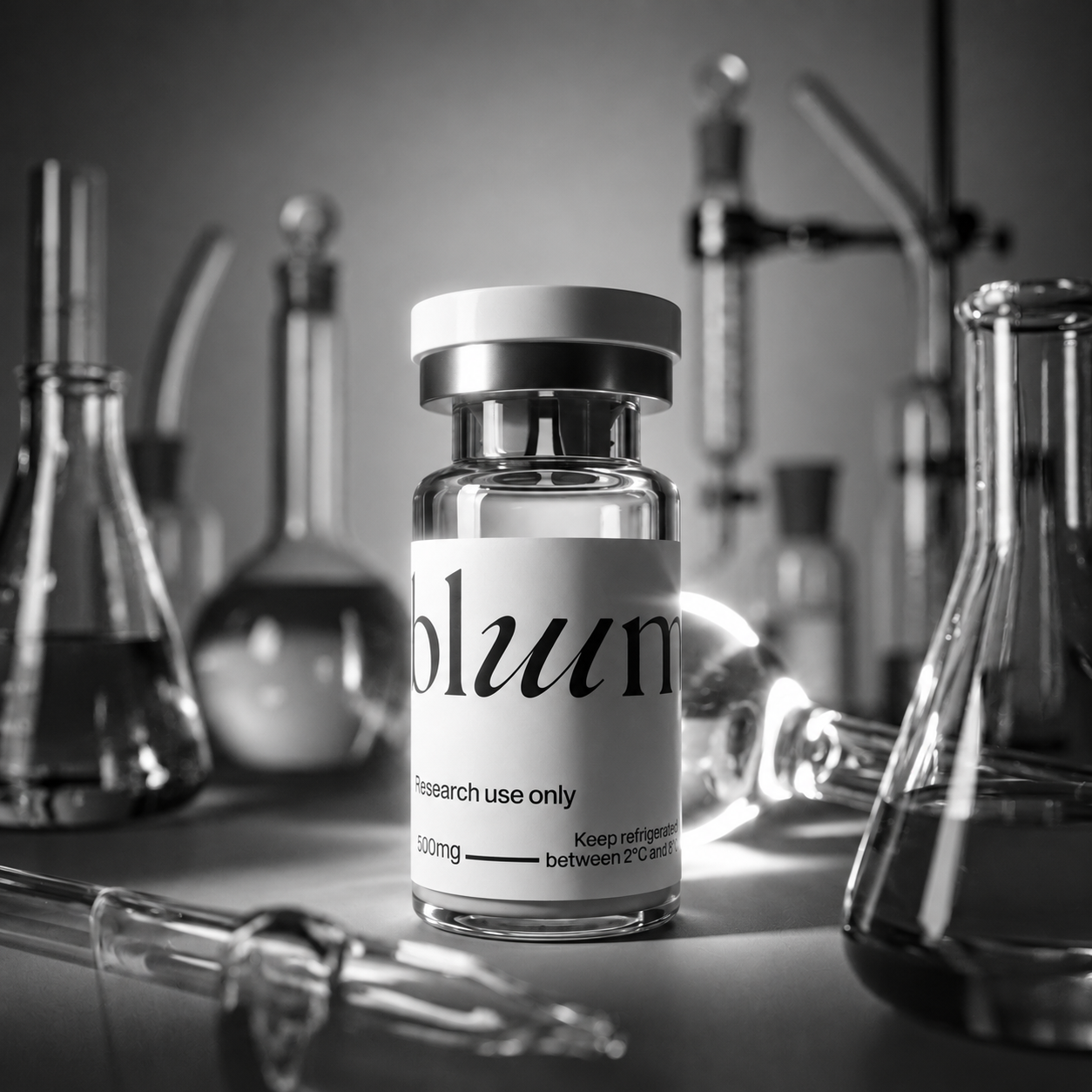
If a shipment sat in a warm delivery truck for a couple of days, the question most researchers ask is the same one: is the compound still good? For a sealed, lyophilized (freeze-dried) peptide, the honest answer is usually yes. A short warm spell in transit is far less damaging than most people assume, and far less damaging than the same peptide would experience if it were already dissolved.
But “probably fine” is not a storage plan. Proper peptide storage is what protects a compound's integrity from the moment it arrives until the moment it is used, and understanding peptide stability is what lets a researcher trust that a sample tested weeks earlier still reflects what is being measured today. This guide covers what actually happens to a peptide in storage, realistic shelf life by state, and the handling habits that make the biggest difference.
All products referenced here are sold for laboratory research use only and are not intended for human or animal use. Nothing below is preparation or administration guidance.
Why Storage Is Part of the Experiment, Not an Afterthought
A compound that has quietly degraded before use introduces uncertainty into every result that follows, no matter how carefully the rest of a study is designed. Once a peptide chain begins to break down, the material no longer matches the profile described on its Certificate of Analysis, which is why storage habits are treated as a core part of research documentation rather than a detail to handle later.
A Certificate of Analysis Reflects a Moment, Not a Guarantee
A supplier's Certificate of Analysis describes the compound at the moment it was tested, not indefinitely afterward. For a closer look at what that document should include, see How to Read a Peptide COA. Two labs can receive vials from the same batch, with identical paperwork, and end up with meaningfully different material weeks later simply because one followed sound storage practices and the other did not. When a result looks unexpected, checking that batch's documentation is a more reliable first step than guessing at what might have gone wrong in transit.
Lyophilized vs. Dissolved: Two Different Stability Stories
Research peptides exist in one of two states, and the difference between them matters more than almost anything else in this guide.
Why Freeze-Drying Extends Shelf Life
Most research peptides are shipped as a freeze-dried powder, and that dry state is doing real work. Removing the water slows the chemical reactions that cause a peptide to break down, since many of the most damaging pathways need moisture to get started. This is why a sealed, unopened vial can remain stable for a surprisingly long time compared to the same compound once it has been dissolved.
What Changes Once a Peptide Is in Solution
Peptide solution prep is the process of moving a lyophilized compound into an appropriate laboratory solvent or diluent, and the clock changes completely the moment it happens. Water re-enters the picture, molecular movement increases, and the same degradation pathways that freeze-drying had suppressed become active again. A peptide sitting in solution does not inherit the shelf life of the dry powder it came from, and treating it as though it does is one of the more common storage mistakes.
Getting Storage Temperature Right by State
Temperature is the single most influential variable in how long a peptide stays usable, but the right approach depends on which state the compound is in.
Peptide Storage Temperature Guidelines
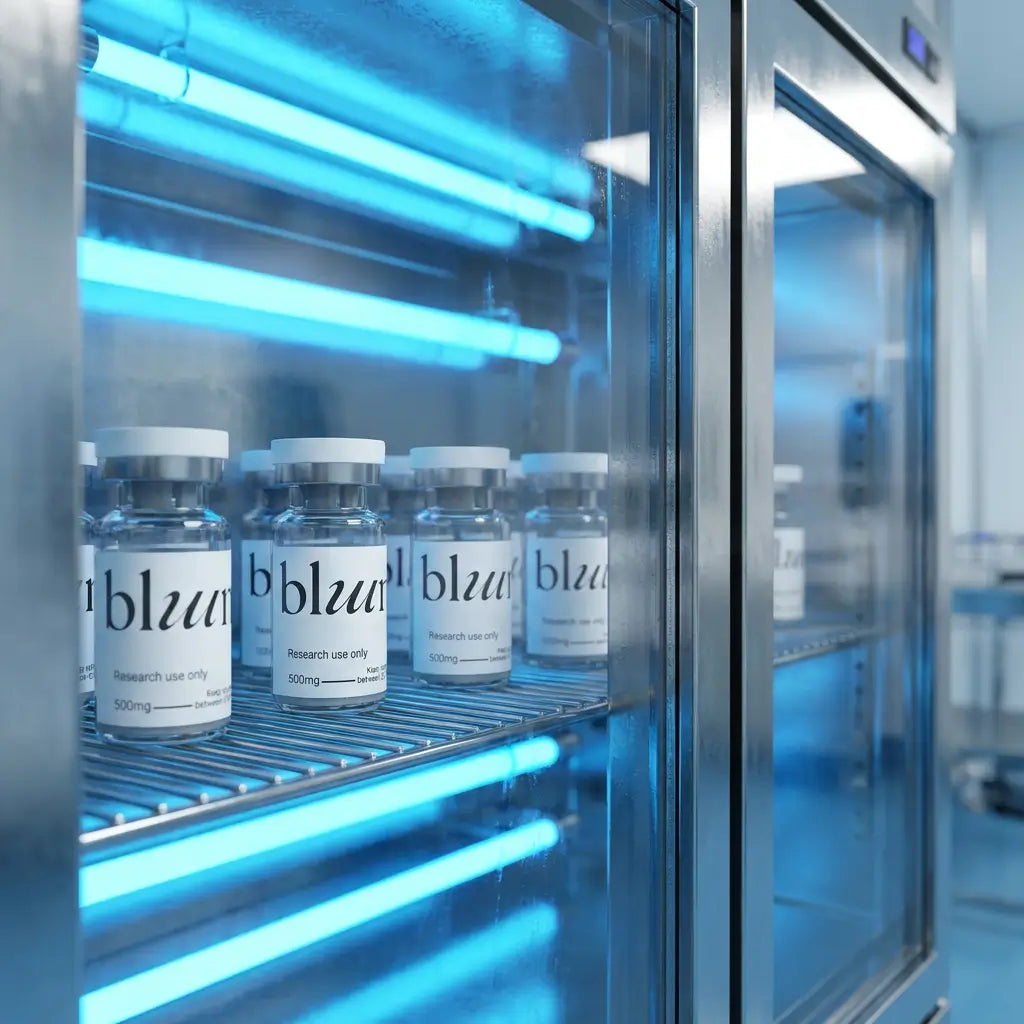
For anything not in active use, freeze-dried compounds are generally most stable at -20°C or colder, which is the standard recommendation for long-term holding. Refrigeration between 2°C and 8°C works well for shorter-term storage before a compound is needed, though it does not offer the same long-run protection as a freezer.
What Room-Temperature Exposure Actually Means
A sealed, dry vial is more tolerant of brief room-temperature exposure than many researchers expect. The short shipping windows suppliers often mention are conservative tolerances meant to cover a worst-case scenario, not a precise measurement of how long a compound can actually sit at room temperature. Sustained heat over days, rather than a brief spell in transit, is what actually causes meaningful damage, and cold storage remains the correct default whenever a vial is not in active use.
Peptide Vial Storage Best Practices
Careful peptide handling extends beyond storage temperature. Keeping compounds away from direct light, minimizing exposure to air, and avoiding repeated freeze-thaw cycling once a vial has been opened all matter beyond the freezer setting itself. Each freeze-thaw cycle stresses the compound and raises the odds of degradation products turning up in later testing. Letting a cold vial warm up gradually before opening it also matters, since opening a cold container too quickly can let moisture condense directly onto the powder, working against the very dryness that made it stable in the first place.
Handling and Record-Keeping Habits
Good peptide handling doesn't stop at temperature and light. Labeling each vial with its receipt date and batch number makes it far easier to trace back through a compound's history if a result looks unexpected later.
What Causes Peptide Degradation
Several overlapping factors drive this kind of breakdown, and heat is often blamed for damage that actually traces back to something else. Moisture is a major driver, since many breakdown reactions need water to proceed, which is exactly what freeze-drying is designed to prevent. Oxygen and light contribute as well, especially for sequences containing certain amino acids that are more prone to that kind of reaction. Heat still matters, but mainly as a multiplier: a brief warm spell is a minor factor, while sustained elevated temperature over days or weeks is what actually adds up. No single factor tends to cause serious damage on its own, but combined, they compound quickly, which is why a single lapse, like a vial left out overnight, can shift a compound's profile more than expected.
Cold Storage Once a Peptide Is in Solution
Peptides in solution are a different material from the dry powder they started as, and the storage math shifts the moment that happens.
Storage Conditions for Dissolved Peptides
Once a compound is in solution, peptide storage conditions change substantially. A dissolved sample should be kept refrigerated and used within the window described in the supplier's documentation, since solutions are inherently less stable than the freeze-dried form they came from. This is the point at which post-mixing peptide storage becomes the variable that matters most for how long a sample stays usable.
Why Dissolved Peptides Need Extra Care
Consistent peptide refrigeration slows the degradation process but does not stop it once a compound is in solution. This is why tracking how long a sample has been dissolved matters more than relying on how it looks, since a compound can appear visually unchanged well after its documented usable window has closed.
Peptide Shelf Life and Preservation
This depends on a combination of formulation, purity, and storage history, which is why suppliers typically give guidance specific to each compound rather than a single blanket timeframe. Proper peptide preservation, meaning consistent temperature, minimal light exposure, and limited handling, is what keeps a compound within its tested purity range for as long as possible. Long-term storage in lyophilized form, paired with dissolving only what is about to be used, gives researchers the widest realistic window of reliable use.
A Quick Storage Reference
|
Form |
Recommended Condition |
Typical Window |
|
Lyophilized, unopened |
-20°C or colder, protected from light |
Longest window, often months to a year or more depending on the compound |
|
Lyophilized, short-term |
Refrigerated between 2°C and 8°C |
Suitable for near-term use before opening |
|
In solution |
Refrigerated, used promptly |
Considerably shorter than the lyophilized form |
|
Extended room-temperature exposure |
Not recommended for long periods |
Increases degradation risk regardless of form |
None of these habits work in isolation. Together, they form the difference between reliable peptide stability months later and a compound that quietly drifts away from its documentation. For batches where documentation depth matters most, Why Batch-Level COAs Matter for Research Peptides covers why every lot should carry its own independently generated report rather than a reused one.
How Bluum Peptides Supports Reliable Storage
Good habits only matter if there is a trustworthy starting point to protect. Every batch shipped by Bluum Peptides is tested by an independent, third-party laboratory, and the resulting Certificate of Analysis is published for that specific lot rather than reused across unrelated shipments. This is why the guidance above only goes as far as the documentation behind the vial it is protecting.
Researchers can browse our collections to see what's available by category, review the full products collection for every compound we carry, or go straight to the research peptides collection for research-use listings. To confirm the documentation behind a specific batch before use, look it up directly through the COA lookup tool.
Frequently Asked Questions
How to store peptides in the fridge?
Lyophilized compounds intended for shorter-term storage can be kept refrigerated between 2°C and 8°C, in their original, light-protected packaging. Samples already in solution should also go straight into the refrigerator and be used within the window described in the supplier's documentation, since even a refrigerated solution has a limited usable life once water is involved.
How long does a mixed peptide solution last?
Once dissolved, most research peptides stay within an acceptable window for a limited number of days under refrigeration, though the exact timeframe depends on the specific compound and should be confirmed against the supplier's documentation rather than assumed. More time in solution means a higher likelihood of degradation, even when refrigerated the whole time.
How to freeze dried peptides?
Freeze-drying is typically performed by the manufacturer before a compound ever reaches the researcher, not something done in an individual lab. From a storage standpoint, freeze-dried compounds should stay in their sealed, lyophilized state at -20°C or colder whenever long-term storage is needed, and should only be moved into solution when the compound is actually ready to be used.
Does a peptide need to be cold before it's mixed?
Unopened, lyophilized vials are generally stable at -20°C for long-term storage, or refrigerated for shorter-term storage before use, depending on the supplier's guidance for that specific compound. Keeping a vial cold beforehand helps preserve its tested purity until the moment it is actually needed.
How long do lyophilized peptides last at room temperature?
Sealed, dry vials tend to hold up at room temperature longer than the short shipping windows on a label might suggest, since those figures are conservative transit tolerances rather than a true shelf-life limit. Even so, extended room-temperature storage is not recommended when cold storage is available, since prolonged exposure adds up and accelerates degradation over time.
Research Use Only Disclaimer
All products available on Bluum Peptides are intended for laboratory and research purposes only. They are not for human consumption, veterinary use, or any medical, therapeutic, or diagnostic application. All compounds are sold under a Research Use Only designation to qualified research professionals aged 21 or older. The storage and handling information in this article relates strictly to compound integrity for research documentation purposes and does not constitute a claim of suitability for clinical, therapeutic, or diagnostic use. These statements have not been evaluated by the U.S. Food and Drug Administration.