

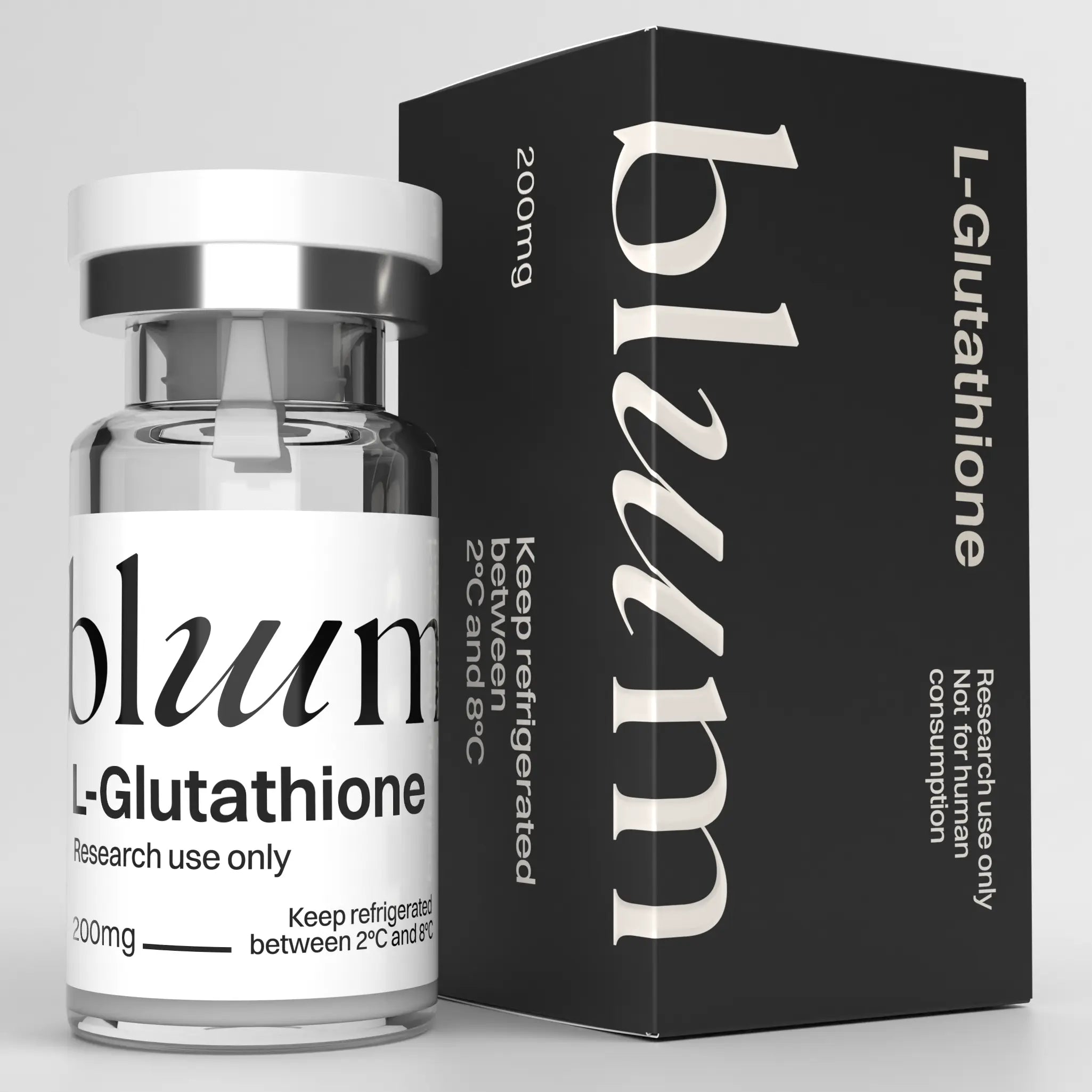
Glutathione (500mg)
 Money Back
Guarantee
Money Back
Guarantee Satisfaction
Guarantee
Satisfaction
Guarantee Easy Returns
 Secure
Ordering
Secure
Ordering 2-Day
Shipping
2-Day
Shipping Third Party
Tested
Third Party
Tested Batch & Lot
Tracking
Batch & Lot
TrackingLab results
RESEARCH USE ONLY
These compounds are NOT intended for human consumption, clinical use, or veterinary applications. We are not affiliated with any pharmaceutical companies or their commercial medications. By placing an order, you certify these materials will be used exclusively for in vitro testing and laboratory experimentation only. Bodily introduction of any kind into humans or animals is strictly forbidden by law. This product should only be handled by licensed, qualified professionals. This product is not a drug, food, or cosmetic and may not be misbranded, misused or mislabeled as a drug, food or cosmetic.
About Glutathione (500mg)
L-Glutathione (GSH) is a naturally occurring tripeptide composed of glutamate, cysteine, and glycine and is widely studied in redox biology, thiol chemistry, and cellular biochemical research. Unlike receptor-targeting peptides, glutathione functions as a key component of cellular redox systems, including the reversible GSH/GSSG redox couple and glutathione-dependent enzyme pathways.
Bluum Peptides supplies high-purity research-grade glutathione as a lyophilized powder. The current batch has a verified purity of 99.54%, verified through third-party testing with Certificate of Analysis and endotoxin reports for every new batch. Sold for research use only.
Available Sizes
L-Glutathione is supplied as a high-purity lyophilized powder in vial sizes selected to support a range of research applications and experimental conditions.
- L-Glutathione 1500 mg vial
- L-Glutathione 1200 mg vial
- L-Glutathione 500 mg vial
Glutathione (500mg) Product Specifications
| Product Specifications | L-Glutathione 1500mg in 10mL glass vial. |
|---|---|
| Application | Research compound for cellular redox regulation and oxidative stress signaling studies |
| Appearance | White to off-white fine, crystalline powder in 10mL glass vial |
| Chemical Formula | C10H17N3O6S |
| PubChem CID | 124886 |
| CAS Number | 70-18-8 |
| Molecular Weight | 307.32 g/mol |
| Synonyms | Glutathione, L-Glutathione, L-Glutathione reduced, GSH |
| Storage | Store lyophilized at -20°C, sealed, protected from light and moisture. |
Chemical Structure
What Is Glutathione?
Glutathione (GSH), also known as L-glutathione reduced, is a naturally occurring tripeptide composed of the amino acids glutamate, cysteine, and glycine. Unlike many research peptides that are investigated primarily for their interactions with specific receptors, glutathione is best characterized by its role in cellular redox chemistry. Its reactive cysteine thiol allows glutathione to participate in reversible oxidation–reduction reactions and interactions with other molecules containing reactive sulfur groups.
A defining feature of glutathione is the GSH/GSSG redox couple. In its reduced form, GSH contains a free sulfhydryl group on its cysteine residue. When two GSH molecules undergo oxidation, their cysteine residues can form a disulfide bond, producing oxidized glutathione, or GSSG. Cellular enzymes can subsequently reduce GSSG back to GSH, creating a dynamic redox cycle that helps regulate the chemical environment within cells. [1]
This reversible chemistry makes glutathione an important subject of research involving oxidative stress, redox signaling, protein thiol regulation, and enzymatic antioxidant systems. Glutathione serves as a substrate or cofactor in several enzyme-mediated reactions, including those involving glutathione peroxidases and glutathione S-transferases. It can also participate in reversible modification of protein cysteine residues through a process known as S-glutathionylation, linking glutathione metabolism with regulation of protein function and cellular signaling.
From a research perspective, the distinction between GSH and GSSG is particularly important. The GSH/GSSG ratio is commonly used as an indicator of the redox environment within experimental systems, while changes in glutathione concentration, oxidation state, synthesis, and recycling can provide information about cellular responses to changing redox conditions. [2]
Bluum Peptides supplies L-glutathione reduced as a lyophilized research-grade powder. The product is intended to be a high-purity research material for laboratory investigations involving redox biology, thiol chemistry, enzyme systems, and related biochemical processes.
Mechanism of Action (Research Only)
Glutathione’s biological activity arises primarily from the chemical reactivity of its cysteine thiol and its participation in enzymatic redox systems. In experimental biology, glutathione is therefore studied as both a redox-active molecule and a substrate for enzymes that regulate cellular responses to reactive oxygen species, electrophilic compounds, and changes in protein thiol status.
GSH/GSSG Redox Cycle
The central biochemical system involving glutathione is the reversible GSH/GSSG redox cycle. Reduced glutathione (GSH) contains a reactive sulfhydryl group on its cysteine residue. When GSH participates in oxidation reactions, two GSH molecules can form a disulfide bond, producing oxidized glutathione (GSSG).
Glutathione reductase catalyzes the reduction of GSSG back to GSH using NADPH as a source of reducing equivalents. This creates a continuous cycle between the reduced and oxidized forms of glutathione:
2 GSH ⇌ GSSG + 2H⁺ + 2e⁻
The balance between these forms is important in experimental studies of cellular redox state. A shift toward GSSG can indicate increased oxidative conditions, while the capacity to regenerate GSH depends in part on glutathione reductase activity and the availability of NADPH.
Glutathione Peroxidase Systems
Glutathione is also a substrate in reactions catalyzed by glutathione peroxidases (GPx). These enzymes use GSH as a reducing substrate during the conversion of hydrogen peroxide and certain lipid hydroperoxides into less reactive products.
In a simplified reaction, two molecules of GSH donate reducing equivalents during peroxide reduction, producing GSSG as a reaction product. Glutathione reductase can then recycle the resulting GSSG back into reduced glutathione.
This coupling between glutathione peroxidases and glutathione reductase creates an enzymatic system capable of repeatedly using the GSH pool in redox reactions. Consequently, experimental studies of oxidative processes often examine glutathione concentration and oxidation state together with the activities of the enzymes responsible for its utilization and regeneration.
Glutathione S-Transferases
Glutathione also participates in glutathione S-transferase (GST) reactions. GST enzymes catalyze the conjugation of GSH with a broad range of electrophilic compounds. This reaction occurs through the nucleophilic sulfur atom of the cysteine residue in GSH.
The resulting glutathione conjugates can have substantially different chemical properties from their parent compounds, making GST-mediated conjugation an important area of research in cellular detoxification, xenobiotic metabolism, and chemical biology.
Importantly, GST activity represents a distinct biochemical function in which glutathione participates directly in the enzymatic modification of electrophilic substrates.
Protein S-Glutathionylation
Another important mechanism involving glutathione is S-glutathionylation, a reversible modification of protein cysteine residues. Under appropriate redox conditions, glutathione can become covalently attached to a reactive cysteine thiol within a protein.
S-glutathionylation can alter protein conformation, enzyme activity, localization, or interactions with other molecules. Because many proteins contain functionally important cysteine residues, reversible glutathionylation has become an area of research into redox regulation and cell signaling.
The process is dynamic, meaning it doesn’t just represent irreversible oxidative damage. Experimental systems contain enzymatic and chemical mechanisms that can promote both glutathionylation and deglutathionylation, allowing researchers to investigate how changes in cellular redox conditions influence protein function.
Glutathione as a Redox Buffer
The high intracellular concentration of glutathione, together with the reversible chemistry of its cysteine thiol, allows the GSH/GSSG system to contribute to cellular redox buffering. It doesn’t mean that glutathione is an indiscriminate scavenger of every reactive species; instead, its research significance comes from its integration with specific enzymatic pathways and reversible thiol chemistry.
For laboratory research, measurements of reduced glutathione, oxidized glutathione, the GSH/GSSG ratio, and glutathione-related enzyme activity can therefore provide complementary information about the redox conditions within an experimental system.
Mechanistic Context
Glutathione's mechanism is best understood as a network of interconnected biochemical reactions rather than a single molecular target. Its cysteine thiol provides the chemical reactivity required for redox reactions and conjugation, while glutathione peroxidases, glutathione reductase, glutathione S-transferases, and other enzymes determine how the glutathione pool is consumed, regenerated, and incorporated into cellular processes.
This combination of direct chemical reactivity and enzyme-mediated cycling makes glutathione a widely studied research molecule for investigating redox regulation, oxidative processes, protein thiol chemistry, and cellular responses to electrophilic or oxidizing conditions.
Research Applications (Observations from Studies)
Glutathione is widely used in experimental research involving cellular redox chemistry, oxidative processes, thiol regulation, and glutathione-dependent enzyme systems. Because its reduced and oxidized forms participate in reversible biochemical reactions, researchers can use glutathione to investigate changes in redox state, protein modification, enzymatic activity, and cellular responses to oxidative or electrophilic conditions.
Redox Biology and Oxidative Stress Research
One of the most established applications of glutathione research involves studying cellular redox balance and responses to oxidative conditions. Experimental systems can be used to examine changes in reduced glutathione (GSH), oxidized glutathione (GSSG), and the relationship between the two forms.
The GSH/GSSG system is particularly useful because glutathione can be consumed during oxidation reactions and subsequently regenerated through glutathione reductase using NADPH. Researchers can therefore examine changes in glutathione concentration and redox state alongside related enzymes and oxidative markers to characterize how an experimental system responds to altered redox conditions. [1][4]
Protein Redox Regulation
Glutathione is also an important research tool for investigating protein S-glutathionylation, a reversible modification in which glutathione becomes attached to a cysteine residue within a protein through a mixed disulfide bond.
Research into S-glutathionylation examines how changes in protein thiol status can alter protein structure, activity, localization, or interactions. The modification is reversible, with glutaredoxin systems contributing to deglutathionylation, making it relevant to studies of dynamic redox signaling rather than simply irreversible oxidative damage. [4]
Experimental researchers can therefore use glutathione-containing systems to investigate the relationship between cellular redox conditions and changes in specific protein cysteine residues. This has become an important area of research in redox proteomics and molecular signaling.
Glutathione-Dependent Enzyme Research
Glutathione is a substrate in several enzyme systems, making it useful for biochemical research examining enzyme activity and reaction mechanisms.
Glutathione peroxidases (GPx) use GSH during the reduction of hydrogen peroxide and certain organic hydroperoxides. Researchers can investigate these reactions by examining relationships between GSH consumption, GSSG formation, peroxide concentration, and enzyme activity.
Glutathione reductase (GR) provides the complementary recycling step by reducing GSSG back to GSH using NADPH. Studying these coupled reactions allows researchers to investigate how cells maintain their reduced glutathione pool and how changes in enzyme activity influence experimental redox conditions.
Glutathione S-Transferase Research
Another major research application involves glutathione S-transferases (GSTs), a family of enzymes that catalyze the conjugation of glutathione with a broad range of electrophilic compounds.
Researchers study GSTs to investigate enzyme structure and catalytic mechanisms, substrate recognition, and the biochemical processing of xenobiotic and endogenous electrophilic compounds. Because different GST isoenzymes have different substrate preferences and catalytic properties, glutathione can also be incorporated into comparative enzyme assays and biochemical characterization studies. [5]
This makes glutathione relevant not only to cellular redox research but also to enzyme kinetics, molecular toxicology, chemical biology, and xenobiotic-metabolism research.
Cellular Redox and Metabolic Research
Glutathione measurements are frequently incorporated into experimental studies examining how cells respond to changes in their biochemical environment. Researchers may measure reduced and oxidized glutathione alongside reactive oxygen species, antioxidant enzymes, mitochondrial markers, or other indicators of cellular redox status. [6]
The resulting measurements can help researchers distinguish between changes in the overall glutathione pool and changes in its oxidation state. This distinction is important because total glutathione concentration alone does not necessarily describe the redox environment of an experimental system.
Peptide, Protein, and Biochemical Research
Because glutathione contains a reactive cysteine thiol, it is also relevant to laboratory studies of protein chemistry and thiol-containing biomolecules. Researchers can investigate reversible disulfide exchange, thiol oxidation, protein modification, and interactions between glutathione and reactive chemical species.
These properties make glutathione useful as a defined biochemical component in experimental systems designed to investigate redox-sensitive molecular interactions. Its relatively well-characterized structure and extensive biochemical literature also make it a useful reference compound when studying glutathione-dependent reactions.
Research Context
Across these applications, glutathione is primarily valuable because it connects several areas of biochemical research through one well-characterized molecular system. Its reversible thiol chemistry, participation in enzymatic redox cycles, and ability to form protein mixed disulfides allow researchers to investigate redox regulation from the level of individual chemical reactions through to cellular biochemical systems.
The specific behavior of glutathione depends on factors including its concentration, oxidation state, surrounding redox environment, enzyme activity, and experimental model. Research findings should therefore be interpreted in the context of the particular assay or biological system being studied rather than treating glutathione as having a single universal mechanism or experimental function.
Glutathione Compared With Related Research Compounds
Glutathione is part of a broader group of sulfur-containing compounds investigated in redox biology and glutathione metabolism. Two particularly relevant research comparators are N-acetyl-L-cysteine (NAC) and L-cysteine, both of which are closely connected to glutathione biosynthesis but differ substantially in molecular structure and biochemical role.
Characteristic | Glutathione (GSH) | N-Acetyl-L-Cysteine (NAC) | L-Cysteine |
Compound class | Tripeptide | Acetylated amino-acid derivative | Sulfur-containing amino acid |
Role in glutathione biology | Reduced glutathione; active component of the GSH/GSSG system | Cysteine-related precursor investigated in glutathione biosynthesis | Amino-acid component and substrate for glutathione biosynthesis |
Composition | Glutamate + cysteine + glycine | N-acetylated cysteine | Cysteine |
Molecular formula | C₁₀H₁₇N₃O₆S | C₅H₉NO₃S | C₃H₇NO₂S |
Molecular weight | 307.33 g/mol | 163.19 g/mol | 121.16 g/mol |
Reactive sulfur group | Cysteine thiol | Cysteine thiol | Cysteine thiol |
Direct participation in GSH/GSSG cycle | Yes | No | No |
Oxidized form | GSSG | NAC disulfide/oxidized products under appropriate conditions | Cystine |
Primary research context | Redox biology, glutathione metabolism, protein thiol regulation | Glutathione biosynthesis, cysteine availability, redox research | Amino-acid metabolism, thiol chemistry, glutathione biosynthesis |
Glutathione synthesis relationship | Final tripeptide product | Cysteine source investigated in relation to GSH synthesis | Direct amino-acid substrate for GSH synthesis |
Research focus | GSH/GSSG balance, glutathione-dependent enzymes, S-glutathionylation | Precursor biology and cellular redox systems | Cysteine metabolism and sulfur chemistry |
Research Note: These three compounds represent different points within the same biochemical network. L-cysteine is an individual amino acid that contributes sulfur to glutathione, NAC is an acetylated cysteine derivative studied in relation to cysteine availability and glutathione synthesis, and glutathione is the assembled tripeptide that directly participates in the GSH/GSSG redox system.
For laboratory research, these distinctions can be important when interpreting experimental results. A study using NAC or cysteine is not necessarily measuring the same biochemical phenomenon as a study using purified glutathione. Researchers should therefore consider the exact compound, oxidation state, concentration, experimental model, and pathway being investigated when comparing results across studies.
Glutathione Laboratory Handling & Storage
Glutathione is supplied as a lyophilized research-grade powder and should be handled using established laboratory practices appropriate for biochemical research materials.
Laboratory procedures may vary according to institutional requirements, experimental objectives, and applicable safety protocols. Researchers should follow relevant laboratory standard operating procedures (SOPs), chemical hygiene requirements, and product documentation when handling glutathione.
For general laboratory handling, researchers should consider the following practices:
Store unopened material according to the conditions specified in the product documentation and minimize unnecessary exposure to moisture, light, and environmental conditions that could affect sample integrity.
Handle the material using appropriate personal protective equipment (PPE), including laboratory gloves and eye protection, with additional protective equipment where required by institutional procedures.
Use appropriate laboratory controls to minimize contamination and preserve the integrity of the research material.
Maintain the original product identification, lot number, Certificate of Analysis (COA), and supporting documentation as part of laboratory records.
Because glutathione participates in reversible oxidation–reduction chemistry, researchers should consider the oxidation state of the material when designing experiments and interpreting analytical results.
Dispose of unused material, contaminated consumables, and laboratory waste according to institutional procedures and applicable regulations.
Because experimental procedures and laboratory requirements vary, Bluum Peptides does not provide protocol-specific preparation, experimental, or application instructions for glutathione. The product is supplied exclusively for qualified laboratory research and is not intended for human or veterinary use.
Certificate of Analysis (COA) & Quality Assurance
Bluum Peptides places an emphasis on batch-level analytical verification when supplying research-grade glutathione. Each lot is supported by documentation that allows researchers to associate analytical results with the specific material supplied, helping maintain traceability and consistency across laboratory records.
The current listed glutathione lot, GLU52607-122A, was tested on July 12, 2026, with a reported purity of 99.54%. The batch is accompanied by a Certificate of Analysis (COA) and an endotoxin report showing ≤0.05 EU/mL.
Certificates of Analysis can provide information such as:
Lot or batch identification
Reported purity and analytical results
Product identity and testing information
Testing date and analytical laboratory information
Endotoxin testing results where applicable
Supporting quality-control documentation
Bluum Peptides works with independent third-party analytical laboratories to verify research materials. We work with accredited analytical labs such as Freedom Diagnostics and BioRegen, among other independent testing partners. We provide detailed rest reports for current and previous batches, allowing researchers to verify documentation using the lot number associated with their material.
More importantly, all research compounds supplied by Bluum Peptides are subject to a 98% minimum purity guarantee. For glutathione, the current documented lot exceeds that benchmark with a reported purity of 99.54%.
Note that Glutathione is supplied exclusively as a laboratory research material and is not intended for human or veterinary use.
Frequently Asked Questions (Glutathione)
What is glutathione (GSH)?
Glutathione (GSH) is a naturally occurring tripeptide composed of glutamate, cysteine, and glycine. It is widely studied in redox biology because its cysteine thiol participates in reversible oxidation–reduction reactions. Reduced glutathione is the active form that participates in the GSH/GSSG redox couple and several glutathione-dependent enzyme systems.
What is reduced glutathione?
Reduced glutathione, commonly abbreviated GSH, is the non-oxidized form of glutathione. It contains a free sulfhydryl group on its cysteine residue that allows it to participate in redox reactions, thiol chemistry, and enzyme-mediated processes. Two GSH molecules can undergo oxidation to form glutathione disulfide (GSSG), which can subsequently be converted back to GSH through glutathione reductase activity.
What is glutathione used for in research?
Glutathione is used as a research compound in studies of cellular redox biology, oxidative processes, thiol chemistry, protein S-glutathionylation, and glutathione-dependent enzyme systems. Researchers may investigate GSH and GSSG concentrations, the GSH/GSSG ratio, glutathione peroxidase and glutathione reductase activity, or interactions between glutathione and reactive compounds.
What is the difference between GSH and GSSG?
GSH is reduced glutathione, containing a reactive sulfhydryl group on its cysteine residue. GSSG is oxidized glutathione, formed when two GSH molecules become linked through a disulfide bond. The reversible relationship between GSH and GSSG forms an important biochemical redox system and is widely investigated as part of experimental studies of cellular redox state.
How does glutathione work in the GSH/GSSG redox system?
Glutathione participates in a reversible redox cycle. GSH can donate reducing equivalents during reactions involving reactive oxygen species and other oxidizing compounds, becoming GSSG in the process. Glutathione reductase subsequently converts GSSG back to GSH using NADPH. This continuous cycling allows researchers to investigate how experimental conditions influence cellular redox balance and glutathione metabolism.
What is the molecular weight of glutathione?
The molecular weight of reduced L-glutathione is approximately 307.33 g/mol. Its molecular formula is C10H17N3O6S. These specifications are useful for molecular identification, analytical characterization, and biochemical research involving glutathione.
What purity does Bluum Peptides glutathione have?
The currently listed Bluum Peptides glutathione lot, GLU52607-122A, has a reported purity of 99.54%. The batch is supported by a Certificate of Analysis (COA) and an endotoxin report, providing lot-specific analytical documentation. Bluum also maintains a 98% minimum purity guarantee across its research products.
Does Bluum Peptides provide a COA for glutathione?
Yes. Bluum Peptides provides batch-specific quality documentation for its glutathione research material. The current listed lot is accompanied by a Certificate of Analysis and endotoxin documentation, and Bluum's COA system provides lot-specific analytical reports for its research products. This documentation can be retained as part of laboratory quality-control procedures, material traceability, and research records.
Scientific References
Vašková, J., Kočan, L., Vaško, L., & Perjési, P. (2023). Glutathione-related enzymes and proteins: A review. Molecules, 28(3), 1447.
https://www.mdpi.com/1420-3049/28/3/1447McGinley, C., Adeyemi, O., Oyolola, O., Ford, B. D., & Ford, G. D. (2026). Redox state of glutathione and cysteine in plasma following acute stroke. Antioxidants, 15(1), 117.
https://www.mdpi.com/2076-3921/15/1/117Aoyama, K., & Nakaki, T. (2015). Glutathione in cellular redox homeostasis: Association with the excitatory amino acid carrier 1 (EAAC1). Molecules, 20(5), 8742–8758.
https://www.mdpi.com/1420-3049/20/5/8742Mieyal, J. J., Gallogly, M. M., Qanungo, S., Sabens, E. A., & Shelton, M. D. (2008). Molecular mechanisms and clinical implications of reversible protein S-glutathionylation. Antioxidants & Redox Signaling, 10(11), 1941–1988.
https://pmc.ncbi.nlm.nih.gov/articles/PMC2774718/Alnasser, S. M. (2024). The role of glutathione S-transferases in human disease pathogenesis and their current inhibitors. Genes & Diseases, 12(4), 101482.
https://pmc.ncbi.nlm.nih.gov/articles/PMC12022661/Enns, G. M., & Cowan, T. M. (2017). Glutathione as a redox biomarker in mitochondrial disease—Implications for therapy. Journal of Clinical Medicine, 6(5), 50.
https://www.mdpi.com/2077-0383/6/5/50
You ask,
we answer.
Are these peptides quality tested?
Absolutely. Our analytical testing is conducted by Janoshik Analytical, BioRegen, or Freedom Diagnostics, independent third-party laboratories that verify the identity, purity, and composition of our research products. All products are guaranteed to test at 98% purity or higher. Each CoA includes purity analysis, peptide sequence confirmation, date of analysis, and an endotoxin report.
What are typical delivery times?
Free 2-Day Air shipping is available when qualifying merchandise totals reach $200. Overnight Air is also available. Please allow up to 24 hours for processing.
Every package comes with professional packaging and tracking updates via email.
How should these compounds be stored?
Our peptides are shipped in lyophilized form, which is stable at room temperature during transit. Once received, store unopened vials in a cool, dry place.
Are products stable during shipping?
Our peptides are shipped in lyophilized (freeze-dried) form, which ensures stability during transit. This powder form is highly stable at room temperature and resistant to temperature fluctuations that occur during shipping.
Research has shown no significant degradation or loss of purity when lyophilized peptides are exposed to room temperature during typical shipping timeframes. Each batch is verified for purity upon production, and our stability testing confirms maintenance of product integrity during standard shipping conditions.
What are your bulk ordering options?
For bulk inquiries and volume pricing, please contact us.
What is the shelf life/expiration of unopened vials?
Each lot lists a best-by/expiration on the vial label and COA. As general guidance, lyophilized peptides stored as directed are typically stable 12–24 months (often longer at –20 °C). Short shipping periods at ambient temperature are normal. Actual stability depends on sequence and storage conditions.