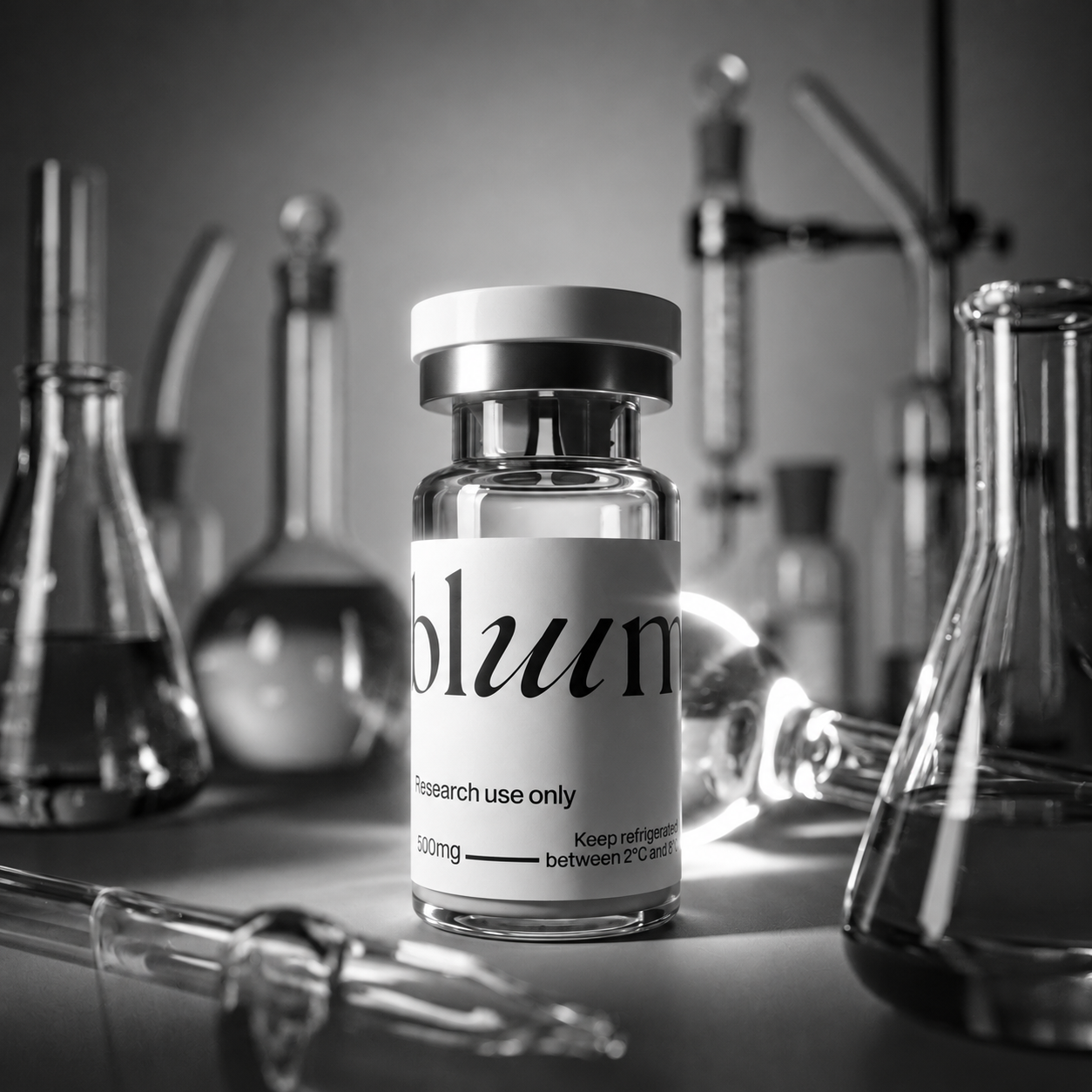

Choosing where to source a research compound is one of the most consequential decisions a laboratory or independent researcher makes, and it is a decision that has very little to do with price. Two vials can look identical on a shelf and carry entirely different levels of documentation, testing rigor, and manufacturing accountability behind them. Finding a source worth repeat business means looking past the label and evaluating the systems that stand behind it.
This guide walks through the practical criteria researchers should use when evaluating a new source, what separates a trusted peptide supplier from one making unverified claims, and how to read the signals that indicate a supplier takes documentation seriously. It closes with a supplier evaluation checklist and answers to the questions researchers ask most often when comparing sources.
Why Supplier Selection Shapes Research Outcomes
Research-grade peptides are supplied under a Research Use Only designation, which means they are not subject to the same pre-market regulatory review as pharmaceutical products. That places the burden of verification on the researcher and, by extension, on the supplier's own documentation practices. A compound with no analytical backing is not a known quantity, and results generated from an unverified material are difficult to defend or reproduce.
This becomes especially important in labs running comparative studies across multiple batches or compounds, where even small inconsistencies in sourcing can introduce variables that are difficult to trace back after the fact. A well-documented supply chain removes much of that uncertainty before an experiment even begins.
This is why supplier selection is not a procurement afterthought. It directly affects whether the data a lab generates can be trusted, cited, and replicated. A supplier that treats documentation as optional is effectively asking researchers to accept unverified assumptions about compound identity, concentration, and purity.
What Defines a Reliable Peptide Supplier?
A reliable peptide supplier is defined less by marketing language and more by consistent, checkable practices.
Batch-Specific Certificates of Analysis
The clearest signal is whether every product is backed by a batch-specific Certificate of Analysis rather than a generic document reused across multiple listings. Each production lot should have its own analytical record, tied to a matching lot number on the vial itself.
Sourcing Transparency
Beyond documentation, sourcing transparency matters. Suppliers who are willing to disclose where compounds are synthesized, how they are handled after production, and which laboratories conduct independent testing are demonstrating a level of accountability that generic sellers typically avoid. Researchers evaluating a new source should expect straightforward answers to direct questions about these practices, not vague reassurances.
Analytical Standards and Production Practices to Evaluate
Peptide testing is the analytical foundation of any credible research compound. Researchers comparing sources should ask directly which laboratories perform testing, whether those labs are independent of the manufacturer, and whether raw data, such as chromatograms, is available on request. A supplier confident in its own manufacturing process will not hesitate to share this information. Across the industry, rigorous analytical characterization is increasingly prioritized over headline purity claims.
Peptide Testing Standards
At minimum, this should include high-performance liquid chromatography to establish purity, expressed as an area percentage rather than a general grade descriptor, alongside mass spectrometry to confirm identity and checks for sterility and endotoxins as part of the core testing set. Purity results at or above 98% are the accepted baseline for research applications, and results should be paired with mass spectrometry data confirming that the dominant HPLC peak is, in fact, the correct compound. Even batches that passed purity thresholds at 99% can still contain endotoxins, and purity testing does not detect heavy metals or microbial contamination. Suppliers should state acceptable endotoxin limits for cell-culture research. Documentation should include lot numbers and storage recommendations.
Peptide Manufacturing Practices
On the production side, peptide manufacturing deserves equal scrutiny. Consistent, controlled synthesis conditions, standardized purification steps, and careful handling during lyophilization and storage all shape the final result. Variability at any of these stages can introduce degradation products, residual solvents, or inconsistent yields between batches, all of which should be reflected honestly in the compound's testing results rather than obscured by rounded, suspiciously uniform figures.
Peptide Quality and Documentation Standards
Strong research peptide quality control extends beyond a single purity number. It includes several other factors.
Quality Control Beyond Purity
It includes molecular weight confirmation, batch-to-batch consistency tracking, and clear documentation of the testing date relative to the batch being shipped. A compound tested months earlier and shipped without updated verification does not reflect the current state of that inventory.
Reporting Peptide Purity Correctly
Peptide purity, specifically, should always be reported as an area percentage with method details included, such as the column type and detection wavelength used during HPLC analysis. A number presented without this context is difficult for a researcher to evaluate independently and offers limited assurance on its own.
Documentation Depth
Documentation depth is also where the difference between adequate and excellent sourcing becomes visible. Some suppliers report only headline purity figures, while others include net peptide content, accounting for moisture, counterions, and residual solvents in the lyophilized powder. This level of detail is a meaningful indicator of how seriously a supplier approaches its own quality standards.
A Practical Supplier Evaluation Checklist
The table below summarizes the core items researchers should confirm before committing to a new source. It condenses the documentation and testing standards discussed above into a quick reference for evaluating any prospective supplier.
|
Checklist Item |
What to Verify |
|
|
Batch-specific COA |
Lot number on the vial matches the lot number on the certificate |
|
|
Third-party laboratory |
Testing performed by an independent, accredited lab, not in-house |
|
|
HPLC purity results |
Purity reported as an area percentage of 98% or above |
|
|
Mass spectrometry data |
Observed molecular weight matches theoretical molecular weight |
|
|
Verification portal |
Report ID can be cross-checked directly with the testing lab |
|
|
Manufacturing transparency |
Supplier discloses sourcing and production practices on request |
|
|
Payment options |
|
|
|
Warehouse Location |
Selecting a peptide supplier in the USA ensures your delivery will arrive fast, avoiding customs delays and long wait times |
|
|
Research Use Only labeling |
Product is clearly designated RUO with no clinical claims |
None of these items should be treated as optional extras. Together, they form the minimum baseline that separates a documented research source from an unverified one, and running through them before placing a first order takes only a few minutes.
For a more detailed walkthrough of these criteria, see the Research Peptide Supplier Evaluation Checklist, which covers each verification step in greater depth.
Red Flags: Separating a Trusted Supplier from a Risk
Certain patterns consistently indicate a supplier is not being fully transparent. Generic or recycled Certificates of Analysis, purity figures that appear suspiciously identical across every product and batch, and an unwillingness to name the testing laboratory are all signals worth taking seriously. A missing test date, or a lot number that cannot be matched to the physical vial, undermines the entire purpose of the documentation.
A trusted peptide supplier will not react defensively to direct questions about testing and sourcing. If a supplier discourages independent verification, delays sharing documentation, or provides only marketing copy in place of analytical data, that resistance itself is informative. Researchers should treat responsiveness to these questions as part of the evaluation, not a separate courtesy.
How Bluum Peptides Approaches Sourcing and Verification
Bluum Peptides supplies research compounds tested by independent third-party laboratories, with batch-specific documentation published for every active product. Each Certificate of Analysis includes compound identity, HPLC purity results, and mass spectrometry confirmation, giving researchers a clear basis for peptide verification before a compound is ever used in a study.
Our full product catalog is available through the Bluum Peptides products collection, with complete range and variety. Researchers focused specifically on research peptide compounds can browse the research peptides collection directly, where each listing links to its corresponding batch documentation.
Frequently Asked Questions
What is the single most important factor when choosing a research peptide Supplier?
Batch-specific, independently verified documentation is the most important factor. A supplier without a Certificate of Analysis tied to the exact lot number on the vial cannot substantiate any claim about compound identity or purity, regardless of how the product is marketed.
How can a researcher confirm that peptide testing results are accurate?
The most direct method is checking whether the testing laboratory offers a public verification portal where a report identifier can be cross-referenced against the lab's own records. When no such mechanism exists, confirming the laboratory's name, accreditation, and contact details independently is the next best step.
Does a high purity percentage guarantee correct compound identity?
No. HPLC purity confirms how much of the sample corresponds to a single dominant peak, but it does not confirm what that peak actually is. Mass spectrometry data is needed to verify that the molecular weight matches the expected compound, which is why both figures should appear together on a complete Certificate of Analysis.
Why does peptide manufacturing consistency matter for research use?
Inconsistent manufacturing conditions between batches can introduce variability in purity, molecular integrity, and impurity profiles, which in turn affects the reproducibility of research results. Consistent, controlled production is what allows researchers to expect comparable results across different orders from the same supplier.
What should a researcher do if a supplier will not share testing documentation?
Treat it as a disqualifying signal rather than a minor inconvenience. Legitimate suppliers publish or readily provide batch-specific documentation, since it is the primary evidence supporting any claim about the compound's identity, purity, or reliability for research use.
Research Use Only Disclaimer
All products available on Bluum Peptides are intended for laboratory and research purposes only. They are not for human consumption, veterinary use, or any medical, therapeutic, or diagnostic application. All compounds are sold under a Research Use Only designation to qualified research professionals aged 21 or older. The information in this article, including references to purity, testing, and manufacturing standards, relates strictly to compound characterization for research documentation and does not constitute a claim of suitability for clinical or therapeutic use.