KLOW Peptide Blend: A Research Guide to Sourcing, Verification, and Experimental Handling
Written by Tim J
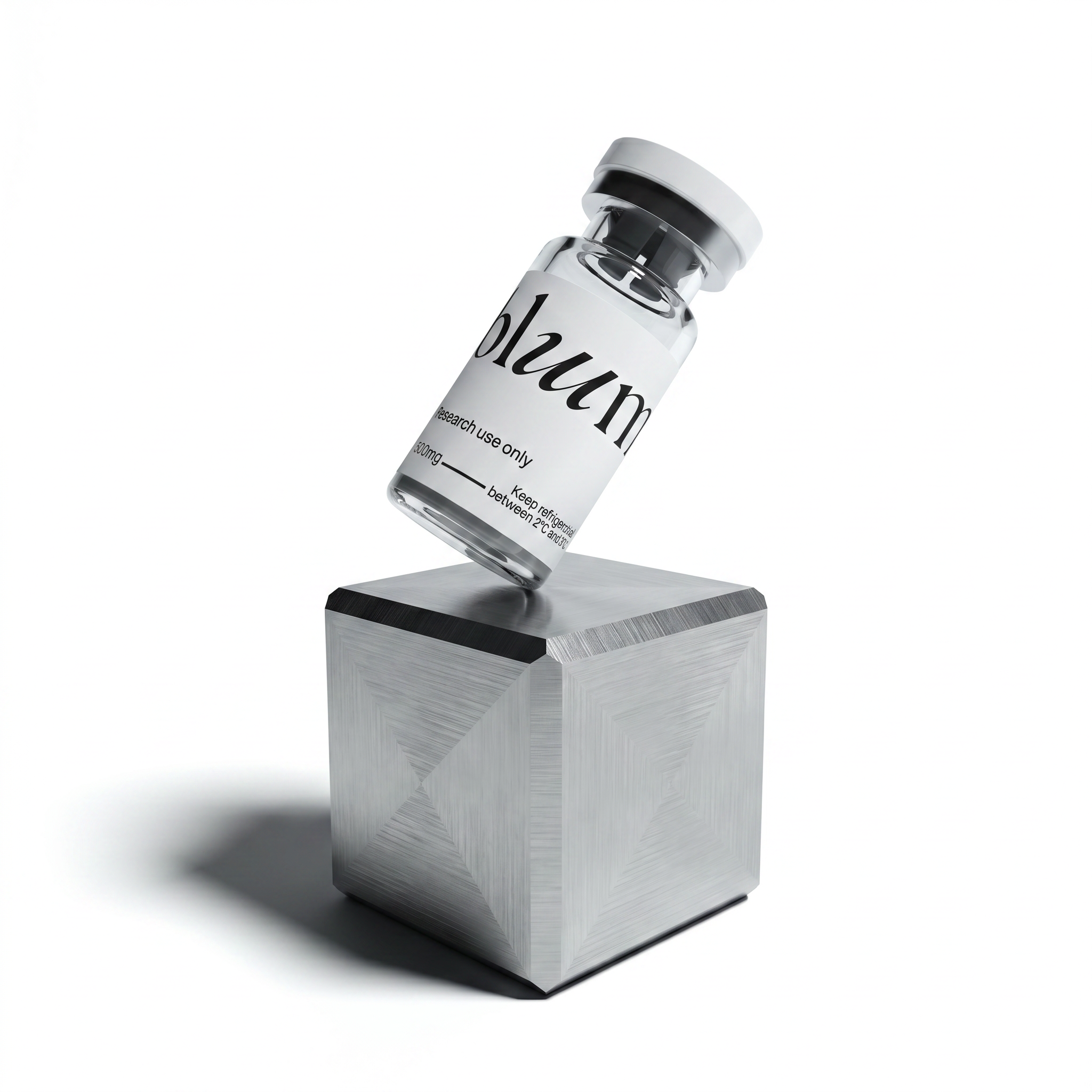
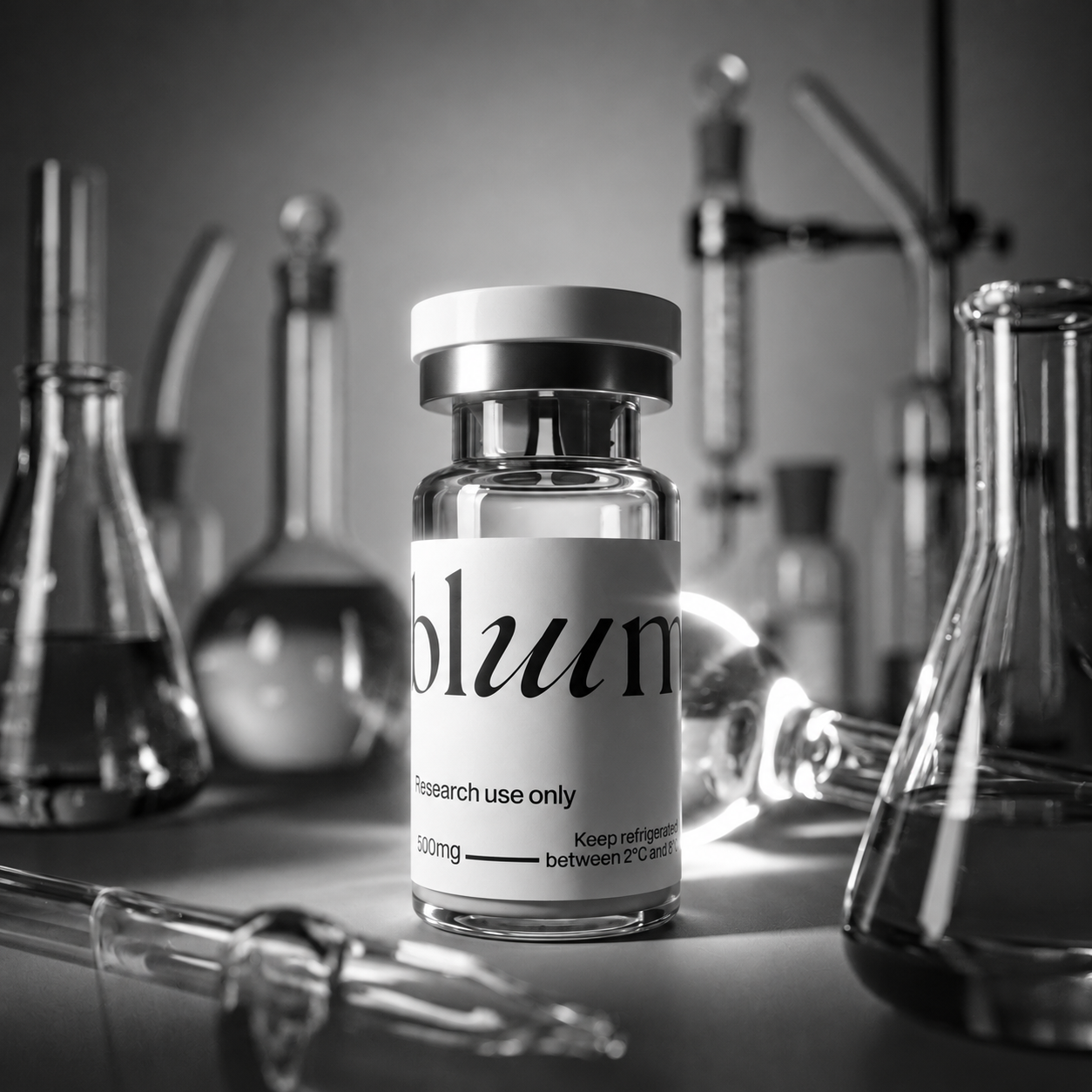
The KLOW peptide blend is a multi-component research preparation containing four peptides in a single lyophilized vial: KPV, BPC-157, TB-500, and GHK-Cu. The name is industry shorthand assembled from the initials of its constituents and denotes that specific four-way composition across research-supply catalogs. It is a research-use-only material intended for in-vitro and laboratory investigation, and it is not a drug, supplement, or product for administration to humans or animals.
That definition is the easy part, and any competent product listing states it. What a product page cannot carry is the surrounding scientific and procurement context: how a co-lyophilized preparation differs from single peptides as an experimental input, what analytical documentation actually proves, and how handling between vial and assay quietly determines whether your data will be interpretable later. This guide covers that layer, and deliberately does not restate blend ratios or component mechanism summaries.
What Makes a Combination Blend a Distinct Research Tool
A blend is not four vials poured together. As an experimental input, a co-lyophilized multi-peptide preparation differs from separately sourced peptides in three ways that matter.
Fixed stoichiometry. The molar relationship between components is set by the manufacturer and is identical across every vial in a lot. That helps reproducibility within a study and constrains any design that needs to vary one component against the others. Ratio-variation work and component-dropout designs require individual peptides.
Single reconstitution event. Four vials mean four dilution steps, four chances for volumetric error, and four independent stability clocks. A blend collapses that to one. The tradeoff is that all four constituents then share one storage history, including whatever thermal stress the least stable of them tolerates worst.
Shared solvent environment. The components do not share a physicochemical profile. GHK-Cu is a copper-complexed tripeptide whose solution behavior depends partly on coordination chemistry. KPV is a short tripeptide. BPC-157 is a pentadecapeptide, and TB-500 a considerably longer fragment. Any pH or vehicle choice is therefore a compromise across four molecules rather than an optimization for one. Researchers used to tuning conditions per peptide should expect a middle setting and should record it, because that setting is now a study variable.
Comparative Context: KLOW Against Related Preparations
Buyers evaluating KLOW usually also weigh GLOW (BPC-157, TB-500, GHK-Cu) or the individual peptides. The real distinctions are analytical and logistical.
| Consideration | KLOW blend | GLOW blend | Individual peptides |
|---|---|---|---|
| Components | KPV, BPC-157, TB-500, GHK-Cu | BPC-157, TB-500, GHK-Cu | Researcher-defined |
| Ratio control | Fixed by manufacturer | Fixed by manufacturer | Variable at the bench |
| Analytical complexity | Highest; four species resolved in one chromatogram | High; three species | Lowest; single-analyte methods |
| Purity reporting | Per-component plus impurity profile | Per-component plus impurity profile | One figure per peptide |
| Reconstitution steps | One | One | One per peptide |
| Supports dropout designs | No | No | Yes |
| Supports fixed-composition replication | Yes | Yes | Possible, higher variance |
| Lot consistency burden | Supplier | Supplier | Laboratory |
The choice is a design question, not a quality question. To characterize a fixed multi-component condition across many replicates, a blend removes a real source of technician-introduced variance. To attribute an observed in-vitro result to a specific constituent, a blend obscures exactly what you are measuring.
Reading a Certificate of Analysis Properly
The certificate of analysis is the primary evidence a buyer has about vial contents, and it is the document most often skimmed. Several sections deserve real attention on a multi-component product.
HPLC purity and what the figure covers
High-performance liquid chromatography separates species by their interaction with a stationary phase and reports relative peak areas. For a four-component blend, ask what the reported number refers to. A responsible certificate either reports purity per component or states plainly that the figure describes total peptide content against total detected impurities. A single headline percentage with no breakdown cannot distinguish a well-balanced preparation from one where a co-eluting impurity is being counted favorably. Check detection wavelength too: peptides without aromatic residues absorb weakly at 280 nm, so blends are normally monitored in the low-UV region where the peptide bond absorbs.
Identity confirmation by MS analysis
Chromatography tells you how much of something is present and how cleanly it separates. It does not tell you what that something is. Observed values should be consistent with the expected molecular weight of each declared component. For GHK-Cu, the copper-complexed species and the uncomplexed tripeptide differ in molecular weight, so a certificate reporting only the free peptide is not evidence that the complex was formed and retained. Deconvoluted spectra and reported charge states are more informative than a typed summary line, and a supplier who provides raw chromatogram and spectrum images is giving you something you can evaluate independently.
Peptide content versus fill weight
A vial labeled with a total milligram figure may be reporting gross lyophilized weight, which includes counterion (commonly acetate or trifluoroacetate), residual water, and any bulking agent such as mannitol. Actual peptide content can be materially lower. Amino acid analysis or nitrogen determination resolves this. If your calculations depend on accurate molar concentration rather than approximate weight, request the peptide content figure when the certificate omits it.
Counterion, residual solvents, and endotoxin
Synthesis and purification leave traces. Trifluoroacetic acid is common in reverse-phase purification and is a recognized interferent in some cell-based assays, so the certificate should state which counterion is present. Endotoxin content matters for any cell-culture work, because bacterial lipopolysaccharide is a potent confounder capable of producing responses unrelated to the peptide under study. Standard research-grade material is not automatically low-endotoxin. If your model includes macrophages, monocytes, or any endotoxin-responsive line, treat a missing limulus amebocyte lysate figure as an open question rather than a non-issue.
Lot traceability
A certificate should carry a lot number matching the vial label, a date of analysis, and identification of the testing party. Without lot linkage it cannot be tied to the material in your hand. A certificate reused across visibly different lots is a documentation failure regardless of how good the underlying material may be.
Lyophilization Quality: What the Cake Tells You
Freeze-drying quality is one of the few things assessable before any instrument is involved, and it proxies reasonably well for process control.
- A well-formed cake is uniform, holds its shape, occupies a consistent portion of the vial across units, and dissolves readily.
- Collapse or shrinkage into a dense, glassy, or retracted plug suggests product temperature exceeded the critical formulation temperature during primary drying. Collapsed cakes often retain more residual moisture.
- Variation between vials of one lot points to uneven shelf conditions and a fill-finish process that is not tightly controlled.
- Unexpected appearance in a copper-containing preparation warrants a query to the supplier rather than a shrug.
Residual moisture is the invisible half of this. Lyophilized peptides are hygroscopic, and water is the vehicle for hydrolysis, oxidation, and aggregation over time. Where a supplier reports Karl Fischer moisture data, that is a meaningful signal of manufacturing seriousness.
Reconstitution and Storage Science
The largest controllable source of variance in peptide research is what happens between opening the vial and running the assay. The following is laboratory handling practice for in-vitro material only.
Solvent choice rationale
Reconstitution Solution for Laboratory Use contains benzyl alcohol as a preservative, which suppresses microbial growth in a vial ; that same benzyl alcohol is a chemical additive capable of interfering with sensitive cell-based readouts and must be accounted for in vehicle controls. Sterile water introduces no additive but offers no microbial protection, which argues for single-use aliquoting. For blends, pH is the more important variable, since solubility and stability are pH-dependent and a metal-complexed component adds a further constraint. Record the vehicle, its lot, and the resulting solution pH as experimental metadata.
Technique
Solvent should be introduced slowly against the vial wall rather than jetted onto the cake. Peptides are surface-active and shear-sensitive; forceful addition and vortexing promote foaming, and the air-liquid interface is where aggregation preferentially occurs. Gentle swirling until dissolution completes is standard.
Freeze-thaw and aliquoting
Repeated freeze-thaw cycling is among the most reliably damaging things done to peptide solutions. Each cycle concentrates solutes in the unfrozen fraction, shifts local pH as buffer components crystallize at different points, and imposes interfacial stress. The cumulative result is progressive loss of intact peptide and increased aggregate content, none of it visible. The mitigation is simple and consistently underused: aliquot immediately after reconstitution into single-use volumes in low-binding tubes, labeled with identity, lot, concentration, vehicle, and date. For a blend this matters more than for a single peptide, because degradation may not proceed at equal rates across four constituents. A twice-frozen solution is not merely weaker; it may be compositionally different from the material the certificate describes.
Temperature and light
Lyophilized material is stored cold and protected from light and moisture, with lower temperatures appropriate for longer holding periods. Solutions are far less stable than dry powder and are handled on a much shorter timescale under refrigeration. Vials should equilibrate before opening, because condensation on cold glass introduces water into a hygroscopic powder. Shipping exposure is a related and frequently ignored variable, so record receipt condition on arrival.
Evaluating a Supplier
- Lot-specific or representative testing? A certificate generated once and reused describes a batch you did not receive.
- Third-party analysis available? In-house data is not automatically suspect, but independent verification is a stronger position.
- Raw chromatograms and spectra, or only summary tables? Raw data can be examined; tables must be believed.
- Does labeling match documentation? Lot numbers, fill weights, and component declarations should agree across vial, box, and certificate.
- Is research-use-only status stated consistently? Suppliers who blur that line usually show the same looseness in their documentation.
- Is there a technical contact? Ask a specific question about counterion or detection wavelength. The answer is diagnostic.
For laboratories that have worked through this evaluation and need the material itself, Bluum Peptides supplies research-grade KLOW with lot documentation for laboratory research use.
Common Sourcing Pitfalls
- Buying on price per milligram without checking peptide content. Two vials of identical stated weight can contain materially different quantities of peptide once counterion and moisture are accounted for.
- Accepting one purity figure for a multi-component product. That number is ambiguous by construction unless its reporting basis is stated.
- Treating identity as established by the label. Without confirmation, the label is a claim, and for blends the claim covers all four components including the complexed state of the metal-bound one.
- Switching lots mid-study. A new lot is a new material until demonstrated otherwise. Order enough from one lot to cover the study.
- Ignoring endotoxin in cell culture. A result driven by contaminating lipopolysaccharide can look remarkably like a real finding.
Study-Design Considerations for In-Vitro Work
Match vehicle controls exactly. If material is reconstituted in Reconstitution Solution for Laboratory Use, controls must receive the same vehicle at the same final concentration.
Treat copper as a variable. Any preparation containing a copper-complexed peptide introduces copper into the culture environment, and some models require controls addressing the metal separately from the peptide.
Respect the attribution limit. An effect observed with a four-component blend is an effect of that blend under those conditions, and cannot be assigned to a single constituent without separate work using individual peptides.
Report concentrations unambiguously. State whether figures refer to total peptide weight or individual component molarity, and the basis used to calculate them. Ambiguity here is a leading cause of failed replication between laboratories.
Document the handling chain. Lot number, reconstitution date, vehicle, storage temperature, freeze-thaw count, and time from reconstitution to assay belong in the methods record.
Frequently Asked Questions
What is the KLOW peptide blend?
KLOW is a research-use-only peptide preparation containing four components in a single lyophilized vial: KPV, BPC-157, TB-500, and GHK-Cu. The name is an acronym formed from the initials of its constituents and is used as standard shorthand across research-supply catalogs. It is supplied for laboratory and in-vitro research only and is not intended for administration to humans or animals.
What is the difference between KLOW and GLOW?
GLOW contains three peptides: BPC-157, TB-500, and GHK-Cu. KLOW contains those same three plus KPV, making it a four-component preparation. For researchers, the practical difference is that KLOW requires analytical methods capable of resolving and confirming four distinct species rather than three, and its certificate of analysis should reflect that additional component.
What should a certificate of analysis for a peptide blend include?
A complete certificate of analysis for a multi-component peptide blend should include a lot number matching the vial, the date of analysis, the identity of the testing laboratory, HPLC purity data with the reporting basis clearly stated, identity confirmation for each declared component, counterion identification, and peptide content as distinct from gross fill weight. Residual solvent and endotoxin data are additionally relevant for cell-culture applications.
Why does freeze-thaw cycling matter for peptide solutions?
Each freeze-thaw cycle concentrates solutes in the unfrozen fraction, causes localized pH shifts as buffer components crystallize at different rates, and exposes peptide molecules to interfacial stress. The cumulative result is progressive loss of intact peptide and increased aggregation, none of which is visible on inspection. Aliquoting into single-use volumes immediately after reconstitution is the standard laboratory mitigation.
Why is HPLC purity alone insufficient to confirm a blend?
HPLC quantifies how much material is present and how cleanly components separate, but it does not establish molecular identity. Spectrometric confirmation is required to show that observed peaks correspond to the expected molecular weights of the declared peptides. For a copper-complexed component such as GHK-Cu, that data should be consistent with the complexed species rather than the free peptide alone.
Should a laboratory use a blend or individually sourced peptides?
A blend suits research designs calling for a fixed multi-component condition replicated consistently across many samples, since it removes technician-introduced ratio variance and reduces pipetting steps. Individually sourced peptides suit designs that require varying component ratios, running dropout conditions, or attributing an observed in-vitro result to a specific constituent, which a fixed-composition blend cannot support.
Research-Use-Only Disclaimer
All materials and information described on this page are intended strictly for laboratory research and in-vitro investigational use by qualified professionals. Products referenced are not drugs, foods, cosmetics, or medical devices, and are not approved by the U.S. Food and Drug Administration for the diagnosis, treatment, cure, or prevention of any condition. Nothing on this page constitutes medical advice, therapeutic guidance, or any recommendation regarding use in humans or animals, and no such use is authorized, suggested, or implied. Purchasers and end users are solely responsible for compliance with all applicable federal, state, and local regulations, for appropriate institutional review and biosafety approval, and for the safe handling, storage, and disposal of research materials in their possession.