

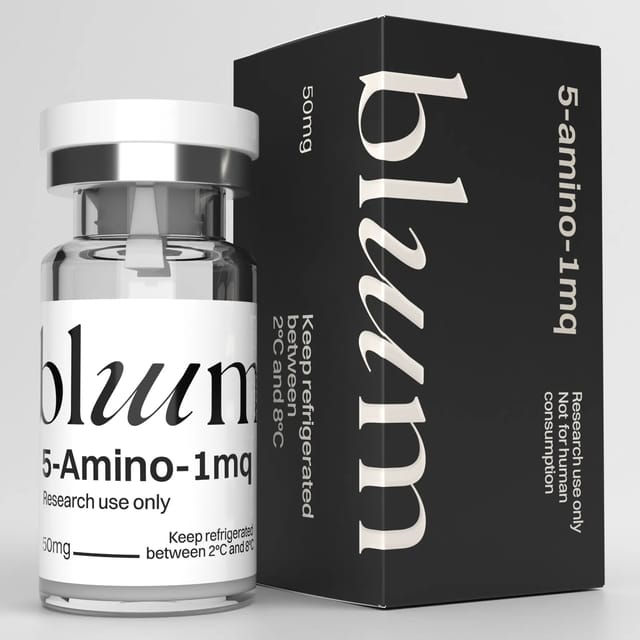
5-Amino-1MQ
 Money Back
Guarantee
Money Back
Guarantee Satisfaction
Guarantee
Satisfaction
Guarantee Easy Returns
 Secure
Ordering
Secure
Ordering 2-Day
Shipping
2-Day
Shipping Third Party
Tested
Third Party
Tested Batch & Lot
Tracking
Batch & Lot
TrackingLab results
RESEARCH USE ONLY
These compounds are NOT intended for human consumption, clinical use, or veterinary applications. We are not affiliated with any pharmaceutical companies or their commercial medications. By placing an order, you certify these materials will be used exclusively for in vitro testing and laboratory experimentation only. Bodily introduction of any kind into humans or animals is strictly forbidden by law. This product should only be handled by licensed, qualified professionals. This product is not a drug, food, or cosmetic and may not be misbranded, misused or mislabeled as a drug, food or cosmetic.
About 5-Amino-1MQ
5-Amino-1MQ (5-Amino-1-methylquinolinium iodide) is a synthetic small molecule compound studied in laboratory research as a nicotinamide N-methyltransferase (NNMT) inhibitor.
Researchers investigate 5-Amino-1MQ to better understand methylation pathways, cellular metabolism, and NAD-related biochemical processes. Bluum Peptides supplies research-grade 5-Amino-1MQ with verified 99.72% purity, supported by Certificates of Analysis (COAs), analytical verification, and third-party testing where applicable. Available for laboratory research applications with reliable sourcing and documentation support. Sold strictly for research use only and not intended for human or veterinary use.
5-Amino-1MQ Product Specifications
| Product Specifications | 5-Amino-1MQ (5-Amino-1-methylquinolinium iodide) (10 mg/50mg) research compound supplied as powder. |
|---|---|
| Application | Research small molecule used as a nicotinamide N-methyltransferase (NNMT) inhibitor in metabolic / methylation / NAD-related pathway research. |
| Appearance | Solid powder (commonly reported as off-white to brown solid) supplied in a laboratory vial. |
| Chemical Formula | C10H11IN2 (iodide salt) |
| PubChem CID | 66522933 (iodide salt entry). |
| CAS Number | 42464-96-0 |
| Molecular Weight | 286.11 g/mol |
| Synonyms | 5-Amino-1-methylquinolinium iodide; 1-methylquinolin-1-ium-5-amine iodide; NNMTi; 5-amino-1MQ |
| Storage | 2–8°C (refrigerated), tightly sealed, dry/desiccated, protect from light and moisture. |
| Purity | 99.72% (verified by COA) |
| Chemical grade | Laboratory |
Chemical Structure
What Is 5-Amino-1MQ?
5-Amino-1MQ (5-Amino-1-methylquinolinium iodide) is a synthetic quinolinium-based small molecule studied in laboratory research as a nicotinamide N-methyltransferase (NNMT) inhibitor. It is used as an experimental compound to investigate NNMT activity, methylation pathways, and NAD-related biochemical processes.
The compound’s molecular structure allows researchers to examine small molecule interactions with NNMT and explore how enzyme modulation may influence cellular metabolism, metabolite regulation, and molecular signaling pathways.
Current research involving 5-Amino-1MQ focuses on biochemical assays, cellular models, and experimental systems investigating NNMT inhibition, nicotinamide metabolism, methylation balance, and metabolic signaling mechanisms.
Available scientific evidence is primarily based on laboratory and preclinical research. These findings are intended to support understanding of molecular mechanisms and should not be interpreted as evidence of medical applications or therapeutic use.
Bluum Peptides supplies 5-Amino-1MQ as a research-grade small molecule supported by quality documentation, including Certificates of Analysis (COAs) and third-party analytical verification where applicable. 5-Amino-1MQ is supplied strictly for laboratory research use and is not intended for human or veterinary application.
5-Amino-1MQ Mechanism of Action (Research Context)
5-Amino-1MQ is a synthetic small molecule studied for its interaction with nicotinamide N-methyltransferase (NNMT), an enzyme involved in nicotinamide methylation. Researchers investigate NNMT inhibition to better understand methylation pathways, metabolite regulation, and NAD-related biochemical processes. Current understanding is based primarily on biochemical studies, cellular models, and preclinical research.
Structural Characteristics
5-Amino-1MQ is a quinolinium-based small molecule containing a methylated nitrogen structure and an amino group within its chemical framework. These structural features allow researchers to study how small molecule design influences enzyme interactions, inhibitor activity, and structure-activity relationships.
NNMT Enzyme Interaction
The primary research focus of 5-Amino-1MQ is its ability to interact with and inhibit NNMT activity in experimental systems. Researchers use this compound to investigate enzyme regulation, nicotinamide metabolism, and the relationship between NNMT activity and cellular methylation pathways.
These studies help characterize molecular mechanisms and biochemical interactions rather than demonstrate therapeutic effects.
Intracellular Signaling and Metabolic Pathways
Research involving 5-Amino-1MQ explores how NNMT modulation may influence cellular metabolic networks, including pathways related to nicotinamide availability, methyl donor utilization, and NAD-associated processes.
Experimental models are used to examine changes in metabolite levels, molecular signaling, and biochemical responses under controlled laboratory conditions.
Research Significance
5-Amino-1MQ serves as a valuable research tool for investigating NNMT biology, small molecule enzyme inhibition, and cellular metabolic regulation. Ongoing studies continue to explore its role in understanding methylation pathways, enzyme function, and molecular signaling networks.
Bluum Peptides supplies 5-Amino-1MQ as a research-grade compound supported by quality documentation and analytical testing. It is supplied exclusively for laboratory research use and is not intended for human or veterinary application.
5-Amino-1MQ Research Applications (Observations From Studies)
5-Amino-1MQ is studied across experimental models investigating NNMT biology, methylation pathways, and NAD-related metabolic processes. The research applications described below are based on biochemical studies, cellular models, and laboratory investigations. They should not be interpreted as evidence of therapeutic effects, clinical outcomes, or human or veterinary applications.
NNMT Enzyme Research
One of the primary research applications of 5-Amino-1MQ is the investigation of nicotinamide N-methyltransferase (NNMT) activity. Researchers study how NNMT inhibition affects enzyme function, nicotinamide metabolism, methyl group transfer, and related biochemical pathways.
These studies help scientists better understand enzyme regulation and the role of NNMT within cellular metabolic networks under controlled laboratory conditions.
Cellular Signaling and Metabolic Pathways
5-Amino-1MQ is also used in research exploring how NNMT activity influences cellular signaling and metabolic regulation. Experimental models examine changes in metabolite levels, molecular pathways, and biochemical responses associated with NNMT modulation.
These investigations provide insight into the relationship between methylation processes, NAD-related pathways, and cellular metabolism.
Structure-Activity Relationship Research
Researchers investigate 5-Amino-1MQ in structure-activity relationship (SAR) studies to understand how chemical structure influences small molecule behavior, enzyme interaction, and inhibitor characteristics.
Studies involving quinolinium-based compounds help scientists evaluate how molecular design affects experimental activity, stability, and target interactions.
Metabolic and Cellular Biology Research
5-Amino-1MQ is studied as a research tool for examining metabolic regulation, including nicotinamide processing, methylation balance, and enzyme-controlled biochemical pathways.
Experimental research models allow scientists to analyze molecular mechanisms involved in cellular metabolism without establishing clinical or physiological outcomes.
Emerging Research Areas
NNMT-related pathways continue to be investigated in areas such as aging biology, neuroscience, oncology, and immunology research due to their connection with cellular metabolism and biochemical regulation.
Current studies focus on understanding molecular mechanisms and pathway interactions rather than demonstrating medical applications or therapeutic effects.
Bluum Peptides supplies 5-Amino-1MQ exclusively as a research material for qualified laboratory use. No statements on this page should be interpreted as medical, therapeutic, diagnostic, human, or veterinary claims.
5-Amino-1MQ vs NAD+ vs BPC-157: Incretin Research Peptides Comparison
|
Characteristic |
5-Amino-1MQ |
||
|
Research Classification |
Synthetic quinolinium-based NNMT inhibitor |
Pyridine nucleotide coenzyme |
GLP-1 receptor agonist |
|
Primary Receptor Targets |
Nicotinamide N-methyltransferase (NNMT) |
Electron acceptor and enzymatic cofactor |
GLP-1 receptor |
|
Mechanistic Profile |
Investigated as an NNMT inhibitor in experimental models |
Single-pathway precursor role |
Single-pathway receptor activation |
|
Primary Research Focus |
NNMT inhibition, methylation biology, metabolic pathway regulation |
Research-use compound (some dietary supplement contexts) |
GLP-1 receptor biology and peptide pharmacology |
|
Experimental Scope |
Enzyme assays, cellular studies, molecular pathway research |
Indirect modulation via precursor conversion |
Investigation of GLP-1 receptor activation and downstream signaling |
|
Structural Design |
Quinolinium-based synthetic small molecule iodide salt |
Pyridine-based amide compound |
Long-acting GLP-1 analogue |
|
Current Research Status |
Investigational research compound |
Well-characterized biochemical molecule |
Extensively characterized GLP-1 analogue |
Research Note: The comparison above is intended to illustrate differences in molecular classification, biochemical roles, and experimental research applications. These compounds are discussed only in the context of laboratory investigation. The information should not be interpreted as evidence of clinical performance, therapeutic value, safety, or suitability for human or veterinary use.
Bluum Peptides supplies 5-Amino-1MQ exclusively as a research material intended for qualified laboratory applications.
5-Amino-1MQ Laboratory Handling & Storage
5-Amino-1MQ is supplied as a solid small molecule research compound and should be handled using established laboratory practices appropriate for chemical research materials.
Laboratory handling procedures may vary depending on research protocols, institutional requirements, and study objectives. Bluum Peptides recommends following applicable laboratory standard operating procedures (SOPs) and safety guidelines when working with this product.
For general laboratory handling, researchers should consider the following best practices:
- Store unopened vials under recommended storage conditions and protect the material from light, moisture, and unnecessary environmental exposure.
- Handle the compound using appropriate personal protective equipment (PPE), including laboratory gloves, eye protection, and protective clothing where required.
- Use controlled laboratory environments to help minimize contamination and maintain sample integrity.
- Maintain batch records, Certificates of Analysis (COAs), and supporting documentation for traceability and research records.
- Dispose of unused material and laboratory waste according to institutional procedures and applicable regulations.
- For storage stability, 5-Amino-1MQ should typically be stored refrigerated at 2–8°C in a tightly sealed container.
Because laboratory procedures vary between research environments, Bluum Peptides does not provide protocol-specific preparation or experimental instructions. 5-Amino-1MQ is supplied exclusively for laboratory research use and is not intended for human or veterinary application.
Certificate of Analysis (COA) & Quality Assurance
At Bluum Peptides, quality assurance is a key part of supplying research-grade compounds for laboratory applications. Each production lot of 5-Amino-1MQ undergoes analytical evaluation, with batch-specific Certificates of Analysis (COAs) available to support research documentation, quality control, and experimental consistency.
Each COA typically includes:
- Identity verification using analytical techniques such as mass spectrometry to confirm the molecular characteristics of 5-Amino-1MQ.
- Purity analysis performed using methods such as high-performance liquid chromatography (HPLC) to verify compound purity and identify potential impurities.
- Batch documentation, including lot number, testing information, analytical methods, and quality assessment results.
- Traceability information to support laboratory recordkeeping and reproducibility across research workflows.
Bluum Peptides works with independent analytical laboratories, including providers such as Janoshik, BioRegen, and Freedom Diagnostics, to support third-party verification of research material quality. Independent testing provides additional transparency and confidence in product identity, consistency, and sourcing.
Batch-specific COAs are available for review and can be retained as part of laboratory documentation, internal quality procedures, and research recordkeeping.
5-Amino-1MQ is supplied exclusively for laboratory research use and is not intended for human or veterinary application.
Frequently Asked Questions
What is 5-Amino-1MQ?
5-Amino-1MQ (5-Amino-1-methylquinolinium iodide) is a synthetic small molecule studied in laboratory research as a nicotinamide N-methyltransferase (NNMT) inhibitor. Researchers investigate its role in methylation pathways, NNMT activity, and NAD-related biochemical processes.
It is supplied exclusively for laboratory research use and is not intended for human or veterinary applications.
What is 5-Amino-1MQ studied for in research?
5-Amino-1MQ is studied as an experimental NNMT inhibitor to investigate nicotinamide metabolism, methylation pathways, and cellular biochemical processes.
Research applications include studying enzyme activity, molecular interactions, and metabolic pathways in laboratory models.
How does 5-Amino-1MQ work in laboratory research?
In research settings, 5-Amino-1MQ is investigated for its interaction with nicotinamide N-methyltransferase (NNMT), an enzyme involved in nicotinamide methylation.
Studies examine how NNMT activity influences biochemical pathways, metabolite levels, and cellular processes.
How is the quality of Bluum Peptides 5-Amino-1MQ verified?
Bluum Peptides supports research-grade quality through analytical testing, batch documentation, and Certificates of Analysis (COAs).
Quality verification may include methods such as HPLC and mass spectrometry, with independent testing from providers including Janoshik, BioRegen, and Freedom Diagnostics.
How should unopened 5-Amino-1MQ be stored?
Unopened 5-Amino-1MQ should be stored under recommended laboratory conditions, typically refrigerated at 2–8°C and protected from light and moisture.
Researchers should follow their approved storage procedures and institutional guidelines.
Is 5-Amino-1MQ intended for human use?
No. 5-Amino-1MQ is supplied strictly for laboratory research use only.
It is not approved for human consumption, veterinary use, diagnosis, treatment, or medical applications.
Why do researchers choose Bluum Peptides for 5-Amino-1MQ?
Bluum Peptides provides research-grade compounds supported by analytical documentation, Certificates of Analysis, and third-party verification where applicable.
Researchers benefit from transparent quality standards, batch traceability, and reliable sourcing for laboratory applications.
Scientific References
- Yoon, M. J., Yoshida, M., Johnson, S., et al. (2015). SIRT1-Mediated Mechanisms and the Role of Nicotinamide Metabolism in Cellular Regulation. Cell Metabolism.
https://www.cell.com/cell-metabolism/ - Neelakantan, H., Vance, V., Wang, L., et al. (2018). Selective inhibition of nicotinamide N-methyltransferase (NNMT) activity by 5-amino-1MQ improves cellular metabolic function. Biochemical Pharmacology.
https://pubmed.ncbi.nlm.nih.gov/29155147/ - Ulanovskaya, O. A., Zuhl, A. M., & Cravatt, B. F. (2013). NNMT inhibition as a strategy for modulating cellular metabolism. ACS Chemical Biology.
https://doi.org/10.1038/nchembio.1204 - Eckert, M. A., Coscia, F., Chryplewicz, A., et al. (2019). Proteomics reveals NNMT as a master metabolic regulator in cancer-associated pathways. Nature Communications.
https://www.nature.com/articles/s41467-019-09763-0 - PubChem. 5-Amino-1-methylquinolinium iodide compound record (CID 66522933). National Center for Biotechnology Information.
https://pubchem.ncbi.nlm.nih.gov/compound/66522933
Related Peptides
Shop All PeptidesYou ask,
we answer.
Are these peptides quality tested?
Absolutely. Our analytical testing is conducted by Janoshik Analytical, BioRegen, or Freedom Diagnostics, independent third-party laboratories that verify the identity, purity, and composition of our research products. All products are guaranteed to test at 98% purity or higher. Each CoA includes purity analysis, peptide sequence confirmation, date of analysis, and an endotoxin report.
What are typical delivery times?
Free 2-Day Air shipping is available when qualifying merchandise totals reach $200. Overnight Air is also available. Please allow up to 24 hours for processing.
Every package comes with professional packaging and tracking updates via email.
How should these compounds be stored?
Our peptides are shipped in lyophilized form, which is stable at room temperature during transit. Once received, store unopened vials in a cool, dry place.
Are products stable during shipping?
Our peptides are shipped in lyophilized (freeze-dried) form, which ensures stability during transit. This powder form is highly stable at room temperature and resistant to temperature fluctuations that occur during shipping.
Research has shown no significant degradation or loss of purity when lyophilized peptides are exposed to room temperature during typical shipping timeframes. Each batch is verified for purity upon production, and our stability testing confirms maintenance of product integrity during standard shipping conditions.
What are your bulk ordering options?
For bulk inquiries and volume pricing, please contact us.
What is the shelf life/expiration of unopened vials?
Each lot lists a best-by/expiration on the vial label and COA. As general guidance, lyophilized peptides stored as directed are typically stable 12–24 months (often longer at –20 °C). Short shipping periods at ambient temperature are normal. Actual stability depends on sequence and storage conditions.