

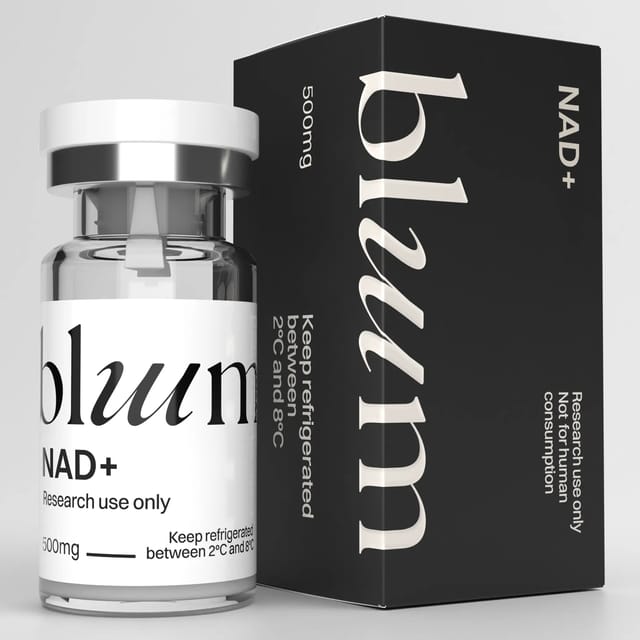
NAD+
Rated 4.2 out of 5 from 9 reviews
 Money Back
Guarantee
Money Back
Guarantee Satisfaction
Guarantee
Satisfaction
Guarantee Easy Returns
 Secure
Ordering
Secure
Ordering 2-Day
Shipping
2-Day
Shipping Third Party
Tested
Third Party
Tested Batch & Lot
Tracking
Batch & Lot
TrackingLab results
RESEARCH USE ONLY
These compounds are NOT intended for human consumption, clinical use, or veterinary applications. We are not affiliated with any pharmaceutical companies or their commercial medications. By placing an order, you certify these materials will be used exclusively for in vitro testing and laboratory experimentation only. Bodily introduction of any kind into humans or animals is strictly forbidden by law. This product should only be handled by licensed, qualified professionals. This product is not a drug, food, or cosmetic and may not be misbranded, misused or mislabeled as a drug, food or cosmetic.
About NAD+
NAD⁺ (Nicotinamide Adenine Dinucleotide) is a naturally occurring coenzyme found in all living cells and is widely studied for its role in cellular energy metabolism, redox reactions, and enzymatic signaling pathways. Researchers use NAD⁺ in experimental models investigating mitochondrial function, cellular bioenergetics, and metabolic regulation. Bluum Peptides supplies high-purity, research-grade NAD⁺ synthesized to meet strict quality standards and is supported by third-party COAs.
NAD+ Product Specifications
| Product Specifications | NAD+ Lyophilized Powder in 5ml vial. |
|---|---|
| Application | Research peptide coenzyme involved in various metabolic processes |
| Appearance | Solid, white powder in 5mL glass vial |
| Chemical Formula | C21H27N7O14P2 |
| PubChem CID | 5892 |
| CAS Number | 53-84-9 |
| Molecular Weight | ~663.43 g/mol |
| Synonyms | Nicotinamide adenine dinucleotide, Coenzyme I, β-NAD, NADH |
| NAD+ 500mg Storage | Store at -10°C, sealed, away from heat, light, and moisture. |
| Chemical grade | Laboratory |
Chemical Structure
What Is NAD⁺?
NAD⁺ (nicotinamide adenine dinucleotide) is a naturally occurring coenzyme found in virtually all living cells and is essential to numerous cellular metabolic processes. It belongs to the pyridine nucleotide family and functions as a key electron carrier in oxidation-reduction (redox) reactions, supporting the transfer of energy during cellular metabolism.
In addition to its role in cellular bioenergetics, NAD⁺ serves as a required cofactor for several enzyme families, including sirtuins, poly(ADP-ribose) polymerases (PARPs), and CD38 enzymes, making it an important research tool for investigating cellular signaling, DNA maintenance pathways, and metabolic regulation.
In scientific literature, NAD⁺ is widely studied in cell-culture systems, biochemical assays, animal models, and other experimental settings examining mitochondrial function, redox biology, enzymatic regulation, and cellular energy metabolism. Researchers also use NAD⁺ to investigate how intracellular coenzyme availability influences metabolic networks and communication between interconnected signaling pathways.
Because NAD⁺ participates in numerous biological processes rather than acting through a single receptor, it is commonly employed in systems-level research exploring cellular metabolism, bioenergetics, and regulatory enzyme activity.
The mechanistic insights discussed here are derived from laboratory and preclinical research, although NAD⁺ continues to be investigated across a range of experimental models. As such, these findings should be interpreted within the context of controlled research settings and should not be construed as evidence of clinical or therapeutic applications.
Bluum Peptides supplies high-purity, research-grade NAD⁺ manufactured under rigorous quality standards and verified through independent third-party analytical testing. Batch-specific Certificates of Analysis (COAs) are available to support traceability, reproducibility, and data integrity.
NAD⁺ is supplied strictly for research use only and is not intended for human consumption, therapeutic use, diagnostic use, or veterinary applications.
NAD⁺ Mechanism of Action (Research Only)
NAD⁺ (nicotinamide adenine dinucleotide) is a naturally occurring intracellular coenzyme studied for its role in cellular energy metabolism, redox chemistry, and enzyme-mediated signaling. Rather than interacting with cell-surface receptors, NAD⁺ participates directly in biochemical reactions by serving as an electron carrier and enzymatic cofactor within numerous metabolic pathways.
Current mechanistic understanding is derived primarily from biochemical assays, cell-culture studies, and animal models. The mechanisms described below reflect observations from experimental systems and should be interpreted strictly within a research context.
Structural and Chemical Basis
NAD⁺ is a pyridine nucleotide composed of two nucleotides joined by a phosphate bridge: one containing adenine and the other nicotinamide [1]. It exists in oxidized (NAD⁺) and reduced (NADH) forms, allowing it to reversibly transfer electrons during cellular metabolic reactions.
This reversible redox chemistry underpins its widespread use in metabolic research, enabling investigators to examine how intracellular coenzyme availability influences biochemical pathways, enzyme activity, and cellular energy balance under controlled experimental conditions.
Cellular Energy Metabolism
One of the principal areas of NAD⁺ research involves its participation in cellular energy metabolism. In experimental systems, NAD⁺ serves as an electron acceptor for numerous dehydrogenase enzymes involved in glycolysis, the tricarboxylic acid (TCA) cycle, and β-oxidation.
Researchers use NAD⁺ to investigate how electron transfer supports metabolic pathway activity and how changes in intracellular NAD⁺ availability influence broader bioenergetic processes within cells.
Redox Biology and Cellular Signaling
NAD⁺ also plays an important role in cellular redox biology. The balance between NAD⁺ and NADH is widely studied as an indicator of intracellular redox state and as a component of signaling pathways that respond to changing metabolic conditions [2].
Experimental models examine how shifts in this balance influence redox-sensitive biochemical networks, mitochondrial function, and cellular signaling under controlled laboratory conditions.
NAD⁺-Dependent Enzyme Activity
Beyond its role in metabolism, NAD⁺ functions as a required cofactor for several enzyme families, including sirtuins, poly(ADP-ribose) polymerases (PARPs), and CD38 enzymes [3]. These enzymes utilize NAD⁺ during biochemical reactions involved in cellular regulation, making NAD⁺ availability an important variable in mechanistic research.
Researchers use these experimental systems to examine how coenzyme availability influences enzyme activity, intracellular signaling, and broader regulatory networks rather than to establish biological outcomes.
Systems-Level Metabolic Research
Because NAD⁺ participates in numerous interconnected biochemical pathways, it is commonly studied within systems-level models of cellular metabolism. Researchers use NAD⁺ to investigate how energy metabolism, redox biology, and enzyme-dependent signaling interact to maintain coordinated cellular function under controlled experimental conditions.
Bluum Peptides supplies high-purity, research-grade NAD⁺ strictly for laboratory research use. This material is intended solely as a research tool for investigating cellular metabolism, redox biology, and NAD⁺-dependent biochemical pathways. It is not intended for human consumption, therapeutic use, diagnostic use, or veterinary applications.
NAD⁺ Research Applications (Observations from Studies)
NAD⁺ is extensively studied in preclinical, translational, and exploratory human research as a central coenzyme involved in cellular metabolism and biochemical signaling. Researchers use NAD⁺ across a wide range of experimental models to investigate how intracellular coenzyme availability influences metabolic networks, redox biology, and enzyme-dependent regulatory pathways.
The observations described below are derived from controlled laboratory studies, cell-culture systems, animal models, and limited exploratory human research. They should be interpreted strictly within experimental settings and do not represent established clinical outcomes.
Cellular Energy Metabolism and Mitochondrial Research
One of the primary applications of NAD⁺ research involves cellular energy metabolism and mitochondrial function. Experimental models examine how NAD⁺ availability influences electron transfer, oxidative phosphorylation, and metabolic pathway activity within cells [1].
Because NAD⁺ participates in numerous enzymatic reactions, researchers use it to investigate how changes in intracellular coenzyme levels affect integrated metabolic networks rather than isolated biochemical pathways.
Redox Biology and Cellular Homeostasis
NAD⁺ is widely investigated in studies of cellular redox biology. Experimental systems frequently examine the relationship between the NAD⁺/NADH ratio and redox-sensitive biochemical processes involved in maintaining cellular homeostasis.
These models help researchers characterize how intracellular redox balance interacts with metabolic activity and broader biochemical signaling networks under controlled laboratory conditions.
NAD⁺-Dependent Enzyme Research
Another major area of investigation focuses on enzymes that require NAD⁺ as a substrate or cofactor, including sirtuins, poly(ADP-ribose) polymerases (PARPs), and CD38 enzymes [2].
Researchers use these experimental models to study how intracellular NAD⁺ availability influences enzyme activity, regulatory signaling, and molecular communication between metabolic and transcriptional pathways.
Integrated Metabolic Signaling Studies
Because NAD⁺ participates in numerous interconnected biochemical processes, it is frequently utilized in systems-level research examining metabolic regulation and cellular signaling. Experimental studies investigate how NAD⁺ coordinates communication between energy metabolism, redox biology, and enzyme-dependent regulatory pathways within complex cellular systems.
Rather than focusing on a single molecular target, these investigations provide a broader framework for understanding how intracellular coenzyme availability contributes to coordinated biochemical activity under controlled experimental conditions.
Comparative Metabolic Research
NAD⁺ is also employed in comparative research evaluating metabolic pathway interactions and coenzyme-dependent signaling networks. These studies help researchers distinguish the effects of changes in coenzyme availability from those associated with individual enzymes or isolated signaling pathways, contributing to a more comprehensive understanding of cellular metabolism.
Bluum Peptides does not make medical or therapeutic claims regarding NAD⁺. All findings referenced here are derived from experimental and non-clinical research settings. This material is supplied strictly for laboratory research use and is not intended for clinical, diagnostic, therapeutic, veterinary, or human applications.
NAD⁺ vs NMN vs NADH Comparison
|
Feature |
NAD⁺ (Nicotinamide Adenine Dinucleotide) |
NMN (Nicotinamide Mononucleotide) |
NADH (Reduced Nicotinamide Adenine Dinucleotide) |
|
Molecular classification |
Pyridine nucleotide coenzyme |
Nucleotide intermediate / NAD⁺ precursor |
Reduced form of NAD⁺ coenzyme |
|
Primary biological role |
Electron acceptor and enzymatic cofactor |
Biosynthetic precursor in NAD⁺ salvage pathway |
Electron donor in metabolic reactions |
|
Redox state |
Oxidized form |
Not redox-active |
Reduced form |
|
Mechanism complexity |
Multi-pathway intracellular cofactor |
Single-pathway precursor role |
Functional counterpart within NAD⁺/NADH pair |
|
Cellular localization focus |
Cytosolic and mitochondrial processes |
Cytosolic uptake and conversion pathways |
Primarily mitochondrial electron transport |
|
Typical research applications |
Metabolic flux analysis, enzyme kinetics, signaling studies |
NAD⁺ availability modeling, pathway flux studies |
Bioenergetics and redox state measurements |
|
Research or regulatory status |
Research-use compound |
Research-use compound (some dietary supplement contexts) |
Research-use compound |
|
Investigative value |
Direct modulation of NAD⁺-dependent enzymes |
Indirect modulation via precursor conversion |
Assessment of reduced redox capacity |
|
Intended use classification |
Laboratory research use only |
Laboratory research use only |
Laboratory research use only |
NAD⁺ Laboratory Safety & Handling (Research Use Only)
NAD⁺ is supplied as a research-grade biochemical reagent intended exclusively for laboratory investigation. As with other research materials, handling should take place only within controlled laboratory environments operating under appropriate institutional oversight, safety protocols, and regulatory requirements.
Appropriate handling, storage, and documentation practices help preserve material integrity, minimize contamination risk, and support reproducible experimental outcomes. Specific laboratory procedures may vary depending on study design, analytical methods, and institutional risk assessments.
Laboratory Handling Guidelines
Best-practice laboratory guidance includes:
-
Follow institutional standard operating procedures (SOPs), chemical hygiene plans, and approved research protocols.
-
Wear appropriate personal protective equipment (PPE), including laboratory coat, gloves, and eye protection.
-
Handle material using procedures appropriate for research-grade biochemical reagents in controlled laboratory environments.
-
Utilize engineering controls where required by institutional risk assessments or laboratory policies.
-
Maintain clean working conditions to reduce contamination risk and support experimental consistency.
-
Record lot numbers, storage conditions, and laboratory handling activities as part of routine quality-control procedures.
-
Retain Certificates of Analysis (COAs), batch documentation, and associated quality records to support traceability and reproducibility.
-
Follow established institutional procedures for spill response, waste management, and incident reporting.
Storage and Stability Considerations
Proper storage practices help preserve product quality and reduce experimental variability.
-
Store material under the conditions specified in product documentation.
-
Protect from excessive heat, moisture, and direct light exposure.
-
Maintain consistent storage conditions throughout the study period.
-
Monitor inventory and storage records as part of laboratory quality-assurance practices.
Consistent handling, storage, and documentation practices help support data integrity, traceability, and reproducibility across research programs.
Bluum Peptides supplies NAD⁺ strictly for research use only. This material is not intended for human consumption, therapeutic use, diagnostic use, or veterinary applications and should be handled exclusively within qualified laboratory settings.
Certificate of Analysis (COA) & Quality Assurance
Each batch of research-grade NAD⁺ supplied by Bluum Peptides is accompanied by a third-party–verified Certificate of Analysis (COA) to support data integrity, reproducibility, and experimental confidence. COAs are intended to provide researchers with transparent, lot-specific quality documentation.
Certificates of Analysis typically include compound identity confirmation using appropriate analytical techniques, purity or composition assessment through chromatography or assay-based methods, and relevant physicochemical data when applicable.
Documentation also includes lot numbers, testing dates, and descriptions of analytical methodologies used by the testing laboratory.
Bluum Peptides partners with independent analytical laboratories to ensure objective verification and consistent quality standards across batches. COAs are available for review or request in PDF format prior to purchase. Researchers are encouraged to retain COA documentation for institutional review, audits, reproducibility tracking, or independent verification in accordance with laboratory protocols.
Scientific References
1. Amjad S, Nisar S, Bhat AA, Shah AR, Frenneaux MP, Fakhro K, Haris M, Reddy R, Patay Z, Baur J, Bagga P. Role of NAD+ in regulating cellular and metabolic signaling pathways. Mol Metab. 2021 Jul;49:101195.
https://pmc.ncbi.nlm.nih.gov/articles/PMC7973386/
2. Nakamura M, Bhatnagar A, Sadoshima J. Overview of pyridine nucleotides review series. Circ Res. 2012 Aug 17;111(5):604-10.
https://pmc.ncbi.nlm.nih.gov/articles/PMC3523884/
3. Xiao W, Wang RS, Handy DE, Loscalzo J. NAD(H) and NADP(H) Redox Couples and Cellular Energy Metabolism. Antioxid Redox Signal. 2018 Jan 20;28(3):251-272.
https://pmc.ncbi.nlm.nih.gov/articles/PMC5737637/
4. Zhang W, Ren H, Chen W, Hu B, Feng C, Li P, Shi Y, Fang J. Nicotinamide phosphoribosyltransferase in NAD+ metabolism: physiological and pathophysiological implications. Cell Death Discov. 2025 Aug 8;11(1):371.
https://pmc.ncbi.nlm.nih.gov/articles/PMC12332177/
Related Peptides
Shop All PeptidesYou ask,
we answer.
Are these peptides quality tested?
Absolutely. Our analytical testing is conducted by Janoshik Analytical, BioRegen, or Freedom Diagnostics, independent third-party laboratories that verify the identity, purity, and composition of our research products. All products are guaranteed to test at 98% purity or higher. Each CoA includes purity analysis, peptide sequence confirmation, date of analysis, and an endotoxin report.
What are typical delivery times?
Free 2-Day Air shipping is available when qualifying merchandise totals reach $200. Overnight Air is also available. Please allow up to 24 hours for processing.
Every package comes with professional packaging and tracking updates via email.
How should these compounds be stored?
Our peptides are shipped in lyophilized form, which is stable at room temperature during transit. Once received, store unopened vials in a cool, dry place.
Are products stable during shipping?
Our peptides are shipped in lyophilized (freeze-dried) form, which ensures stability during transit. This powder form is highly stable at room temperature and resistant to temperature fluctuations that occur during shipping.
Research has shown no significant degradation or loss of purity when lyophilized peptides are exposed to room temperature during typical shipping timeframes. Each batch is verified for purity upon production, and our stability testing confirms maintenance of product integrity during standard shipping conditions.
What are your bulk ordering options?
For bulk inquiries and volume pricing, please contact us.
What is the shelf life/expiration of unopened vials?
Each lot lists a best-by/expiration on the vial label and COA. As general guidance, lyophilized peptides stored as directed are typically stable 12–24 months (often longer at –20 °C). Short shipping periods at ambient temperature are normal. Actual stability depends on sequence and storage conditions.