

What Is Cagrilintide?
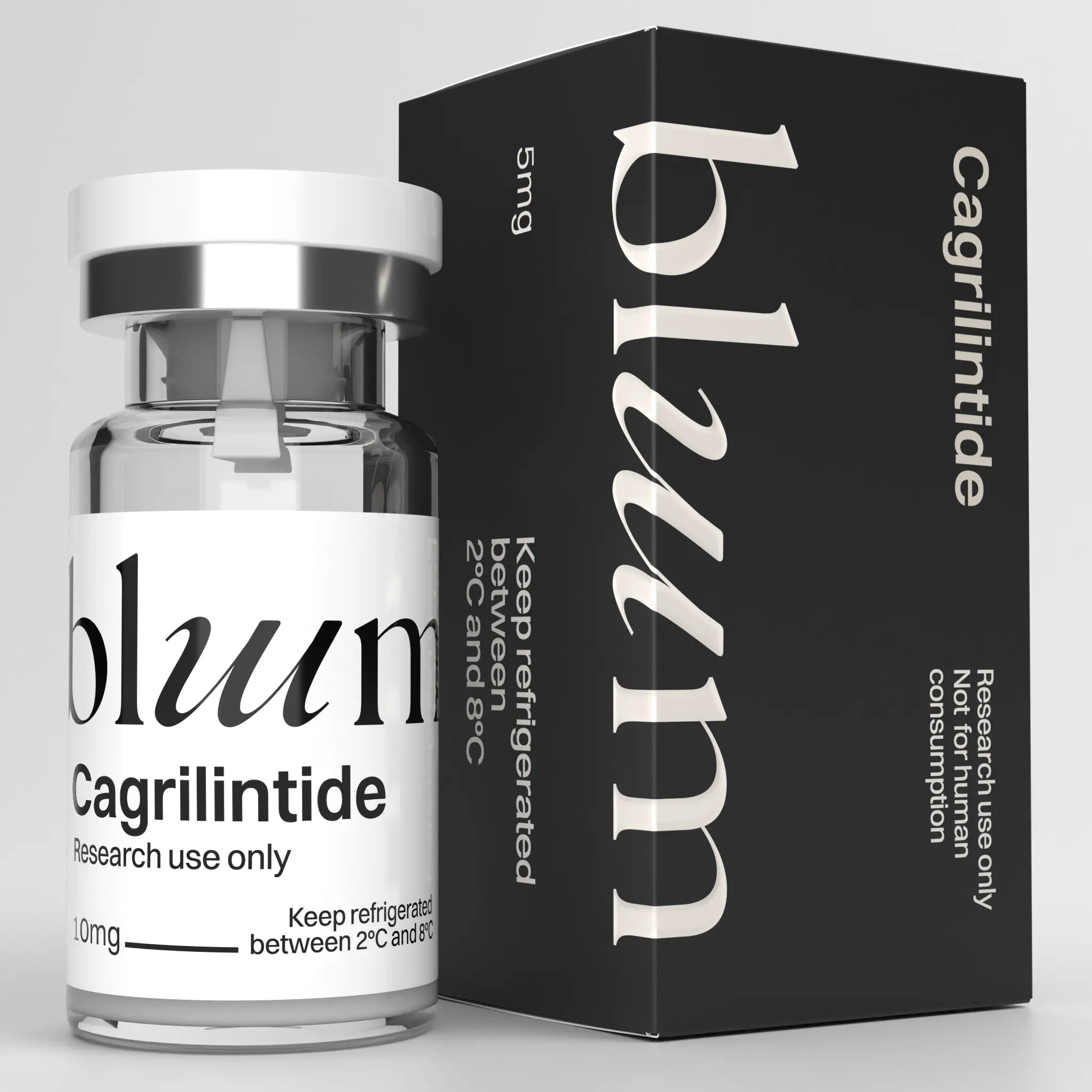
Cagrilintide is a synthetic, long-acting analog of amylin, an endogenous peptide hormone that participates in neuroendocrine and metabolic signaling pathways. It is classified as an amylin receptor agonist and was engineered to improve the stability and pharmacokinetic properties of native amylin for use in research settings.
Developed through targeted amino acid modifications and lipidation technology, cagrilintide was designed to address several limitations of endogenous amylin, including its short biological half-life and tendency to aggregate. These structural changes enhance its stability in experimental systems and support prolonged investigation of amylin receptor signaling pathways.
In the scientific literature, cagrilintide is studied as a research tool for examining amylin receptor biology, neuroendocrine communication, energy-balance signaling, and peptide-hormone regulatory networks. Researchers use the compound in preclinical and translational models to investigate how sustained amylin receptor activation influences downstream signaling pathways and physiological regulatory systems.
Because cagrilintide is engineered for prolonged activity relative to native amylin, it is frequently used in comparative studies exploring receptor signaling dynamics, ligand-receptor interactions, and the effects of structural peptide modifications on biological activity.
Most available findings originate from laboratory studies, mechanistic investigations, and other non-clinical research models. As such, observations involving cagrilintide should be interpreted strictly within an experimental framework and should not be extrapolated to clinical, therapeutic, or veterinary applications.
Bluum Peptides supplies Cagrilintide as a high-purity, lyophilized research compound manufactured using controlled synthesis and purification processes. Each batch undergoes independent analytical verification to confirm identity and purity, with lot-specific Certificates of Analysis (COAs) available to support research reproducibility and data integrity.
Cagrilintide is supplied strictly for research use only and is not intended for human consumption, therapeutic use, diagnostic use, or veterinary applications.
Cagrilintide Mechanism of Action (Research Only)
Cagrilintide is a synthetic amylin analog studied for its interaction with amylin-responsive receptor complexes and the downstream signaling pathways they regulate. In experimental systems, it functions through receptor-mediated mechanisms involving amylin receptor complexes, making it a useful tool for investigating neuroendocrine communication, peptide-hormone signaling, and energy-balance regulation.
Current mechanistic understanding for this peptide is derived primarily from cell-culture studies, animal models, and other non-clinical research settings. These observations should be interpreted strictly within an experimental framework and do not establish clinical or therapeutic outcomes.
Structural and Chemical Basis
Cagrilintide is a modified analog of human amylin engineered to improve stability and prolong activity in research models. The peptide incorporates targeted amino acid substitutions along with a lipid-based modification that promotes reversible albumin binding, extending its persistence in experimental systems compared with native amylin [1].
These structural features make cagrilintide particularly useful for studying sustained amylin receptor signaling and investigating how prolonged ligand exposure influences downstream biological pathways.
Amylin Receptor Engagement
In experimental models, cagrilintide interacts with amylin receptor complexes formed by the calcitonin receptor and receptor activity-modifying proteins (RAMPs) [1]. Activation of these receptor complexes initiates intracellular signaling events involving second-messenger systems and downstream regulatory pathways.
Researchers use cagrilintide to investigate how amylin-family peptides influence receptor signaling dynamics and how prolonged receptor engagement affects signaling behavior over time.
Neuroendocrine Signaling Pathways
A major area of cagrilintide research involves neuroendocrine signaling networks associated with amylin receptor activation [3]. Experimental studies examine how receptor-mediated signaling influences communication between peripheral tissues and central regulatory systems involved in energy-balance biology.
These models provide insight into the role of amylin-responsive pathways within broader neuroendocrine signaling networks and help researchers characterize the mechanisms underlying peptide-hormone communication.
Energy-Balance and Nutrient-Sensing Research
Cagrilintide is frequently studied in experimental systems investigating energy-balance regulation and nutrient-sensing pathways. Animal and mechanistic studies have explored how sustained amylin receptor activation influences signaling networks involved in the integration of metabolic and neuroendocrine information.
From a research perspective, these models are valuable for examining how peptide hormones contribute to complex physiological signaling systems rather than isolated cellular responses.
Peripheral Signaling and Hormonal Communication
Researchers have also investigated cagrilintide in studies examining communication between gastrointestinal, metabolic, and neuroendocrine signaling pathways. Experimental models suggest that amylin receptor activation participates in coordinated signaling processes that help regulate information exchange between multiple physiological systems.
Because these pathways involve numerous interacting factors, cagrilintide is typically evaluated within a systems-level research framework rather than as a single-target signaling molecule.
Cagrilintide is supplied strictly for laboratory research use and serves as a research tool for investigating amylin receptor biology, neuroendocrine signaling, peptide-hormone communication, and energy-balance regulatory pathways. It is not intended for human consumption, therapeutic use, diagnostic use, or veterinary applications.
Cagrilintide Research Applications (Observations from Studies)
Cagrilintide has been investigated in preclinical, translational, and early-stage clinical research as a tool for studying amylin receptor signaling and neuroendocrine regulation. Most available findings originate from controlled laboratory studies, animal models, and exploratory human research designed to examine the biological effects of sustained amylin receptor activation.
The observations described below reflect experimental research findings and should be interpreted strictly within research settings. They do not represent established clinical outcomes and should not be extrapolated to human or veterinary applications.
Amylin Receptor and Neuroendocrine Signaling Research
One of the primary applications of cagrilintide research involves the study of amylin receptor biology and downstream neuroendocrine signaling pathways [3]. Researchers use experimental models to investigate how prolonged activation of amylin-responsive receptor complexes influences communication between central and peripheral regulatory systems.
These studies help characterize the role of amylin-family peptides within broader hormone-signaling networks and provide insight into the mechanisms governing peptide-mediated physiological regulation.
Energy-Balance and Nutrient-Sensing Pathways
Cagrilintide is frequently studied in models examining energy-balance signaling and nutrient-sensing processes. Experimental research investigates how sustained amylin receptor activation influences signaling pathways involved in the integration of nutritional, metabolic, and neuroendocrine information.
From a research perspective, these models are useful for understanding how peptide hormones participate in complex regulatory networks that coordinate responses to changing energy conditions.
Central Nervous System Signaling Studies
A significant area of investigation focuses on central nervous system pathways associated with amylin receptor activation. Preclinical studies have examined receptor expression and signaling activity in brain regions involved in neuroendocrine communication and physiological regulation [6].
Researchers use cagrilintide as a tool to explore how amylin-responsive pathways contribute to information processing within interconnected neural and hormonal signaling systems.
Metabolic Signaling Research
Experimental studies have also evaluated cagrilintide in models involving metabolic signaling and peptide-hormone communication. These investigations examine interactions between amylin receptor signaling and broader physiological pathways that help coordinate nutrient-related and endocrine signaling processes.
Because these systems involve multiple interconnected pathways, cagrilintide is generally studied within a systems-level framework rather than as a single-target research compound.
Combination and Pathway-Interaction Studies
Cagrilintide has also been utilized in comparative and combination research designed to investigate interactions between amylin signaling and other peptide-hormone pathways. These models help researchers explore how multiple signaling systems communicate, overlap, and coordinate biological responses under controlled experimental conditions.
This area of research continues to contribute to a broader understanding of integrated hormone signaling and pathway interactions within complex biological systems.
Bluum Peptides makes no medical or therapeutic claims regarding cagrilintide. All findings referenced here are derived from experimental and non-clinical research settings. This compound is supplied strictly for laboratory research use and is not intended for clinical, diagnostic, therapeutic, veterinary, or human applications.
Cagrilintide vs Semaglutide vs Tirzepatide
|
Comparison Dimension |
Cagrilintide |
Semaglutide |
Tirzepatide |
|
Molecular classification |
Long-acting amylin analog |
Long-acting GLP-1 receptor agonist |
Dual GLP-1 and GIP receptor agonist |
|
Primary receptor targets |
Amylin receptors (AMY1/AMY3 complexes) |
GLP-1 receptor |
GLP-1 and GIP receptors |
|
Mechanism complexity |
Single-pathway (amylin signaling) |
Single-pathway (GLP-1 signaling) |
Dual-pathway (GLP-1 + GIP signaling) |
|
Metabolic scope |
Central nervous system–focused appetite modulation |
Central and peripheral metabolic regulation |
Central and peripheral metabolic regulation |
|
Primary research focus areas |
Amylin receptor signalling and neuroendocrine pathway research |
GLP-1 receptor signaling, nutrient-sensing pathways, and energy-balance regulation research |
Dual GIP/GLP-1 receptor signaling, integrated metabolic pathway research, and neuroendocrine regulation studies |
|
Research or regulatory status |
Investigational research compound |
Investigational research compound |
Investigational research compound |
|
Research value |
Enables isolated study of amylin receptor signalling pathways. |
A well-characterized GLP-1 pathway reference |
Allows study of multi-incretin pathway interactions |
Cagrilintide Laboratory Safety & Handling
Cagrilintide is supplied as a lyophilized research peptide and should be handled in accordance with established laboratory procedures for peptide-based research materials. Appropriate handling, storage, and documentation practices help maintain material integrity and support consistency across experimental workflows.
As a modified peptide hormone analog, cagrilintide may be sensitive to environmental factors such as moisture, temperature fluctuations, excessive light exposure, and improper handling. Laboratory protocols should therefore be designed to minimize avoidable sources of degradation, contamination, and experimental variability.
Laboratory Handling Considerations
Best-practice laboratory guidance includes:
-
Follow institutional standard operating procedures (SOPs), chemical hygiene plans, and approved research protocols.
-
Wear appropriate personal protective equipment (PPE), including gloves, laboratory coat, and eye protection.
-
Use sterile technique during preparation, transfer, and reconstitution procedures where appropriate.
-
Conduct weighing and handling procedures in controlled laboratory environments to minimize contamination and environmental exposure.
-
Utilize suitable engineering controls, such as biological safety cabinets or other controlled workspaces, when required by institutional risk assessments.
-
Maintain accurate records of lot numbers, preparation details, storage conditions, and associated laboratory documentation.
-
Follow established procedures for spill response, waste management, and incident reporting.
Storage and Stability Considerations
Proper storage practices help preserve peptide quality and reduce experimental variability.
-
Store lyophilized material under recommended low-temperature conditions, protected from light and moisture.
-
Minimize repeated freeze-thaw cycles following reconstitution.
-
Clearly label prepared materials with relevant concentration, preparation date, and storage information.
-
Maintain consistent storage conditions throughout the research process.
-
Retain Certificates of Analysis (COAs), batch records, and related documentation to support traceability and reproducibility.
Careful storage and handling practices can help reduce avoidable sources of experimental variability and support consistency across research workflows.
Bluum Peptides supplies Cagrilintide strictly for research use only. This material is not intended for human consumption, therapeutic use, diagnostic use, or veterinary applications and should be handled exclusively within qualified laboratory settings.
Certificate of Analysis (COA) & Quality Assurance
Every batch of research-grade peptides supplied by Bluum Peptides is accompanied by a third-party–verified Certificate of Analysis (COA) to support reproducibility, traceability, and data integrity in laboratory research.
Bluum partners with independent analytical laboratories to ensure objective verification of identity, composition, and purity for each batch offered to researchers.
COAs typically include the following, as applicable to the peptide type and analytical protocols used:
-
Identity verification using validated techniques such as mass spectrometry, NMR, or equivalent methods that confirm the molecular identity of the peptide.
-
Purity or composition analysis provided through methods such as high-performance liquid chromatography (HPLC), chromatography-based assays, or similar analytical approaches that quantify the proportion of correctly sequenced material.
-
Relevant physicochemical data, which may include solubility characteristics, concentration information, and stability indicators where determined.
-
Lot number, testing date, and analytical method documentation to ensure traceability of the exact material supplied and the conditions under which testing was conducted.
Bluum Peptides works with independent, third-party laboratories to verify analytical results, ensuring consistent quality standards rather than relying solely on in-house data.
Researchers can review or request COAs (typically provided in PDF format) before purchase and are encouraged to retain these documents for institutional audits, reproducibility checks, or independent verification as required by their protocols.
No clinical use, therapeutic efficacy, or safety claims are made or implied; COAs are intended strictly to support scientific research applications in controlled laboratory settings.
Scientific References
1. A.T. Larsen, K.E. Mohamed, N. Sonne, E. Bredtoft, F. Andersen, MA Karsdal, K. Henriksen, Does receptor balance matter? – Comparing the efficacies of the dual amylin and calcitonin receptor agonists cagrilintide and KBP-336 on metabolic parameters in preclinical models, Biomedicine & Pharmacotherapy, Volume 156, 2022, 113842, ISSN 0753-3322, https://www.sciencedirect.com/science/article/pii/S0753332222012318.
2. Cao J, Belousoff MJ, Johnson RM, Keov P, Mariam Z, Deganutti G, Christopoulos G, Hick CA, Reedtz-Runge S, Glendorf T, Ballarín-González B, Raun K, Bayly-Jones C, Wootten D, Sexton PM. Structural and dynamic features of cagrilintide binding to calcitonin and amylin receptors. Nat Commun. 2025 Apr 10;16(1):3389.
https://pmc.ncbi.nlm.nih.gov/articles/PMC11982234/
3. Thomas A. Lutz, Role of amylin in feeding and satiation, Neuropharmacology, Volume 278, 2025, 110587, ISSN 0028-3908.
https://www.sciencedirect.com/science/article/pii/S002839082500293X