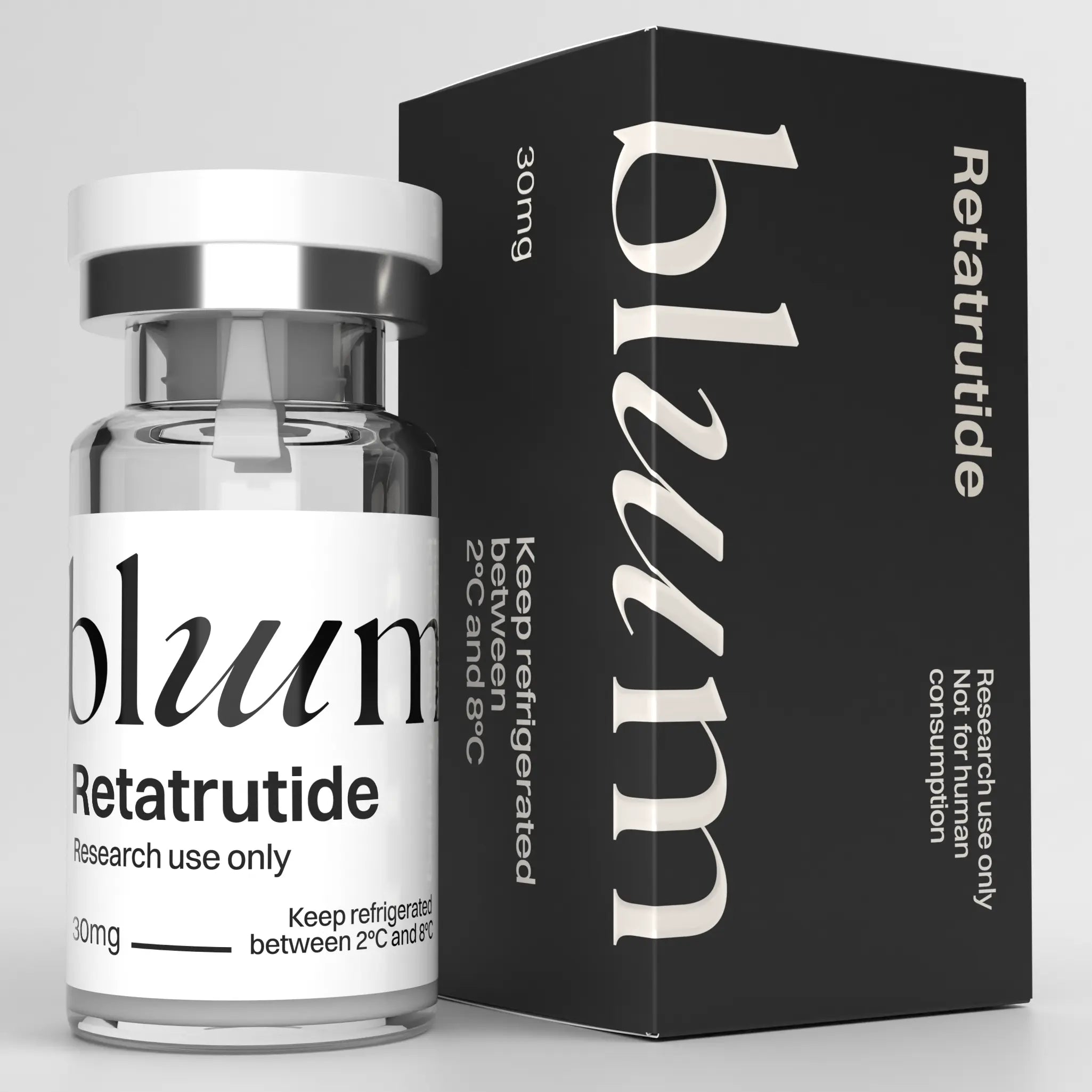


What is Retatrutide?
Retatrutide, also referenced in published literature as LY3437943, is a synthetic 39-amino-acid peptide characterized as a triple receptor agonist research compound. It is studied for activity at three receptor systems: glucagon-like peptide-1 receptor (GLP-1R), glucose-dependent insulinotropic polypeptide receptor (GIPR), and glucagon receptor (GCGR).
This triple-receptor profile makes retatrutide relevant in laboratory research involving multi-pathway receptor signaling, comparative peptide pharmacology, endocrine pathway modeling, and receptor crosstalk. Compared with single-receptor or dual-receptor peptide models, retatrutide gives researchers a single reference compound for studying coordinated GLP-1R, GIPR, and GCGR signaling in controlled experimental systems.
Structurally, retatrutide includes a C20 fatty-diacid side-chain modification associated with albumin binding in published characterization studies. This structural feature is relevant to stability, exposure-window, and receptor-engagement modeling in laboratory research settings.
Bluum Peptides supplies retatrutide strictly as a research-use-only compound for qualified laboratory settings.
Retatrutide Mechanism of Action in Research Models
Retatrutide is studied as a multi-receptor peptide model because it engages GLP-1R, GIPR, and GCGR within one molecule. Each receptor system is independently represented in published receptor-signaling literature, and the combined profile allows researchers to examine pathway interaction under defined laboratory conditions.
GLP-1 Receptor (GLP-1R) Research
GLP-1R is a G-protein-coupled receptor studied in endocrine and metabolic signaling research. In controlled models, GLP-1R activity is commonly evaluated in relation to receptor activation, second-messenger signaling, glucagon-associated pathway interaction, and comparative incretin-receptor biology.
Retatrutide's GLP-1R activity allows laboratory researchers to examine this receptor pathway within a broader multi-receptor agonist model rather than as an isolated GLP-1R-only system.
GIP Receptor (GIPR) Research
GIPR is another receptor target used in research involving nutrient-response signaling, endocrine pathway interaction, and comparative receptor pharmacology. In multi-receptor peptide models, GIPR activity is often evaluated alongside GLP-1R to study pathway coordination and signaling crosstalk.
Retatrutide's concurrent GIPR activity makes it useful for comparing triple-receptor models against dual-receptor research compounds.
Glucagon Receptor (GCGR) Research
GCGR is the receptor target that distinguishes retatrutide from dual GLP-1R/GIPR agonist research compounds. In laboratory literature, GCGR signaling is studied in relation to hepatic signaling models, lipid-pathway research, cellular energy-state models, and endocrine pathway interaction.
Retatrutide's GCGR engagement allows researchers to evaluate how GLP-1R, GIPR, and GCGR pathway activity may be modeled together under controlled experimental conditions.
Integrated Triple-Receptor Profile
Retatrutide is most useful as a research tool when the experimental question involves coordinated receptor behavior. Its integrated profile supports laboratory work involving triple-agonist peptide pharmacology, comparative receptor modeling, pathway coordination, and receptor-selectivity studies.
These observations belong in controlled research contexts only and should not be interpreted outside qualified laboratory research settings.
Research Context and Investigational Interest
Retatrutide peptide (LY3437943) is referenced in published literature as a GLP-1R, GIPR, and GCGR triple-agonist research compound. Current scientific interest centers on multi-receptor signaling, comparative peptide pharmacology, endocrine pathway mapping, receptor-selectivity analysis, and translational model development.
Bluum Peptides provides retatrutide as a high-purity, lyophilized research material for qualified laboratory research only.
Laboratory Documentation & Handling
Retatrutide should be handled only by qualified researchers in controlled laboratory settings using institutional SOPs and applicable safety procedures. Researchers should document lot numbers, storage conditions, chain of custody, analytical records, and any study-specific handling conditions required by their internal protocols.
Bluum Peptides does not provide procedural-use guidance. Retatrutide is supplied strictly as a research-use-only reference material for controlled laboratory settings.
Certificate of Analysis (COA) & Quality Assurance
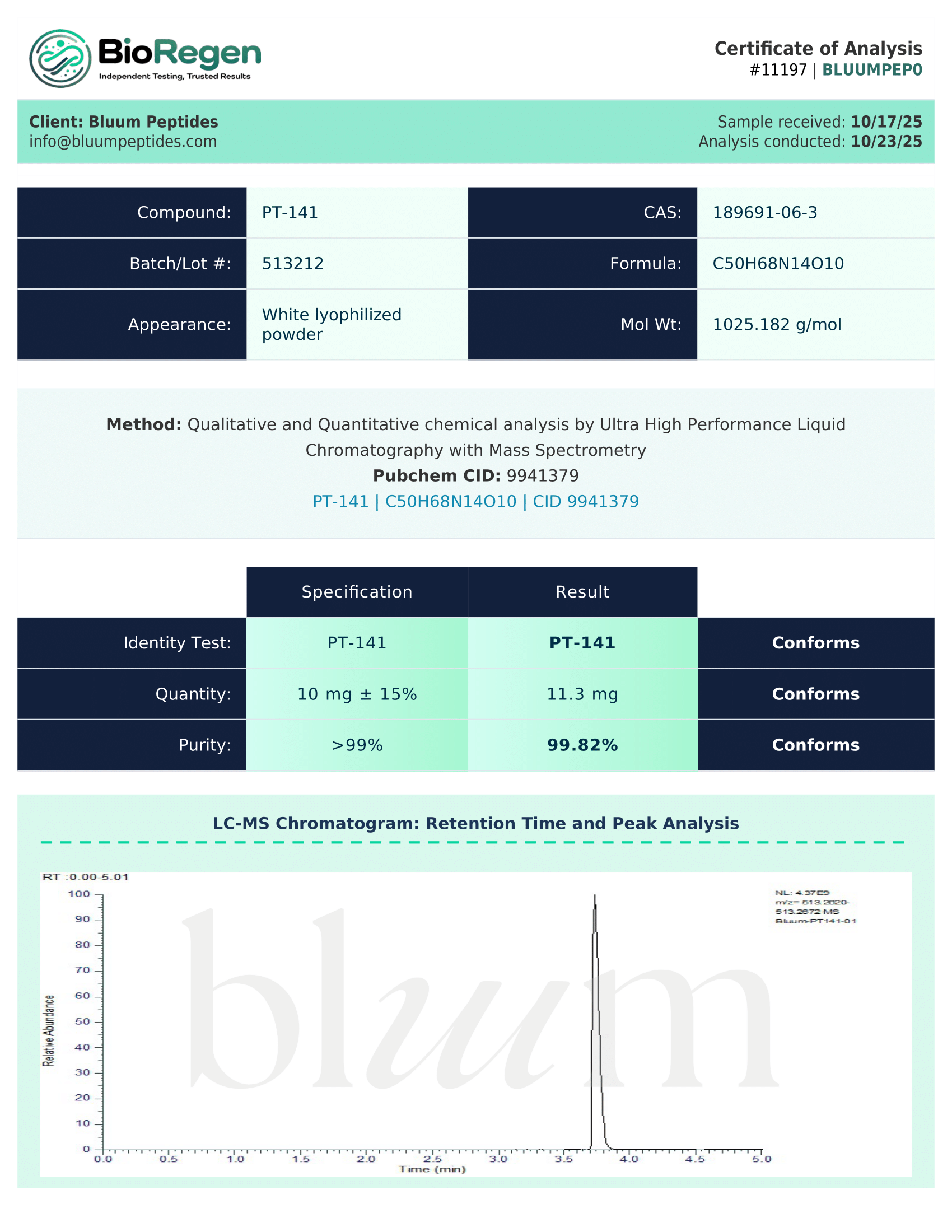
Each retatrutide batch is supported by third-party analytical documentation for research-grade quality control. COA documentation may include identity confirmation, purity assessment, lot number, testing date, analytical method, and batch-specific quality records where applicable.
Researchers may request available COA documentation to review testing parameters, analytical methods, and batch consistency. Independent verification may be appropriate depending on the research setting, institutional requirements, and study design.
Selected Scientific References
- Zheng et al. (2024). GLP-1 receptor signaling reference. https://www.nature.com/articles/s41392-024-01931-z
- Meloni et al. (2013). GLP-1 receptor mechanism reference. https://pmc.ncbi.nlm.nih.gov/articles/PMC3556522/
- James-Okoro et al. (2025). GIPR signaling reference. https://www.frontiersin.org/journals/endocrinology/articles/10.3389/fendo.2025.1532076/full
- Villarroya et al. (2025). Incretin and glucagon pathway reference. https://pmc.ncbi.nlm.nih.gov/articles/PMC12405374/
- Goldney et al. (2025). Triple-agonist receptor research reference. https://pmc.ncbi.nlm.nih.gov/articles/PMC12304053/
- Katsi et al. (2025). Retatrutide research review reference. https://pmc.ncbi.nlm.nih.gov/articles/PMC12190491/