

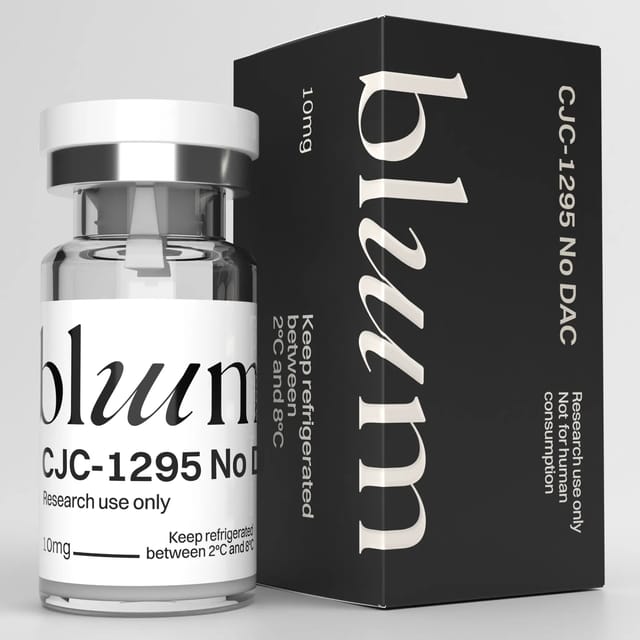
CJC-1295 No DAC
 Money Back
Guarantee
Money Back
Guarantee Satisfaction
Guarantee
Satisfaction
Guarantee Easy Returns
 Secure
Ordering
Secure
Ordering 2-Day
Shipping
2-Day
Shipping Third Party
Tested
Third Party
Tested Batch & Lot
Tracking
Batch & Lot
TrackingLab results
RESEARCH USE ONLY
These compounds are NOT intended for human consumption, clinical use, or veterinary applications. We are not affiliated with any pharmaceutical companies or their commercial medications. By placing an order, you certify these materials will be used exclusively for in vitro testing and laboratory experimentation only. Bodily introduction of any kind into humans or animals is strictly forbidden by law. This product should only be handled by licensed, qualified professionals. This product is not a drug, food, or cosmetic and may not be misbranded, misused or mislabeled as a drug, food or cosmetic.
About CJC-1295 No DAC
CJC-1295 No DAC is a synthetic growth hormone-releasing hormone (GHRH) analogue studied for its interaction with the GHRH receptor and its role in GHRH-mediated signaling pathways. Unlike DAC-conjugated variants designed for extended systemic exposure, the no-DAC form is commonly used in research involving transient receptor activation, signaling kinetics, and comparative GHRH analogue pharmacology. Bluum Peptides supplies CJC-1295 No DAC as a high-purity, lyophilized research peptide manufactured using SPPS and HPLC purification, with independent third-party testing and Certificates of Analysis (COAs) available for verification. For research use only.
CJC-1295 No DAC Product Specifications
| Product Specifications | CJC-1295 No DAC Lyophilized Powder in 3ml vial. |
|---|---|
| Application | Research peptide for GHRH receptor signaling and growth hormone axis research |
| Appearance | Solid, white powder in 3ml glass ampule |
| Chemical Formula | |
| PubChem CID | |
| CAS Number | 863288-34-0 |
| Molecular Weight | 3367.896 g/mol |
| Synonyms | CJC 1295 without DAC, MOD GRF (1-29), Mod GRF 1-29, tetrasubstituted GRF(1-29) |
| Storage | Store at ≤25°C, sealed, away from heat, light, and moisture. |
| Chemical grade | Laboratory |
Chemical Structure
What is CJC-1295 No DAC?
CJC-1295 No DAC is a synthetic growth hormone-releasing hormone (GHRH) analogue derived from modified segments of endogenous GHRH and studied for its interaction with the growth hormone-releasing hormone receptor (GHRHR). It belongs to a class of research peptides used to investigate GHRH-mediated signaling pathways, receptor pharmacology, and neuroendocrine regulation within the hypothalamic-pituitary axis.
Unlike DAC-conjugated variants, CJC-1295 No DAC does not contain a Drug Affinity Complex (DAC), a modification designed to extend peptide residence time in circulation through reversible binding to serum proteins. As a result, the no-DAC form exhibits a shorter duration of activity in experimental systems and is commonly used in studies examining transient receptor engagement, signaling kinetics, and temporal aspects of GHRH receptor activation.
CJC-1295 No DAC vs CJC-1295 with DAC
Researchers frequently compare CJC-1295 No DAC and CJC-1295 with DAC because both compounds target the same GHRH receptor pathway but differ in their pharmacokinetic profiles. The presence of a Drug Affinity Complex in DAC-conjugated versions is designed to extend systemic persistence, whereas CJC-1295 No DAC is studied as a shorter-acting analogue with a more transient signaling profile.
Because of these differences, the two compounds are often evaluated in comparative research involving receptor activation patterns, signaling duration, and GHRH analogue pharmacology. This distinction has made CJC-1295 No DAC a commonly referenced compound in studies examining temporal aspects of GHRH receptor signaling and neuroendocrine pathway regulation.
In the scientific literature, CJC-1295 No DAC is studied across in vitro systems, animal models, and exploratory endocrine research involving GHRH receptor signaling and related neuroendocrine pathways. Researchers use it to investigate receptor-mediated communication, pathway activation, and regulatory mechanisms within the somatotropic axis under controlled laboratory conditions.
Purity and Quality Guarantee
Bluum Peptides supplies CJC-1295 No DAC as a high-purity, lyophilized research peptide manufactured using controlled solid-phase peptide synthesis (SPPS) and HPLC purification to achieve purity levels exceeding 99%. Each batch also undergoes independent analytical verification by trusted third-party laboratories to confirm identity and purity, with lot-specific Certificates of Analysis (COAs) available for review.
CJC-1295 No DAC is supplied strictly for research use only and is not intended for human consumption, therapeutic use, diagnostic use, or veterinary applications.
CJC-1295 No DAC Mechanism of Action (Research Only)
CJC-1295 No DAC is a synthetic growth hormone-releasing hormone (GHRH) analogue studied for its interaction with the growth hormone-releasing hormone receptor (GHRHR) and associated intracellular signaling pathways. As a modified GHRH analogue, it serves as a research tool for investigating receptor pharmacology, neuroendocrine signaling, and temporal aspects of GHRH-mediated pathway activation.
Current mechanistic understanding is derived primarily from receptor pharmacology studies, in vitro experiments, animal models, and comparative investigations involving other GHRH analogues. These observations should be interpreted strictly within controlled research settings.
Structural and Chemical Basis
CJC-1295 No DAC is derived from the biologically active region of endogenous GHRH and incorporates amino acid substitutions designed to improve stability in experimental systems while maintaining affinity for the GHRH receptor [1].
Unlike DAC-conjugated variants, CJC-1295 No DAC does not contain a Drug Affinity Complex (DAC), a modification intended to extend peptide persistence through reversible binding to circulating proteins. As a result, the no-DAC form exhibits a shorter duration of activity in research models and is frequently utilized in studies involving transient receptor engagement and signaling kinetics.
These structural characteristics make CJC-1295 No DAC particularly useful for investigating how differences in peptide persistence influence receptor activation patterns and downstream signaling behavior.
GHRH Receptor Activation
The primary molecular target of CJC-1295 No DAC is the growth hormone-releasing hormone receptor (GHRHR), a G protein-coupled receptor expressed predominantly within the anterior pituitary [1]. Experimental studies use this receptor system to investigate GHRH-mediated signaling pathways and receptor-associated cellular communication processes.
Because GHRHR is a well-characterized component of neuroendocrine signaling networks, CJC-1295 No DAC serves as a useful model compound for studying receptor activation dynamics and pathway regulation under controlled laboratory conditions.
cAMP-Associated Signaling Pathways
Research involving CJC-1295 No DAC has examined intracellular signaling pathways associated with GHRHR activation, including cyclic AMP (cAMP)-mediated signal transduction processes [2]. These pathways are commonly studied to understand how receptor-level events influence downstream cellular signaling networks and transcriptional regulation.
Experimental models use these signaling systems to evaluate receptor responsiveness, pathway activation patterns, and broader aspects of GHRH receptor pharmacology.
Temporal Signaling and Receptor Pharmacology
One of the defining characteristics of CJC-1295 No DAC in research settings is its shorter duration of activity relative to DAC-conjugated GHRH analogues. Because it lacks albumin-binding modifications, investigators frequently use it to examine transient receptor activation, signaling kinetics, receptor responsiveness, and temporal aspects of pathway regulation.
This has made CJC-1295 No DAC a valuable tool in comparative pharmacology studies evaluating how differences in peptide structure and persistence influence receptor-mediated signaling behavior.
Neuroendocrine Signaling Research
CJC-1295 No DAC is also utilized in studies involving neuroendocrine communication and signaling within the somatotropic axis. Researchers use these models to investigate interactions among receptor activation, signaling pathways, and broader endocrine regulatory networks under controlled experimental conditions [2].
These investigations contribute to a broader understanding of GHRH receptor pharmacology and neuroendocrine signaling mechanisms without implying clinical or therapeutic applications.
CJC-1295 No DAC is supplied strictly for laboratory research use and serves as a research tool for investigating GHRH receptor signaling, receptor pharmacology, and neuroendocrine pathway activity. It is not intended for human consumption, therapeutic use, diagnostic use, or veterinary applications.
CJC-1295 No DAC Research Applications (Observations from Studies)
CJC-1295 No DAC has been investigated across preclinical and exploratory research settings as a tool for studying growth hormone-releasing hormone (GHRH) receptor signaling, neuroendocrine communication, and receptor-mediated pathway regulation. These findings originate from in vitro experiments, animal models, and comparative pharmacology studies examining GHRH receptor activity and signaling dynamics.
The observations described below reflect experimental research findings and should be interpreted strictly within controlled laboratory environments. They do not represent established clinical outcomes or approved applications.
GHRH Receptor Signaling Research
One of the primary applications of CJC-1295 No DAC is the study of growth hormone-releasing hormone receptor (GHRHR) activation and associated intracellular signaling pathways. Researchers use experimental models to investigate how GHRH analogues interact with receptor systems and influence downstream signaling processes involved in neuroendocrine communication [3].
These studies help characterize receptor pharmacology, signaling behavior, and pathway activation patterns under controlled laboratory conditions.
Neuroendocrine and Somatotropic Axis Research
CJC-1295 No DAC is frequently utilized in studies involving signaling within the somatotropic axis and related neuroendocrine networks. Experimental models examine how receptor-mediated communication contributes to pathway regulation, endocrine signaling dynamics, and broader physiological coordination processes [4].
Researchers use these systems to investigate timing-dependent aspects of receptor activation and to better understand how signaling pathways interact within complex neuroendocrine environments.
Temporal Signaling and Receptor Kinetics
Because CJC-1295 No DAC lacks a Drug Affinity Complex (DAC), it is commonly studied as a shorter-acting GHRH analogue in comparative pharmacology research. Experimental investigations use this characteristic to examine transient receptor activation, signaling kinetics, receptor responsiveness, and temporal aspects of pathway regulation.
This has made CJC-1295 No DAC a valuable research tool for exploring how differences in signaling duration may influence receptor behavior and downstream pathway activity.
Comparative GHRH Analogue Research
CJC-1295 No DAC is often evaluated alongside DAC-conjugated GHRH analogues and related compounds in studies examining receptor pharmacology and signaling characteristics. Comparative research uses these models to investigate how structural modifications influence receptor engagement, signaling persistence, and pathway activation patterns.
Such studies contribute to a broader understanding of GHRH analogue design and the relationship between peptide structure and signaling behavior in experimental systems.
Bluum Peptides does not make or imply any medical or therapeutic claims regarding CJC-1295 No DAC. All findings referenced here are derived from experimental and non-clinical research settings. This compound is supplied strictly for laboratory research use and is not intended for clinical, diagnostic, therapeutic, veterinary, or human applications.
CJC-1295 No DAC vs Sermorelin vs CJC-1295 (DAC)
Feature | CJC-1295 No DAC | CJC-1295 (with DAC) | |
Molecular Classification | Synthetic GHRH analog (modified 29–amino acid peptide) | Synthetic GHRH(1–29) analog | Synthetic GHRH analog with Drug Affinity Complex (DAC) |
Primary Receptor Target | GHRH receptor (GHRHR) | GHRH receptor (GHRHR) | GHRH receptor (GHRHR) |
Mechanism Type | Receptor activation via cAMP signaling | Receptor activation via cAMP signaling | Receptor activation with prolonged exposure due to albumin binding |
Structural Modifications | Amino acid substitutions for stability; no albumin-binding moiety | Minimal modification of native sequence | Amino acid substitutions plus albumin-binding DAC component |
Circulatory Persistence (Research Models) | Short-acting; transient receptor engagement | Short-acting; relatively rapid clearance | Extended half-life due to reversible albumin binding |
Research Focus Areas | Pulsatile GH signaling, feedback dynamics, comparative pharmacokinetics | Baseline GHRH physiology modeling, endocrine axis studies | Sustained GH stimulation models, exposure-duration studies |
Investigative Value | Enables study of acute signaling and timing-dependent responses | Reference model for native-like GHRH activity | Useful for examining prolonged receptor activation and steady-state hormone profiles |
Regulatory Status | Research-use compound; not approved for clinical use | Research-use compound; not approved for clinical use | Research-use compound; not approved for clinical use |
CJC-1295 No DAC Laboratory Safety & Handling
CJC-1295 No DAC is supplied as a lyophilized research peptide and should be handled in accordance with established laboratory procedures for peptide-based research materials. Appropriate handling, storage, and documentation practices help maintain material integrity and support consistency across experimental workflows.
As a synthetic peptide, CJC-1295 No DAC may be sensitive to environmental factors such as moisture, temperature fluctuations, excessive light exposure, and improper handling. Laboratory protocols should therefore be designed to minimize avoidable sources of degradation and experimental variability.
Laboratory Handling Considerations
Best-practice laboratory guidance includes:
Follow institutional standard operating procedures (SOPs), chemical hygiene plans, and approved research protocols.
Wear appropriate personal protective equipment (PPE), including gloves, laboratory coat, and eye protection.
Conduct weighing, preparation, and handling procedures in controlled laboratory environments where appropriate to minimize contamination and environmental exposure.
Handle lyophilized material carefully to avoid unnecessary particulate dispersion during transfer or preparation.
Use suitable laboratory equipment, containers, and documentation practices to support consistency and traceability.
Record lot numbers, preparation details, storage conditions, and associated laboratory documentation to support reproducibility.
Follow institutional procedures for spill response, waste management, and incident reporting.
These practices are particularly important in receptor pharmacology and neuroendocrine signaling research, where material consistency can contribute to reliable experimental outcomes.
Storage and Stability Considerations
Appropriate storage conditions help preserve the integrity of lyophilized peptide materials during laboratory use.
Store lyophilized material at approximately -4°F (-20°C), protected from light and moisture.
For short-term handling, unopened material may be stored under refrigerated conditions (36–46°F / 2–8°C) when appropriate.
Minimize repeated freeze-thaw cycles to reduce degradation and research variability.
Maintain consistent storage conditions across experiments to support reproducibility.
Clearly label prepared materials with relevant concentration, preparation, and storage information.
Inspect materials and associated documentation prior to use as part of routine laboratory quality-control procedures.
Careful storage and handling practices can help reduce avoidable sources of experimental variability and support consistency across research workflows.
Bluum Peptides supplies CJC-1295 No DAC strictly for research use only. This material is not intended for human consumption, therapeutic use, diagnostic use, or veterinary applications and should be handled exclusively within qualified laboratory settings.
Certificate of Analysis (COA) & Quality Assurance
Each product lot of CJC-1295 No DAC supplied by Bluum Peptides is accompanied by a third-party–verified Certificate of Analysis (COA) to support research reproducibility, traceability, and data integrity. Independent analytical confirmation helps ensure that the material used in laboratory experiments aligns with documented specifications, which is essential for consistent experimental design and reporting.
COAs for peptide compounds such as CJC-1295 No DAC typically include:
Identity verification, commonly performed using mass spectrometry or comparable analytical techniques to confirm molecular weight and structural consistency.
Purity assessment, often conducted via high-performance liquid chromatography (HPLC) or related chromatographic methods to quantify peptide composition.
Relevant physicochemical characteristics, which may include solubility profile, appearance, and stability-related observations where applicable.
Lot-specific documentation, including batch number, date of analysis, and a summary of analytical methods employed.
Bluum Peptides partners with independent, third-party analytical laboratories to provide objective verification of product specifications and maintain consistent quality standards across batches.
Certificates of Analysis are available for review prior to purchase, and researchers are encouraged to retain all documentation for audit purposes, internal validation, and compliance with institutional research protocols.
Scientific References
Ionescu M, Frohman LA. Pulsatile Secretion of Growth Hormone (GH) Persists during Continuous Stimulation by CJC-1295, a Long-Acting GH-Releasing Hormone Analog. The Journal of Clinical Endocrinology & Metabolism. 2006;91(12):4792–4797. https://academic.oup.com/jcem/article-abstract/91/12/4792/2656274?redirectedFrom=fulltext
Kanashiro-Takeuchi RM, Takeuchi LM, Rick FG, Dulce R, Treuer AV, Florea V, Rodrigues CO, Paulino EC, Hatzistergos KE, Selem SM, Gonzalez DR, Block NL, Schally AV, Hare JM. Activation of growth hormone releasing hormone (GHRH) receptor stimulates cardiac reverse remodeling after myocardial infarction (MI). Proceedings of the National Academy of Sciences of the United States of America. 2012;109(2):559–563. https://www.pnas.org/doi/10.1073/pnas.1119203109
Halmos G, Szabo Z, Dobos N, Juhasz E, Schally AV. Growth hormone-releasing hormone receptor (GHRH-R) and its signaling. Reviews in Endocrine and Metabolic Disorders. 2025;26(3):343–352. https://pubmed.ncbi.nlm.nih.gov/39934495/
Sackmann-Sala L, Ding J, Frohman LA, Kopchick JJ. Activation of the GH/IGF-1 axis by CJC-1295, a long-acting GHRH analog, results in serum protein profile changes in normal adult subjects. Growth Hormone & IGF Research. 2009;19(6):471–477. https://pubmed.ncbi.nlm.nih.gov/19386527/
Related Peptides
You ask,
we answer.
Are these peptides quality tested?
Absolutely. Our analytical testing is conducted by Janoshik Analytical, BioRegen, or Freedom Diagnostics, independent third-party laboratories that verify the identity, purity, and composition of our research products. All products are guaranteed to test at 98% purity or higher. Each CoA includes purity analysis, peptide sequence confirmation, date of analysis, and an endotoxin report.
What are typical delivery times?
Free 2-Day Air shipping is available when qualifying merchandise totals reach $200. Subscriptions ship 2-Day free once the subscribed items reach $50, on the first order and on every renewal. Overnight Air is also available. Please allow up to 24 hours for processing.
Every package comes with professional packaging and tracking updates via email.
How should these compounds be stored?
Our peptides are shipped in lyophilized form, which is stable at room temperature during transit. Once received, store unopened vials in a cool, dry place.
Are products stable during shipping?
Our peptides are shipped in lyophilized (freeze-dried) form, which ensures stability during transit. This powder form is highly stable at room temperature and resistant to temperature fluctuations that occur during shipping.
Research has shown no significant degradation or loss of purity when lyophilized peptides are exposed to room temperature during typical shipping timeframes. Each batch is verified for purity upon production, and our stability testing confirms maintenance of product integrity during standard shipping conditions.
What are your bulk ordering options?
For bulk inquiries and volume pricing, please contact us.
What is the shelf life/expiration of unopened vials?
Each lot lists a best-by/expiration on the vial label and COA. As general guidance, lyophilized peptides stored as directed are typically stable 12–24 months (often longer at –20 °C). Short shipping periods at ambient temperature are normal. Actual stability depends on sequence and storage conditions.