

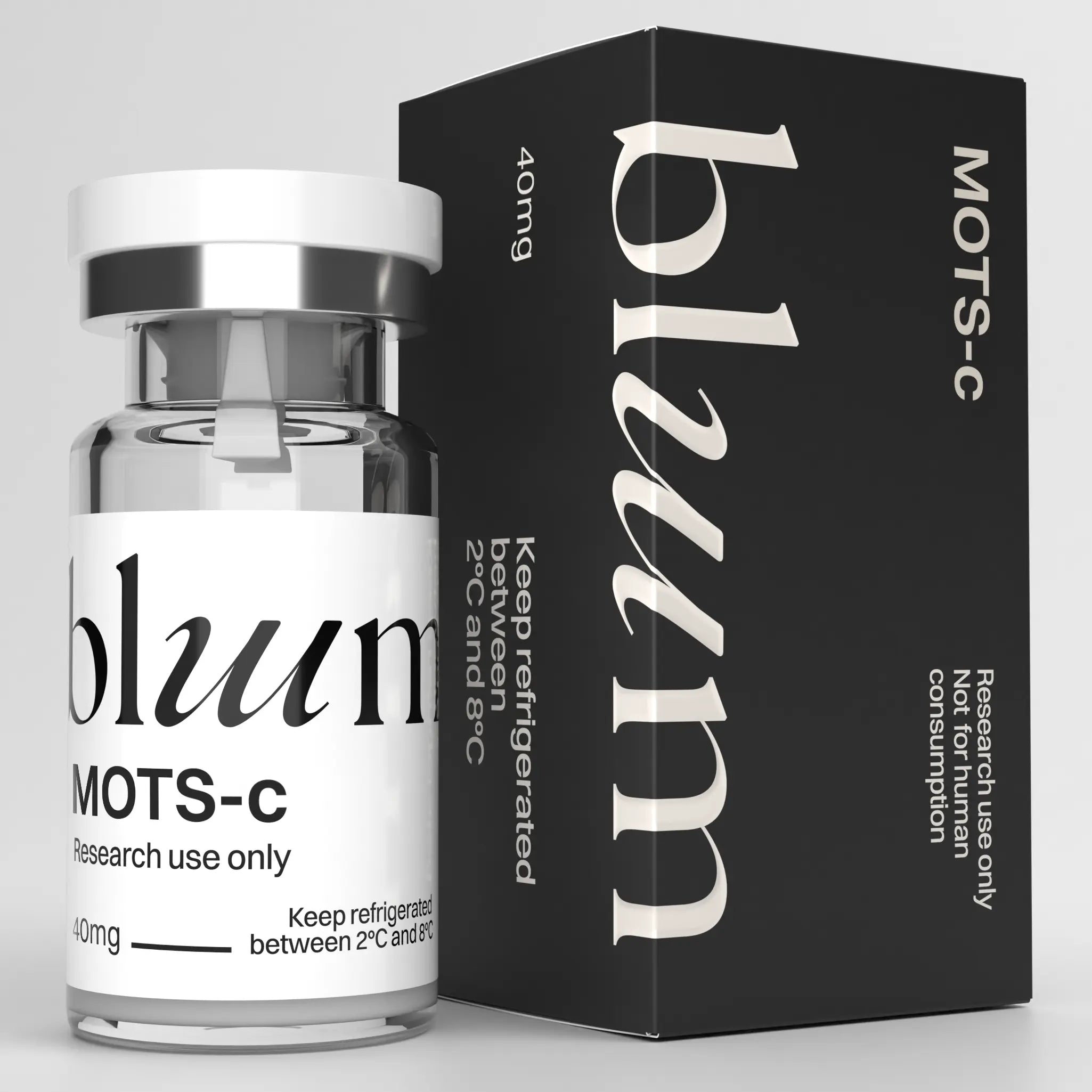
MOTS-c
 Money Back
Guarantee
Money Back
Guarantee Satisfaction
Guarantee
Satisfaction
Guarantee Easy Returns
 Secure
Ordering
Secure
Ordering 2-Day
Shipping
2-Day
Shipping Third Party
Tested
Third Party
Tested Batch & Lot
Tracking
Batch & Lot
TrackingLab results
RESEARCH USE ONLY
These compounds are NOT intended for human consumption, clinical use, or veterinary applications. We are not affiliated with any pharmaceutical companies or their commercial medications. By placing an order, you certify these materials will be used exclusively for in vitro testing and laboratory experimentation only. Bodily introduction of any kind into humans or animals is strictly forbidden by law. This product should only be handled by licensed, qualified professionals. This product is not a drug, food, or cosmetic and may not be misbranded, misused or mislabeled as a drug, food or cosmetic.
About MOTS-c
MOTS-C is a mitochondria-derived peptide encoded by mitochondrial DNA and studied in research involving cellular energy regulation and stress-response signaling pathways, including investigations of AMP-activated protein kinase (AMPK)–associated signaling. Researchers use MOTS-C as a tool for examining pathways associated with glucose metabolism, cellular energy balance, and adaptive metabolic signaling responses under controlled conditions. Buy MOTS-C from Bluum Peptides for >99% purity, with third-party verification by accredited labs for consistent batch quality to support reproducible research. For research use only.
Available Sizes
MOTS-C is supplied as a high-purity lyophilized powder in standard vial sizes to support a range of mitochondrial signaling and metabolic regulation research applications.
-
MOTS-C 10 mg Vial
-
MOTS-C 40 mg Vial
MOTS-c Product Specifications
| Form | Lyophilized powder in 10 mg 3 mL glass vial |
|---|---|
| Application | Research peptide for mitochondrial signaling and metabolic pathway studies in in vitro and preclinical systems |
| Appearance | Solid, white to off-white lyophilized powder |
| Chemical Formula | C101H152N28O22S2 |
| PubChem CID | |
| CAS Number | 1627580-64-6 |
| Molecular Weight | ≈ 2,174.6 g/mol |
| Synonyms | MOTS-c (human); mitochondrial open-reading-frame of the 12S rRNA type-c peptide, MOTS-c (human), (trifluoroacetate salt), A5CV6JFB78 |
| Storage | Keep sealed, protected from light and moisture. Lyophilized: ≤ −20 °C for long-term (2–8 °C short-term acceptable). |
| Sequence | MRWQEMGYIFYPRKLR |
Chemical Structure
What is MOTS-C?
MOTS-C is a mitochondria-derived peptide encoded within the 12S rRNA region of mitochondrial DNA and studied as part of a class of mitochondrial-encoded peptides involved in cellular signaling and metabolic research [1]. First identified among a group of small bioactive peptides originating from the mitochondrial genome, MOTS-C has been investigated in studies involving cellular energy regulation and signaling pathways associated with metabolic stress responses, including AMP-activated protein kinase (AMPK)–related pathways.
In the research literature, MOTS-C is examined in connection with glucose metabolism, cellular energy signaling, and adaptive metabolic pathways under a variety of experimental conditions [1]. Studies have also investigated its association with intracellular signaling processes and gene-expression–related pathways in cellular and animal models.
However, current understanding of these mechanisms is derived primarily from in vitro and preclinical research, where MOTS-C serves as a tool for investigating mitochondrial and metabolic signaling systems.
MOTS-C is supplied by Bluum Peptides as a high-purity lyophilized research compound synthesized through controlled solid-phase and liquid-phase peptide synthesis, with High-Performance Liquid Chromatography (HPLC) purification that enables purity levels exceeding 99%. With stringent quality controls in manufacturing, packaging, and shipping processes, Bluum Peptides helps support consistency across experimental workflows.
Each batch also undergoes third-party analytical verification by independent laboratories, including Janoshik, Freedom Diagnostics, and BioRegen, to confirm identity, purity, and peptide integrity. Certificates of Analysis (COAs) are available to support quality assurance, batch verification, and research reproducibility.
Bluum Peptides supplies MOTS-C strictly for research use only. This material is not intended for human consumption, therapeutic use, diagnostic use, or veterinary applications.
MOTS-C Mechanism of Action (Research Only)
MOTS-C is a mitochondria-derived peptide studied in research involving cellular energy regulation, metabolic signaling, and stress-response pathways. Unlike many peptides that are investigated primarily through cell-surface receptor interactions, MOTS-C is examined in relation to intracellular signaling processes associated with mitochondrial communication and cellular adaptation.
Current mechanistic understanding is derived primarily from in vitro experiments and animal models, where MOTS-C serves as a tool for investigating mitochondrial and metabolic signaling networks under controlled experimental conditions.
Structural and Chemical Basis
MOTS-C is a 16-amino-acid peptide encoded within the mitochondrial genome and classified as a member of the mitochondrial-derived peptide family. Its mitochondrial origin distinguishes it from many conventional peptide signaling molecules and has made it a subject of interest in studies examining communication between mitochondria and other cellular regulatory systems.
Because MOTS-C is produced from mitochondrial DNA, researchers frequently use it as a model for investigating how mitochondria participate in cellular signaling processes beyond their traditional role in energy production.
Mitochondrial-to-Nuclear Communication
One of the most studied aspects of MOTS-C involves its association with mitochondrial-to-nuclear signaling pathways. Experimental models have examined how MOTS-C participates in communication between cellular compartments and how mitochondrial signals may be linked to broader cellular regulatory processes.
Researchers use these systems to investigate relationships between mitochondrial activity, cellular adaptation, and gene-expression–associated signaling pathways under controlled laboratory conditions.
AMPK-Associated Signaling Pathways
MOTS-C is frequently investigated in relation to AMP-activated protein kinase (AMPK) signaling, a pathway commonly studied in cellular energy regulation research. Experimental models examine how MOTS-C is associated with signaling networks involved in energy sensing, metabolic adaptation, and cellular responses to changing environmental conditions.
These studies are used to explore how multiple signaling pathways interact during periods of metabolic demand and how cellular systems coordinate energy-related signaling processes.
Metabolic Signaling Networks
Research involving MOTS-C often focuses on its relationship with broader metabolic signaling pathways. Investigations in cellular and animal models examine how mitochondrial-derived signaling molecules may interact with pathways associated with glucose metabolism, energy utilization, and cellular adaptation.
Rather than being studied as part of a single signaling pathway, MOTS-C is frequently examined within larger networks involving multiple interconnected metabolic and regulatory systems.
Cellular Stress-Response Research
MOTS-C is also utilized in studies involving cellular stress-response signaling. Experimental models investigate its association with pathways activated during oxidative stress, nutrient-related stress, and other environmental challenges. These systems are used to examine how signaling networks coordinate adaptive responses under changing cellular conditions.
Because these pathways involve interactions across multiple regulatory systems, MOTS-C is commonly used as a research tool for studying integrated cellular signaling and pathway relationships in controlled laboratory environments.
MOTS-C is supplied as a high-purity, lyophilized compound for laboratory research applications. It is not intended for human consumption, therapeutic use, diagnostic use, or veterinary applications.
MOTS-C Research Applications (Observations from Studies)
MOTS-C has been studied across preclinical and translational research settings, with a growing body of literature examining its use in mitochondrial signaling and metabolic pathway research. Current understanding is derived primarily from in vitro experiments and animal models, with limited exploratory research available. The observations described below reflect findings from controlled experimental systems and should not be interpreted as established clinical outcomes or as applicable to human or veterinary use.
Mitochondrial Communication and Cellular Adaptation Models
A major area of MOTS-C research involves experimental models that examine communication between mitochondria and broader cellular signaling networks [3]. Researchers use these systems to investigate how cells respond to changing environmental conditions, including nutrient availability, oxidative stress, and other metabolic challenges. These models are commonly used to study cellular adaptation processes and signaling coordination under controlled laboratory conditions.
In simple terms, researchers use MOTS-C to investigate how cells adjust their internal signaling activity when environmental conditions change.
Cellular Energy Regulation Research
MOTS-C is frequently utilized in studies involving cellular energy regulation and metabolic signaling pathways [1]. Experimental models examine how cellular systems respond to fluctuations in energy availability and how signaling networks are coordinated during periods of metabolic demand. These investigations are used to study relationships between energy-related signaling pathways and broader cellular regulatory processes.
At a practical level, this area of research focuses on how cells detect and respond to changes in energy-related conditions within controlled laboratory environments.
Stress-Response Signaling Models
Researchers also employ MOTS-C in studies involving cellular stress-response pathways. Experimental systems evaluate signaling processes associated with oxidative stress, nutrient-related stress, and other cellular challenges [2]. These models are used to investigate how signaling networks are organized during adaptive responses and how different pathways interact under defined experimental conditions.
In other words, these studies explore how cells coordinate signaling activity when exposed to environmental or metabolic stressors.
Multi-Pathway Metabolic Research
Because MOTS-C has been studied across multiple signaling systems, it is frequently used in research designed to investigate interactions between metabolic, mitochondrial, and cellular regulatory pathways [3]. Rather than focusing on a single signaling target, these models evaluate relationships among multiple pathways operating within complex biological systems.
This makes MOTS-C a useful research tool for exploring how interconnected signaling networks function within controlled experimental settings.
Laboratory Handling and Storage Considerations
MOTS-C should be handled in accordance with institutional laboratory procedures and established practices applicable to lyophilized research peptides. Appropriate measures should be taken to minimize contamination, moisture exposure, and environmental conditions that may affect compound integrity during storage and handling.
Store lyophilized material according to product documentation and laboratory protocols. Protect material from excessive heat, light, moisture, and unnecessary environmental stress during storage and handling.
Bluum Peptides makes no medical or therapeutic claims regarding MOTS-C. This compound is supplied strictly as a high-purity, lyophilized research material for laboratory use only and is not intended for clinical, diagnostic, therapeutic, veterinary, or human applications.
MOTS-C vs AOD-9604 vs SS-31 (Elamipretide)
The following comparison outlines key differences between MOTS-C and other compounds commonly studied in metabolic and mitochondrial research. While these compounds may be explored within overlapping domains, they differ significantly in origin, mechanism, and experimental use. The table compares MOTS-C with two other peptides used for investigating energy regulation, mitochondrial function, and pathway-specific signaling in controlled settings.
|
Parameter |
MOTS-C |
SS-31 (Elamipretide) |
|
|
Biological Origin |
Mitochondrial-encoded peptide (12S rRNA) |
Synthetic peptide fragment of HGH (176–191) |
Synthetic mitochondria-targeted peptide |
|
Amino Acid Length |
16 amino acids |
16 amino acids |
4 amino acids |
|
Primary Mechanism |
Intracellular signaling; nuclear translocation |
Growth hormone fragment; pathway-specific metabolic signaling |
Cardiolipin interaction; mitochondrial membrane targeting |
|
Key Pathways Studied |
AMPK signaling; metabolic stress response; gene regulation |
Lipid metabolism-related pathways (non-GH receptor mediated) |
Mitochondrial bioenergetics; oxidative stress pathways |
|
Mechanism Complexity |
Multi-pathway, intracellular regulator |
Single-/limited-pathway activity |
Targeted mitochondrial interaction |
|
Cellular Target Scope |
Mitochondria-to-nucleus signaling axis |
Primarily peripheral metabolic pathways |
Inner mitochondrial membrane |
|
Research Focus Areas |
Energy homeostasis; metabolic adaptation; stress signaling |
Lipid metabolism research; metabolic pathway modeling |
Mitochondrial function; membrane dynamics |
|
Research Stage |
Preclinical and translational |
Preclinical and early-phase research |
Advanced clinical investigation (not broadly approved) |
|
Structural Classification |
Endogenous mitochondrial peptide |
Synthetic peptide fragment |
Synthetic peptide analogue |
|
Investigative Value |
Model for mitochondrial gene-regulation signaling |
Model for targeted metabolic pathway studies |
Model for mitochondrial membrane interaction |
|
Intended Use Classification |
Research-use-only compound |
Research-use-only compound |
Investigational compound (not approved for general clinical use) |
MOTS-C is distinct in research as a mitochondrial-encoded peptide capable of translocating to the nucleus, making it relevant for studying intracellular signaling that links mitochondrial activity with gene expression. In contrast, AOD-9604 is typically used in pathway-specific metabolic studies, while SS-31 is investigated for its direct interaction with mitochondrial membranes and bioenergetic processes.
Additional compounds frequently explored in adjacent research areas include Ipamorelin and Tesamorelin (growth hormone–axis signaling models), 5-Amino-1MQ (NNMT-related metabolic pathway studies), and L-Carnitine or Acetyl-L-Carnitine (substrate transport and mitochondrial metabolism research), each offering distinct experimental frameworks depending on study design.
MOTS-C Laboratory Safety & Handling (Research Use Only)
MOTS-C is a synthetic, lyophilized mitochondrial-derived peptide that should be handled in accordance with established laboratory practices for biologically active research materials. All handling considerations apply strictly within controlled laboratory environments, where procedures are guided by institutional protocols, experimental requirements, and standard laboratory safety practices.
Due to its peptide structure and lyophilized form, MOTS-C may be sensitive to moisture, temperature fluctuations, and repeated handling. Improper storage or environmental exposure may affect compound integrity and introduce variability into experimental workflows. As with other research peptides, MOTS-C should be handled using appropriate laboratory controls to minimize contamination, unintended exposure, and degradation.
Handling requirements may vary depending on study design, laboratory procedures, and analytical methods. Researchers working with MOTS-C in mitochondrial signaling and metabolic pathway investigations should ensure that storage, handling, and documentation practices align with institutional protocols and experimental requirements to support reproducibility and consistency across research workflows.
General Laboratory Safety and Handling Guidelines
-
Follow institutional standard operating procedures (SOPs), chemical hygiene plans, and approved research protocols
-
Wear appropriate personal protective equipment (PPE), including gloves, laboratory coat, and eye protection
-
Perform all handling procedures in controlled laboratory environments as appropriate to minimize contamination and environmental exposure
-
Handle powders carefully to reduce airborne particulates and avoid contact with skin, eyes, and mucous membranes
-
Utilize suitable laboratory containers and equipment to support sample integrity during handling and storage
-
Store lyophilized material according to product documentation and laboratory protocols
-
Protect material from excessive heat, light, moisture, and unnecessary environmental stress during storage and handling
-
Minimize repeated freeze–thaw exposure and other conditions that may affect compound integrity
-
Clearly label research materials with appropriate identifiers, lot numbers, preparation dates, and related documentation to support traceability
-
Follow institutional procedures for spill containment, cleanup, incident reporting, and documentation
-
Dispose of unused material and laboratory waste in accordance with applicable local regulations and institutional requirements
-
Retain certificates of analysis (COAs), batch records, and handling documentation to support quality assurance, reproducibility, and audit readiness
Bluum Peptides supplies MOTS-C exclusively as a research-use compound. No medical, diagnostic, or therapeutic guidance is provided or implied here. This material is not intended for human consumption, veterinary use, diagnosis, treatment, or therapeutic application and must be handled exclusively within qualified laboratory settings.
Certificate of Analysis (COA) & Quality Assurance
Each lot of MOTS-C supplied by Bluum Peptides is accompanied by a third-party–verified Certificate of Analysis (COA) to support research reproducibility, material traceability, and data integrity across experimental workflows.
COAs provide detailed analytical information relevant to peptide characterization and quality assessment, including:
-
Identity verification using established analytical techniques (e.g., mass spectrometry or equivalent methods)
-
Purity analysis, typically determined by HPLC or comparable chromatographic methods
-
Relevant physicochemical data, such as peptide composition and analytical profiles
-
Lot number, date of analysis, and documentation of testing methodologies used
Bluum Peptides partners with independent analytical laboratories to ensure objective verification of each batch, supporting consistent quality standards across production runs. This third-party testing approach helps reduce variability and provides an additional layer of confidence for research applications.
COAs are available for review or request in PDF format prior to purchase. Researchers are encouraged to retain all analytical documentation, including COAs and batch records, to support internal validation, reproducibility requirements, and institutional or regulatory audit processes.
Scientific References
1. Wan W, Zhang L, Lin Y, Rao X, Wang X, Hua F, Ying J. Mitochondria-derived peptide MOTS-c: effects and mechanisms related to stress, metabolism and aging. Journal of Translational Medicine. 2023;21(1):36. https://www.ncbi.nlm.nih.gov/pmc/articles/PMC9854231/
2. Kim KH, Son JM, Benayoun BA, Lee C. The mitochondrial-encoded peptide MOTS-c translocates to the nucleus to regulate nuclear gene expression in response to metabolic stress. Cell Metabolism. 2018;28(3):516–524.e7. https://www.ncbi.nlm.nih.gov/pmc/articles/PMC6185997/
3. Lee C. Nuclear transcriptional regulation by mitochondrial-encoded MOTS-c. Molecular & Cellular Oncology. 2019;6(2):1549464. https://www.ncbi.nlm.nih.gov/pmc/articles/PMC6512917/
You ask,
we answer.
Are these peptides quality tested?
Absolutely. Our analytical testing is conducted by Janoshik Analytical, BioRegen, or Freedom Diagnostics, independent third-party laboratories that verify the identity, purity, and composition of our research products. All products are guaranteed to test at 98% purity or higher. Each CoA includes purity analysis, peptide sequence confirmation, date of analysis, and an endotoxin report.
What are typical delivery times?
Free 2-Day Air shipping is available when qualifying merchandise totals reach $200. Overnight Air is also available. Please allow up to 24 hours for processing.
Every package comes with professional packaging and tracking updates via email.
How should these compounds be stored?
Our peptides are shipped in lyophilized form, which is stable at room temperature during transit. Once received, store unopened vials in a cool, dry place.
Are products stable during shipping?
Our peptides are shipped in lyophilized (freeze-dried) form, which ensures stability during transit. This powder form is highly stable at room temperature and resistant to temperature fluctuations that occur during shipping.
Research has shown no significant degradation or loss of purity when lyophilized peptides are exposed to room temperature during typical shipping timeframes. Each batch is verified for purity upon production, and our stability testing confirms maintenance of product integrity during standard shipping conditions.
What are your bulk ordering options?
For bulk inquiries and volume pricing, please contact us.
What is the shelf life/expiration of unopened vials?
Each lot lists a best-by/expiration on the vial label and COA. As general guidance, lyophilized peptides stored as directed are typically stable 12–24 months (often longer at –20 °C). Short shipping periods at ambient temperature are normal. Actual stability depends on sequence and storage conditions.