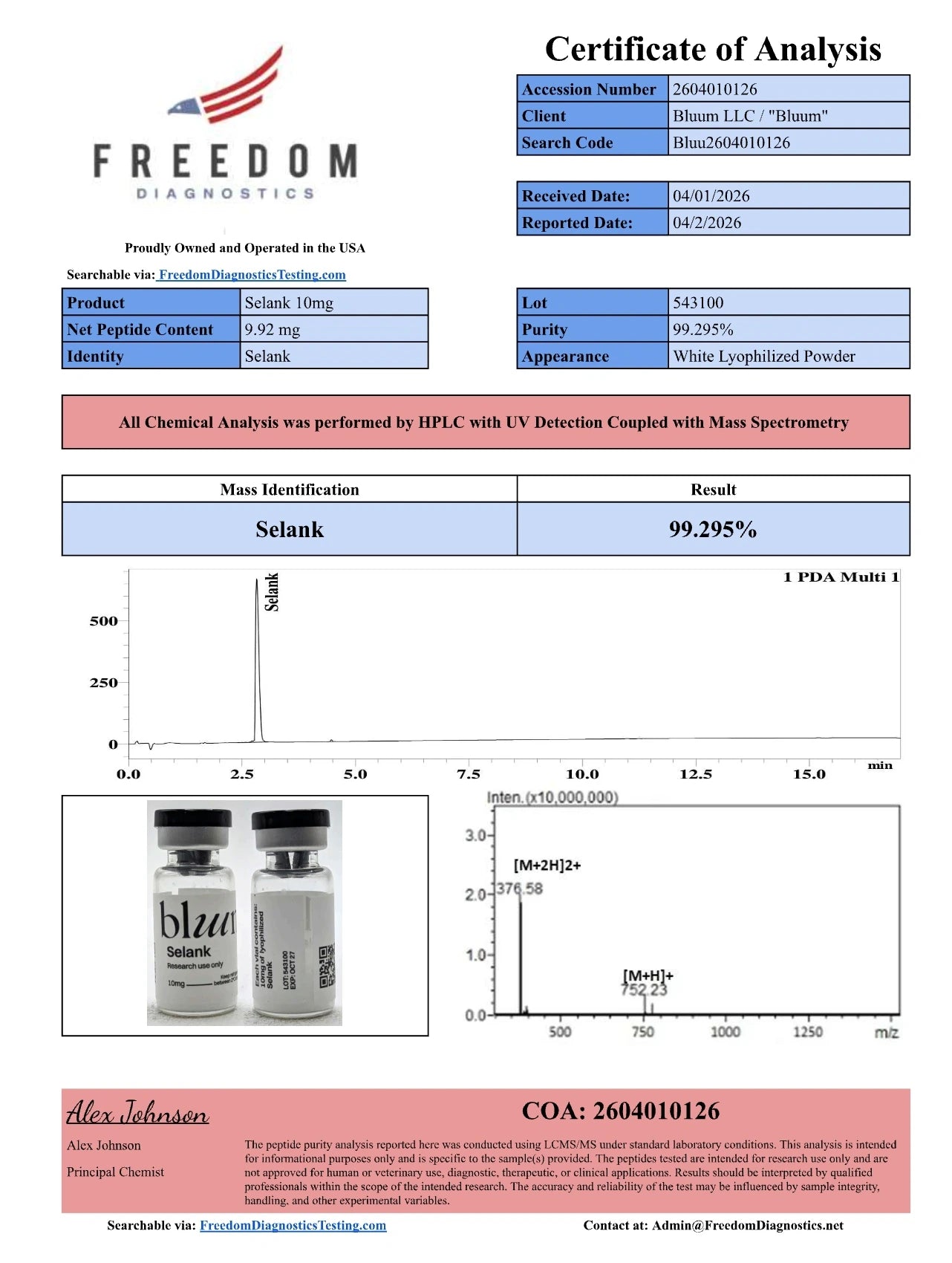
 Batch # 543100
 Report # 2604010126
 Tested at 99.295%


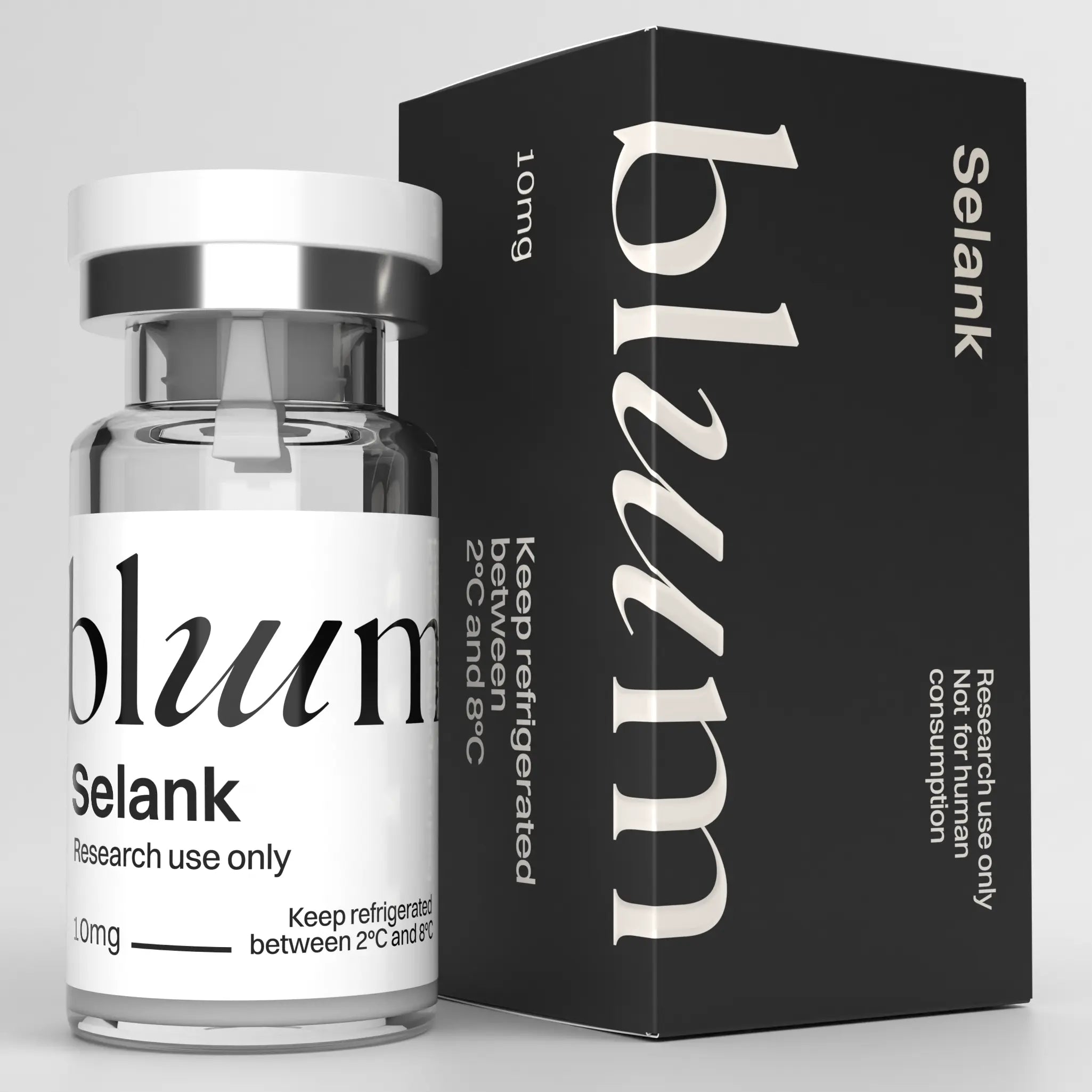
Selank is a synthetic heptapeptide analog of the endogenous tuftsin fragment, commonly studied in neuropeptide and receptor-modulation research, including GABAergic and monoaminergic signaling pathways. Researchers study Selank for its distinct structure and regulatory signaling profile compared with other short neuroactive peptides. Bluum Peptides supplies high-purity Selank 10mg, tested and verified by leading labs (Janoshik, BioRegen) for consistent batch quality.
Selank is sold for research use only.
What Is Selank?
Selank is a synthetic heptapeptide derived from tuftsin, a naturally occurring four–amino-acid immune peptide fragment that is produced from the Fc region of immunoglobulin G (IgG). In biological research, tuftsin is known for its role in regulating certain immune cell activities, particularly macrophage and phagocyte function, and it serves as a signaling molecule within immune response pathways.
Selank was created by taking the core tuftsin sequence and adding more amino acids to extend the chain, which improves molecular stability and slows enzymatic breakdown in experimental systems. These structural extensions also appear to broaden its signaling reach beyond classical immune pathways.
As such, Selank is also frequently examined in neuropeptide and neurotransmitter regulation studies as a more durable, research-friendly analog of the original tuftsin fragment.
Building on its tuftsin-derived structure, Selank is classified as a regulatory neuroactive peptide. In experimental models, researchers investigate its effects on GABAergic systems and related neurotransmitter networks, as well as broader monoamine and peptide-mediated signaling activity.
Most published work on Selank comes from in vitro and animal studies focused on neurochemical regulation and stress-related signaling pathways. However, controlled human clinical evidence remains limited, so interpretation of research results should be restricted to a preclinical framework.
Selank’s value in research partly comes from its multi-target signaling behavior, setting it apart from simpler short peptides. Bluum Peptides supplies Selank as a high-purity, lyophilized research compound in standard vial sizes. Every batch is tested for purity and quality to support reproducible research work. Selank is not approved for human or veterinary application.
Selank Mechanism of Action (Research Only)
Selank is a tuftsin-derived synthetic heptapeptide studied for its multi-pathway signaling effects across neurochemical and immune–neural systems. Current research suggests it functions through signaling modulation across neurotransmitter and regulatory peptide pathways.
However, note that most mechanistic understanding comes from in vitro experiments and animal models, and remains incomplete at the molecular receptor-binding level. As such, these effects should not be applied in the context of any human or animal models.
Structural and Chemical Basis
Selank is a seven–amino-acid peptide built from the natural immune fragment tuftsin with added residues that increase resistance to enzymatic degradation. This extension improves stability in experimental systems and allows longer functional persistence compared with the parent tetrapeptide.
In laboratory models, these structural features are associated with broader pathway engagement and more sustained downstream signaling activity. For researchers, that makes it useful when studying longer-window neurochemical and immune–neural regulatory effects rather than rapid, single-receptor responses.
GABAergic Signaling Modulation
A major area of Selank research involves its influence on GABAergic signaling, which is central to how neural circuits regulate excitability and stress-related responses.
Experimental models suggest Selank can alter GABA receptor–related signaling and receptor subunit expression patterns rather than directly acting as a typical receptor agonist. This kind of modulation is closer to “tuning” system sensitivity than switching a pathway fully on or off[1].
In lab settings, GABAergic systems are often used as a reference point for understanding network stability, inhibition balance, and stress-response signaling.
Monoamine and Neuropeptide Pathways
Selank has also been investigated for effects on monoamine neurotransmitter systems, including dopamine and serotonin-related signaling networks. Preclinical studies report shifts in enzyme activity and signaling markers linked to monoamine turnover and receptor sensitivity[2][3].
Researchers interpret this as indirect pathway regulation rather than direct receptor binding. Because monoamines are widely involved in motivation, arousal, and stress signaling, Selank is used experimentally as a probe for broader neurotransmitter network interactions. However, these findings are model-based and are used to map signaling relationships, not to establish clinical outcomes.
Immune–Neural Cross-Talk Signaling
Because Selank originates from a tuftsin-based sequence, it is also studied in the context of immune–neural communication. Tuftsin itself is known to regulate certain immune cell functions, and Selank retains partial relationship to these signaling themes while extending into neural regulatory domains.
Experimental work suggests peptide-level signals like Selank may influence cytokine patterns and immune signaling markers alongside neural pathway activity[4]. This makes it relevant in research exploring how immune signals and brain signaling overlap. These observations come from controlled lab models designed to track cross-system signaling behavior.
Selank is supplied as a laboratory research compound and is valued as a tool for investigating multi-pathway neurochemical and immune–neural signaling mechanisms. It is for research use only and is not approved for clinical, therapeutic, diagnostic, or human use.
Selank Research Applications (Observations from Studies)
Selank is being studied in preclinical and translational models for its role in neurochemical modulation and regulatory signaling processes, with current understanding derived primarily from animal and in vitro studies along with controlled pilot investigations. As such, findings remain limited to research observations and do not represent established clinical outcomes or approved uses.
These results should be interpreted strictly within controlled experimental settings and are not applicable to human or veterinary use.
Neurotransmitter and GABAergic Signaling Models
A primary research focus for Selank involves its interaction with GABA-related signaling systems and broader neurotransmitter balance. Animal and in vitro studies report directional shifts in GABA receptor subunit expression and inhibitory signaling tone after exposure[1].
Researchers use these models to study how inhibitory circuits regulate stress signaling and neural excitability. In simpler terms, Selank is used as a lab tool to explore how the brain’s “braking system” for overactive signaling adjusts under peptide modulation.
This kind of work can connect to research on stress responses, learning and memory models, and behavior under challenging conditions, where balanced signaling is important to measure.
Compared with single-target receptor ligands, Selank is studied for broader regulatory influence across multiple signaling nodes, making it useful for whole-system signaling research instead of narrow, single-receptor experiments.
Monoamine and Stress-Response Pathways
Selank has also been examined in experimental models that focus on monoamine signaling, including dopamine- and serotonin-related pathways. Preclinical studies have reported directional changes in enzyme activity and signaling markers connected to how these neurotransmitters are produced, released, and recycled under stress conditions[1][3].
Practically, this makes Selank useful in studies that measure stress adaptation, mood-related signaling, motivation and reward circuitry, and behavioral response patterns under controlled laboratory stressors. Because it appears to influence several messenger systems at once, researchers often select it for broader network studies rather than narrow, single-receptor pathway experiments.
Immune–Neural Communication Studies
Because Selank is structurally derived from tuftsin, it is also studied in immune–neural cross-talk models. Laboratory research has reported shifts in selected cytokine and immune signaling markers alongside neural pathway changes[4]. These models help investigators map how immune signals and brain signaling interact under peptide regulation.
In short, Selank is used in lab research to explore how immune messengers and brain signaling systems affect each other under controlled conditions. This supports experimental work examining how immune signaling changes relate to cognitive performance measures, stress-related behavior models, and neuroinflammatory pathway activity.
Selank has also been explored in experimental models that examine memory performance, stress-responsive neurochemistry, and immune-linked signaling. In one study, researchers measured behavioral readouts such as recognition and attention tasks alongside molecular markers tied to neurotrophic activity, cytokine balance, and gene expression. Preclinical work has aso reported effects on hippocampal and cortical signaling markers, including changes in BDNF-related activity in alcohol-withdrawal models, while other studies have found shifts in inflammation-associated cytokines and gene expression under stress conditions [5][6].
For now, this dual-domain relevance sets Selank apart from peptides studied only for neural or only for immune effects and makes it a useful probe in cross-system brain–immune signaling research.
Handling and Laboratory Guidance
As a synthetic research peptide, Selank should be handled using standard laboratory best practices for lyophilized compounds. Proper technique supports sample stability and experimental reproducibility.
- Reconstitute with sterile, research-grade solvents as indicated on the vial or product documentation
- Use gentle reconstitution practices; avoid vigorous shaking
- Short-term storage (lyophilized): 36–46°F (2–8°C) under dry, light-protected conditions
- Long-term storage (lyophilized): −4°F or below (−20°C or below)
- After reconstitution: keep refrigerated at 36–46°F (2–8°C) and minimize freeze–thaw cycles
Bluum Peptides does not make therapeutic or medical claims regarding this compound. Selank is supplied strictly for research use only and is not approved for clinical, diagnostic, or human application.
Selank vs Semax vs Tuftsin Comparison
|
Parameter |
Selank |
Tuftsin |
|
|
Molecular classification |
Synthetic heptapeptide derived from tuftsin |
Synthetic heptapeptide derived from ACTH(4–10) |
Natural tetrapeptide fragment of IgG |
|
Design origin |
Engineered tuftsin analog with extended sequence for stability and broader signaling reach |
Engineered ACTH fragment analog with added sequence for metabolic stability |
Endogenous immune regulatory peptide |
|
Primary pathway focus (research) |
GABAergic modulation, monoamine signaling, immune–neural cross-talk |
Melanocortin-related signaling, neurotrophic and neurotransmitter regulation |
Innate immune cell activation and phagocyte signaling |
|
Mechanism complexity |
Multi-pathway signaling modulation |
Multi-pathway neuroregulatory signaling |
Primarily immune receptor–mediated signaling |
|
Receptor / signaling profile |
Indirect modulation of GABA and monoamine systems; cytokine and immune signaling markers in models |
Melanocortin receptor interaction and downstream neurotrophic gene-expression pathways |
Binds tuftsin receptors on immune cells (phagocytes, macrophages) |
|
Primary research focus areas |
Stress-response models, cognitive and behavioral signaling, brain–immune interaction studies |
Neuroplasticity models, cognitive signaling research, neurotrophic pathway studies |
Immune response regulation and host-defense signaling research |
|
System scope in models |
Neural + immune integrated signaling |
Predominantly neural signaling and neurotrophic regulation |
Predominantly immune system signaling |
|
Typical research use role |
Probe for cross-system neurochemical and immune signaling |
Probe for neurotrophic and central signaling regulation |
Baseline reference peptide for immune modulation studies |
|
Structural stability vs parent compound |
More stable than tuftsin due to sequence extension |
More stable than native ACTH fragment due to modification |
Short natural peptide with rapid enzymatic breakdown |
|
Research status |
Research-use peptide |
Research-use peptide (not approved in the U.S./EU as a drug) |
Endogenous biological peptide used in research |
|
Intended use classification |
Research-use only compound |
Research-use only compound |
Biological peptide (reference context) |
Note Selank is a modified tuftsin analog with improved experimental stability and broader signaling reach, which is why it appears in both neural and immune pathway studies, unlike tuftsin itself.
Selank Laboratory Safety & Handling Protocols
Selank is a synthetic research peptide typically supplied as a lyophilized powder and should be handled using standard laboratory peptide-handling controls.
Selank’s effects in humans are not fully characterized, so it should be handled exclusively within controlled laboratory environments using appropriate safety protocols. These handling requirements may vary depending on reconstitution methods, solvent choice, concentration, and experimental protocol design.
Because peptide powders can be sensitive to contamination, moisture, and temperature variation, careful material control is important for both safety and data integrity. Laboratory teams should treat Selank as a research chemical with unknown exposure risk outside validated lab settings.
Recommended laboratory best practices include:
- Follow institutional SOPs and chemical hygiene plans at all times
- Use appropriate PPE, including gloves, lab coat, and eye protection
- Apply sterile technique during reconstitution and sample preparation
- Use engineering controls (such as biosafety cabinets) where aerosolization risk exists
- Avoid generating dust or aerosols from lyophilized powder
- Store under specified cold-chain conditions with light and moisture protection
- Label all prepared solutions clearly with compound name, concentration, date, and lot number
- Manage spills using peptide/chemical spill procedures defined by the institution
- Dispose of unused material and consumables according to chemical waste regulations
- Maintain batch records, handling logs, and linked COA documentation for traceability
Bluum Peptides supplies Selank strictly for research use only and does not provide medical, diagnostic, or therapeutic guidance. No definitive clinical safety profile has been established.
Certificate of Analysis (COA) & Quality Assurance
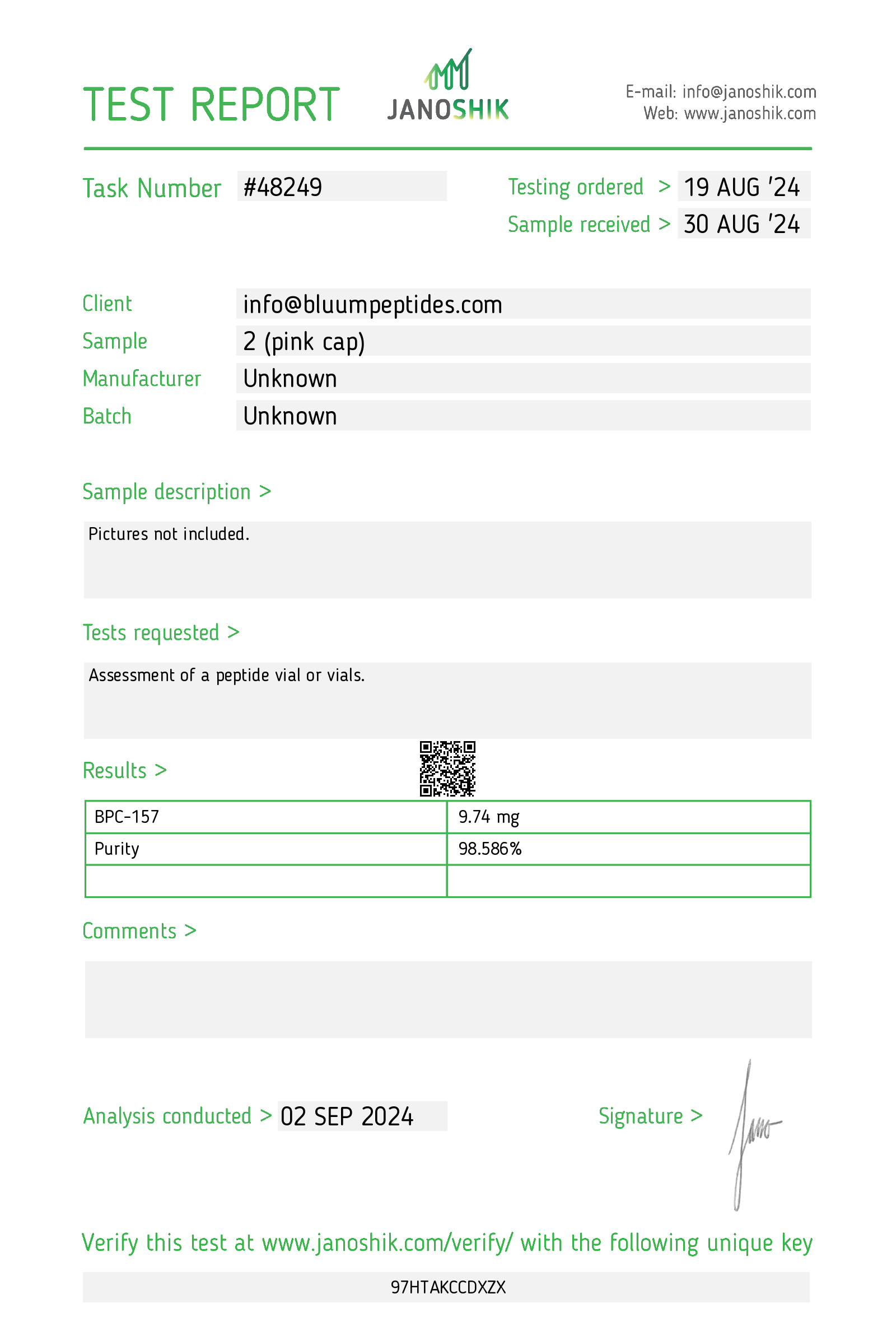
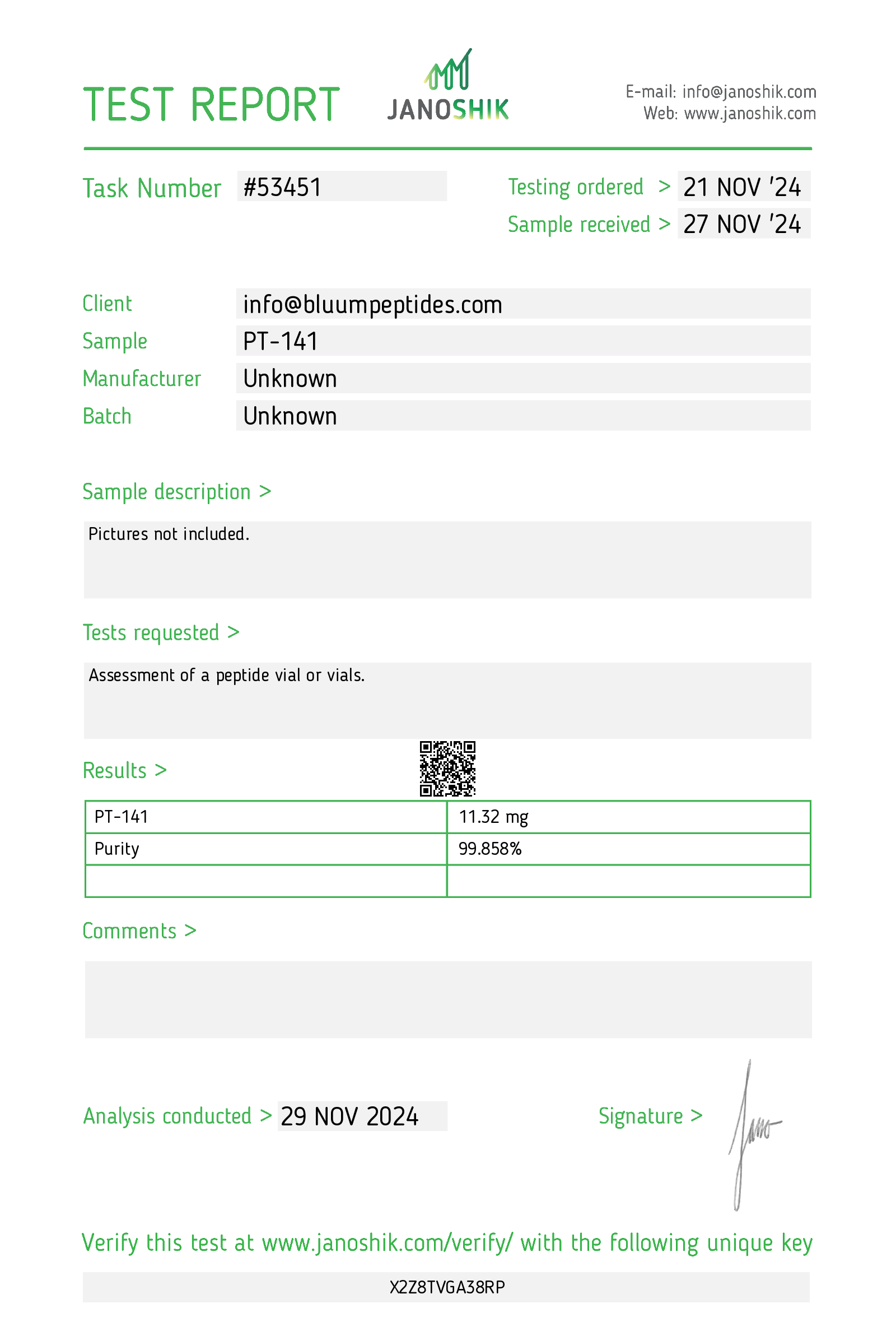
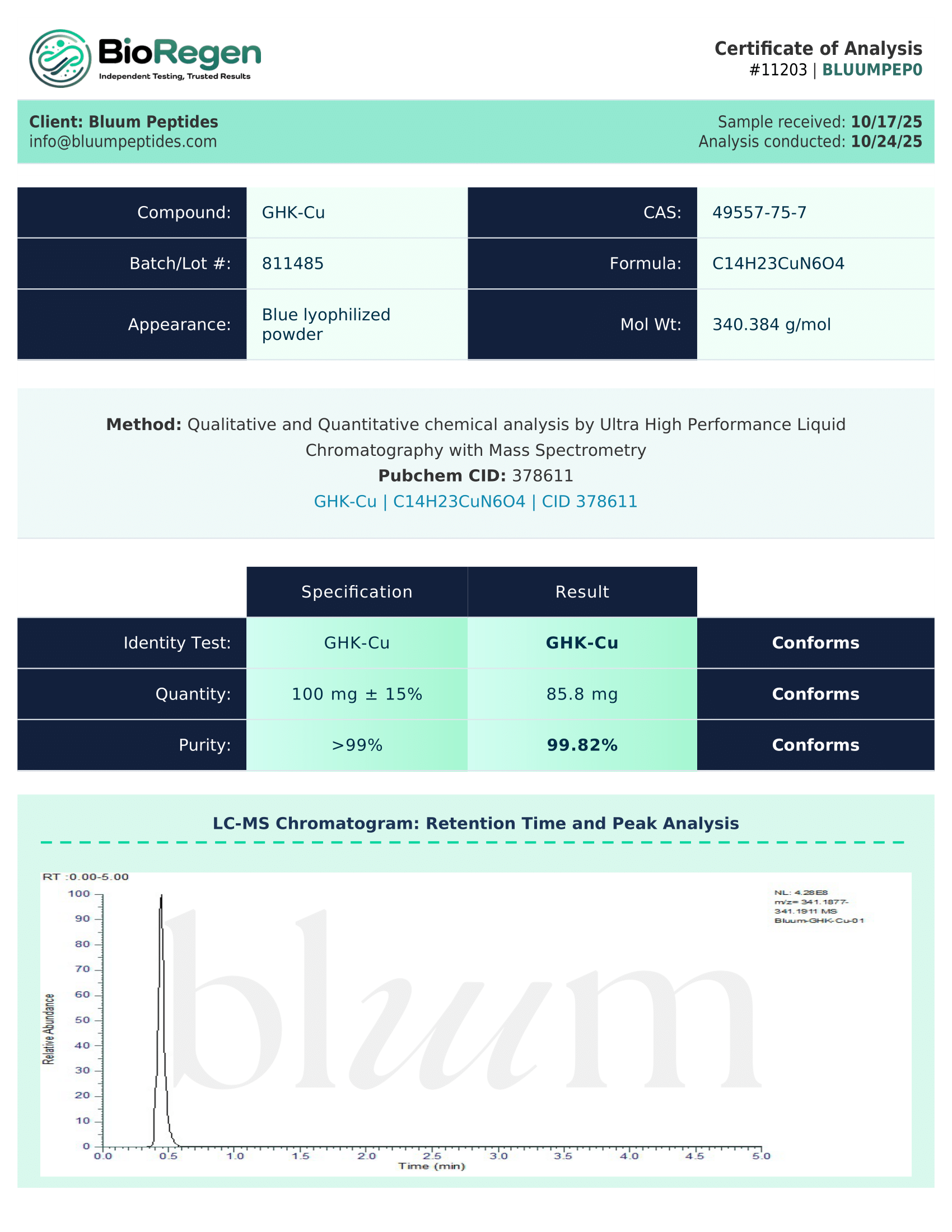
Each Selank lot is accompanied by a third-party–verified Certificate of Analysis (COA) to support research reproducibility, batch traceability, and data integrity. COAs provide lot-specific analytical confirmation so researchers can document compound identity and quality before experimental use.
For research peptides such as Selank, COAs typically include:
- Identity verification using analytical techniques such as mass spectrometry and/or comparable structural confirmation methods
- Purity and composition testing using HPLC or related chromatographic assays
- Relevant physicochemical data, such as solubility characteristics and stability-related notes
- Concentration verification where applicable
- Lot number and batch identifiers
- Testing date and analytical method references
Bluum Peptides works with independent analytical laboratories to provide objective third-party verification and consistent quality standards across production batches. These include Janoshik, BioRegen, and other trusted analytical laboratories.
Find the batch COA documents in PDF form on the product page or request detailed information from our support team. Researchers are encouraged to retain COAs and associated batch records to support audit readiness, reproducibility requirements, and independent verification under institutional research protocols.
Scientific References
1. Volkova A, Shadrina M, Kolomin T, Andreeva L, Limborska S, Myasoedov N, Slominsky P. Selank Administration Affects the Expression of Some Genes Involved in GABAergic Neurotransmission. Front Pharmacol. 2016 Feb 18;7:31.
https://pmc.ncbi.nlm.nih.gov/articles/PMC4757669/
2. Narkevich VB, Kudrin VS, Klodt PM, Pokrovskiĭ AA, Kozlovskaia MM, Maĭskiĭ AI, Raevskiĭ KS. [Effects of heptapeptide selank on the content of monoamines and their metabolites in the brain of BALB/C and C57Bl/6 mice: a comparative study]. Eksp Klin Farmakol. 2008 Sep-Oct;71(5):8-12. Russian. PMID: 19093364.
https://pubmed.ncbi.nlm.nih.gov/19093364/
3. Kolomin, T., Shadrina, M., Slominsky, P., Limborska, S., & Myasoedov, N. (2013). A new generation of drugs: Synthetic peptides based on natural regulatory peptides (pp. 223–252). Neuroscience & Medicine. https://pdfs.semanticscholar.org/2a11/334f12fff603f90a83ef1127e3192ca186b2.pdf
4. Leonidovna YA, Aleksandrovna SM, Aleksandrovna TA, Aleksandrovna BO, Fedorovich MN, Aleksandrovna AL. The Influence of Selank on the Level of Cytokines Under the Conditions of "Social" Stress. Curr Rev Clin Exp Pharmacol. 2021;16(2):162-167.
https://pubmed.ncbi.nlm.nih.gov/32621722/
5. K. R. Siegfried, “First Clinical Impressions with an ACTH Analog (HOE 427) in the Treatment of Alzheimer’s Disease,” Annals of the New York Academy of Sciences, Vol. 640, 1991, pp. 280-283.
https://www.scirp.org/reference/referencespapers?referenceid=1027606
6. Kolik LG, Nadorova AV, Antipova TA, Kruglov SV, Kudrin VS, Durnev AD. Selank, Peptide Analogue of Tuftsin, Protects Against Ethanol-Induced Memory Impairment by Regulating of BDNF Content in the Hippocampus and Prefrontal Cortex in Rats. Bull Exp Biol Med. 2019 Sep;167(5):641-644.
https://pubmed.ncbi.nlm.nih.gov/31625062/