

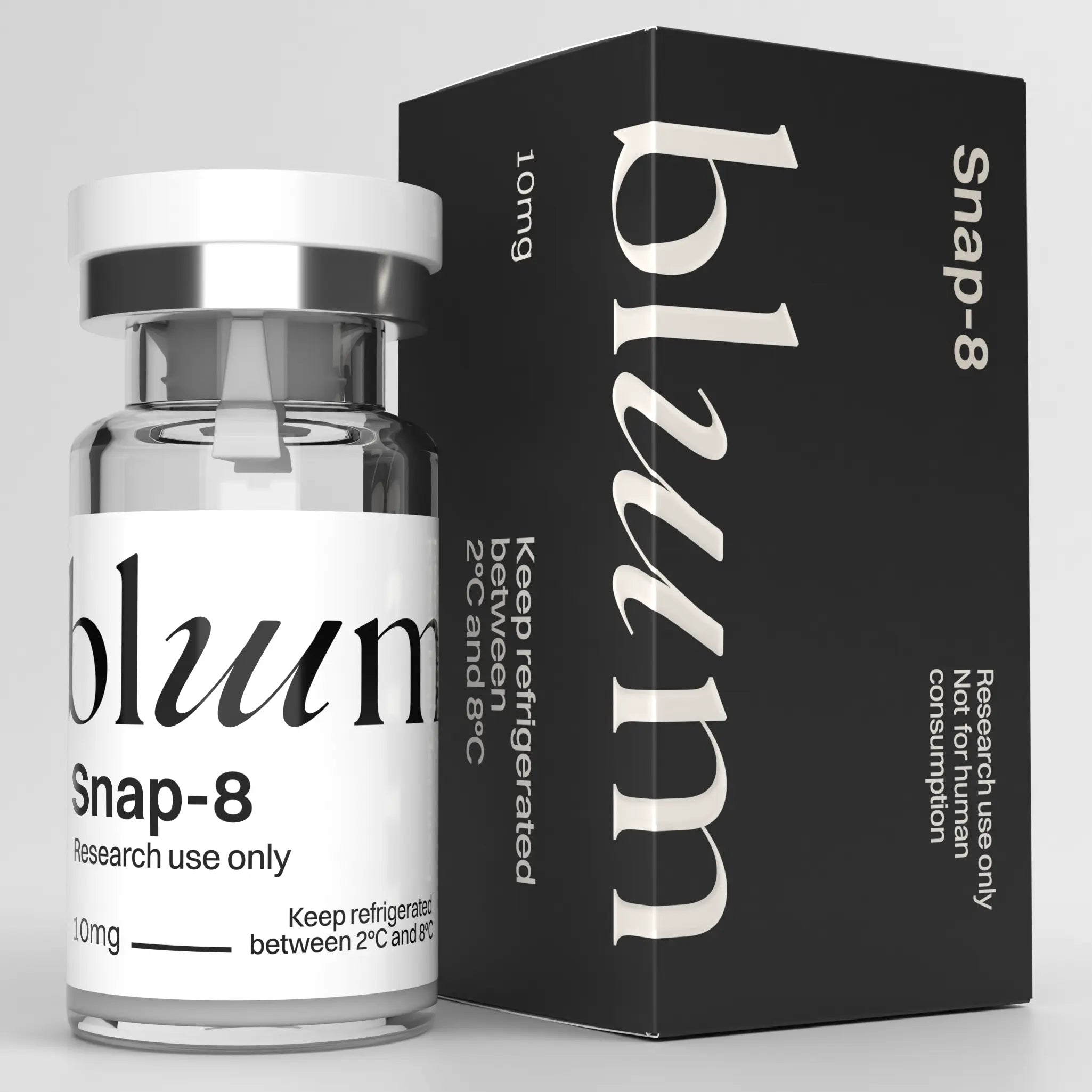
Snap-8
 Money Back
Guarantee
Money Back
Guarantee Satisfaction
Guarantee
Satisfaction
Guarantee Easy Returns
 Secure
Ordering
Secure
Ordering 2-Day
Shipping
2-Day
Shipping Third Party
Tested
Third Party
Tested Batch & Lot
Tracking
Batch & Lot
TrackingLab results
RESEARCH USE ONLY
These compounds are NOT intended for human consumption, clinical use, or veterinary applications. We are not affiliated with any pharmaceutical companies or their commercial medications. By placing an order, you certify these materials will be used exclusively for in vitro testing and laboratory experimentation only. Bodily introduction of any kind into humans or animals is strictly forbidden by law. This product should only be handled by licensed, qualified professionals. This product is not a drug, food, or cosmetic and may not be misbranded, misused or mislabeled as a drug, food or cosmetic.
About Snap-8
Snap-8 is a synthetic octapeptide derived from the N-terminal region of SNAP-25, commonly classified as a SNARE-complex–modulating research peptide used to study vesicle docking and membrane fusion pathways in controlled models. Researchers buy Snap-8 to compare truncated vs full-length SNARE-interacting peptides in research. Bluum Peptides supplies high-purity SNAP-8, verified by accredited analytical labs in the U.S. for consistent quality. For research use only.
Snap-8 Product Specifications
| Product Name | SNAP-8 (Acetyl Octapeptide-3) |
|---|---|
| Application | Research use in SNARE-complex interaction and vesicle docking pathway studies |
| Appearance | White to off-white lyophilized powder in 3 mL glass vial. |
| Chemical Formula | C41H70N16O16S |
| PubChem CID | 86080331 |
| CAS Number | 868844-74-0 |
| Molecular Weight | 1075.2 g/mol |
| Synonyms | SNAP-8 peptide; SNAP-25 fragment (octapeptide); Acetyl Octapeptide-3 |
| Storage | Short term: 36–46°F (2–8°C);Long term: −4°F or below (−20°C or below); store dry, protected from light and moisture |
| Chemical grade | Laboratory |
Chemical Structure
What Is SNAP-8?
SNAP-8 is a synthetic octapeptide derived from the N-terminal region of SNAP-25 (synaptosomal-associated protein-25), a protein involved in the SNARE (soluble N-ethylmaleimide-sensitive factor attachment protein receptor) complex. It is studied as a research peptide in experimental models examining SNARE-complex biology, vesicle fusion mechanisms, and peptide-mediated regulation of cellular communication pathways.
The SNARE complex is a highly conserved protein system involved in membrane fusion processes throughout the body. Researchers study this complex because it plays an important role in coordinating how membrane-bound vesicles interact with target membranes during cellular communication and secretion events. Core SNARE proteins, including SNAP-25, syntaxin, and VAMP family proteins, serve as widely used research targets in studies of vesicle trafficking and membrane dynamics.
SNAP-8 was developed as a shortened peptide fragment derived from SNAP-25 to facilitate investigation of peptide-protein interactions within SNARE-associated systems. Because it represents a defined segment of a larger regulatory protein, researchers use SNAP-8 to explore how peptide fragments may influence complex assembly, signaling behavior, and membrane-associated communication processes in controlled laboratory settings.
In the scientific literature, SNAP-8 is primarily investigated in vitro and in other non-clinical research models involving vesicle fusion, membrane trafficking, cellular communication, and SNARE-complex signaling pathways. Unlike receptor-targeting peptides, SNAP-8 is generally studied for its potential interactions with protein-complex systems involved in cellular regulatory processes.
Most available findings originate from laboratory research, and controlled human evidence remains limited. As such, observations involving SNAP-8 should be interpreted strictly within a preclinical and experimental research framework.
Bluum Peptides supplies SNAP-8 as a high-purity, lyophilized research peptide manufactured using controlled solid-phase peptide synthesis (SPPS) and HPLC purification to achieve purity levels exceeding 99%. Each batch undergoes independent third-party analytical verification to confirm identity and purity, with lot-specific Certificates of Analysis (COAs) available for review.
SNAP-8 is supplied strictly for research use only and is not intended for human consumption, therapeutic use, diagnostic use, or veterinary applications.
SNAP-8 Mechanism of Action (Research Only)
SNAP-8 is a synthetic octapeptide derived from a functional region of SNAP-25, a protein associated with the SNARE (soluble N-ethylmaleimide-sensitive factor attachment protein receptor) complex. It is studied as a research tool for investigating SNARE-complex biology, protein-protein interactions, vesicle fusion mechanisms, and membrane-associated signaling processes.
Current mechanistic understanding is derived primarily from in vitro experiments, biochemical assays, and other non-clinical research models. These observations should be interpreted strictly within controlled laboratory settings and do not establish clinical or therapeutic applications.
Structural and Chemical Basis
SNAP-8 is an eight-amino-acid synthetic peptide derived from a defined region of the SNAP-25 protein [1]. As a peptide fragment rather than a full-length structural protein, it is used in experimental systems to investigate how specific sequence regions may contribute to protein-complex interactions and membrane-associated signaling processes.
Researchers frequently utilize peptide fragments such as SNAP-8 to examine domain-specific biological activity and to better understand how individual protein regions participate in larger molecular assemblies.
SNARE Complex Research
One of the primary areas of SNAP-8 research involves the SNARE complex, a protein system widely studied for its role in membrane fusion and vesicle trafficking processes [2]. Experimental investigations use SNAP-8 to explore how peptide fragments may interact with components of SNARE-associated systems and influence protein-complex behavior under controlled laboratory conditions.
Because the SNARE complex is a highly coordinated molecular system, researchers often employ fragment-based approaches to examine specific aspects of complex assembly, organization, and signaling dynamics.
Protein-Protein Interaction Studies
SNAP-8 is frequently utilized in studies examining protein-protein interactions within membrane-associated signaling systems. Experimental models investigate how defined peptide sequences may influence molecular recognition, complex formation, and regulatory interactions among proteins involved in cellular communication processes.
These studies contribute to a broader understanding of protein-complex biology and the mechanisms through which molecular assemblies coordinate signaling and membrane-associated activities.
Vesicle Fusion and Membrane Dynamics Research
Additional investigations have examined SNAP-8 in experimental models involving vesicle fusion, membrane trafficking, and cellular communication pathways. Researchers use these systems to study how SNARE-associated interactions contribute to membrane dynamics and the coordination of vesicle-associated processes [2].
Because membrane fusion involves multiple interacting proteins and regulatory mechanisms, SNAP-8 is often employed as a research tool for exploring specific components of these complex biological systems.
Fragment-Based Mechanistic Research
A distinguishing feature of SNAP-8 research is its use as a peptide fragment rather than a complete structural protein. This allows investigators to examine sequence-specific interactions and evaluate how individual regions of larger proteins may contribute to complex biological functions.
Such fragment-based approaches are widely used in molecular biology and protein research to investigate the relationship between protein structure, molecular interactions, and biological activity.
SNAP-8 is supplied strictly for laboratory research use and serves as a research tool for investigating SNARE-complex biology, protein-protein interactions, vesicle fusion mechanisms, and membrane-associated signaling pathways. It is not intended for human consumption, therapeutic use, diagnostic use, or veterinary applications.
SNAP-8 Research Applications (Observations from Studies)
SNAP-8 has been investigated in preclinical and translational research as a tool for studying SNARE-complex biology, vesicle fusion mechanisms, and membrane-associated signaling processes. Most available findings originate from in vitro experiments, biochemical assays, and other non-clinical research models designed to examine protein-complex interactions and cellular communication pathways.
The observations described below reflect experimental research findings and should be interpreted strictly within controlled laboratory environments. They do not represent established clinical outcomes or approved applications.
SNARE-Complex and Vesicle Fusion Research
One of the primary applications of SNAP-8 research involves the study of SNARE-complex biology and membrane fusion mechanisms. Experimental models use SNAP-8 to investigate how peptide fragments derived from SNARE-associated proteins may influence complex assembly, protein interactions, and vesicle-associated signaling processes.
Researchers employ these systems to better understand the molecular coordination required for membrane fusion events and to examine how individual protein regions contribute to larger protein-complex systems under controlled laboratory conditions.
Cellular Communication and Secretory Pathway Studies
SNAP-8 has also been investigated in experimental models involving cellular communication pathways and regulated secretion systems [3]. These studies explore how SNARE-associated interactions contribute to signaling processes that depend on vesicle trafficking and membrane-associated communication networks.
Because these systems involve multiple interacting proteins and regulatory components, SNAP-8 is often used as a mechanistic research tool for examining specific aspects of complex cellular signaling pathways.
Protein-Protein Interaction Research
A significant area of SNAP-8 research focuses on protein-protein interactions and the molecular organization of SNARE-associated systems. Experimental investigations use peptide fragments to study how defined sequence regions participate in complex formation, molecular recognition, and regulatory interactions.
This approach allows researchers to evaluate the contribution of individual protein segments while reducing the complexity associated with studying full-length proteins.
Domain Mapping and Structure-Function Studies
SNAP-8 is frequently utilized in domain-mapping experiments designed to investigate relationships between protein structure and biological activity. Researchers compare peptide fragments, larger protein segments, and full-length proteins to identify sequence regions associated with specific interaction patterns and molecular behaviors.
These comparative studies contribute to a broader understanding of how structural organization influences protein-complex function and cellular communication processes.
Comparative Fragment-Based Research
Additional investigations use SNAP-8 alongside related peptide fragments and SNARE-associated proteins to examine differences in interaction profiles, complex behavior, and signaling characteristics. Such studies help researchers characterize the functional roles of specific protein domains and explore how structural variations may influence molecular interactions.
This ongoing body of research continues to support the use of SNAP-8 as a tool for investigating SNARE-complex biology, protein-protein interactions, vesicle fusion mechanisms, and membrane-associated signaling pathways in experimental settings.
Bluum Peptides does not make medical or therapeutic claims regarding SNAP-8. All findings referenced here are derived from experimental and non-clinical research settings. This compound is supplied strictly for laboratory research use and is not intended for clinical, diagnostic, therapeutic, veterinary, or human applications.
SNAP-8 vs SNAP-25 vs Argireline
|
Parameter |
SNAP-8 |
SNAP-25 |
Argireline (Acetyl Hexapeptide-8) |
|
Molecular Type |
Synthetic octapeptide fragment |
Endogenous SNARE-associated protein |
Synthetic hexapeptide derived from SNAP-25 sequences |
|
Structural Scope |
Short peptide representing a functional SNAP-25 region |
Full-length membrane-associated SNARE protein |
Short SNAP-25–inspired peptide analogue |
|
Primary Research Focus |
SNARE-complex interaction and vesicle fusion pathway studies |
SNARE-complex biology and membrane fusion mechanisms |
SNARE-associated peptide signaling and protein-interaction research |
|
Mechanism Category |
Peptide fragment used in protein-interaction studies |
Structural component of the SNARE complex |
Synthetic peptide investigated for interactions with SNARE-associated systems |
|
Biological Complexity |
Domain-specific research probe |
Multi-domain regulatory protein |
Simplified peptide analogue of SNARE-associated sequences |
|
Typical Research Applications |
Vesicle fusion models, protein-interaction studies, domain mapping |
Exocytosis research, membrane trafficking studies, cellular communication models |
Comparative peptide-signaling studies and SNARE-pathway investigations |
|
Research Utility |
Examines the contribution of a defined SNAP-25 sequence region |
Serves as a reference protein for SNARE-complex function |
Provides a structurally distinct peptide model for SNARE-related research |
|
Research Environment |
Primarily in vitro and non-clinical systems |
Cell-based, biochemical, and animal research models |
Primarily in vitro and translational research models |
|
Regulatory Status |
Research-use-only peptide |
Naturally occurring biological protein |
Research-use-only peptide |
Note: SNAP-8 is a short, sequence-derived peptide fragment used to probe SNARE-domain interactions and is typically more chemically stable in lyophilized form than full-length proteins.
SNAP-8 does not replicate the full SNAP-25 function and is best treated as a mechanistic probe. SNAP-8 is a research chemical and is not approved for human or veterinary use.
SNAP-8 Laboratory Safety & Handling
SNAP-8 is supplied as a lyophilized research peptide and should be handled in accordance with established laboratory procedures for peptide-based research materials. Appropriate handling, storage, and documentation practices help maintain material integrity and support consistency across experimental workflows.
As a synthetic peptide, SNAP-8 may be sensitive to environmental factors such as moisture, temperature fluctuations, excessive light exposure, and improper handling. Laboratory protocols should therefore be designed to minimize avoidable sources of degradation and experimental variability.
Laboratory Handling Considerations
Best-practice laboratory guidance includes:
-
Follow institutional standard operating procedures (SOPs), chemical hygiene plans, and approved research protocols.
-
Wear appropriate personal protective equipment (PPE), including gloves, laboratory coat, and eye protection.
-
Conduct weighing, preparation, and handling procedures in controlled laboratory environments where appropriate to minimize contamination and environmental exposure.
-
Handle lyophilized material carefully to avoid unnecessary particulate dispersion during transfer or preparation.
-
Use suitable laboratory equipment, containers, and documentation practices to support consistency and traceability.
-
Record lot numbers, preparation details, storage conditions, and associated laboratory documentation to support reproducibility.
-
Follow institutional procedures for spill response, waste management, and incident reporting.
These practices are particularly important in protein-interaction, SNARE-complex, and vesicle-fusion research, where material consistency can contribute to reliable experimental outcomes.
Storage and Stability Considerations
Appropriate storage conditions help preserve the integrity of lyophilized peptide materials during laboratory use.
-
Store lyophilized material at approximately -4°F (-20°C), protected from light and moisture.
-
For short-term handling, unopened material may be stored under refrigerated conditions (36–46°F / 2–8°C) when appropriate.
-
Minimize repeated freeze-thaw cycles to reduce degradation.
-
Maintain consistent storage conditions across experiments to support reproducibility.
-
Clearly label prepared materials with relevant concentration, preparation, and storage information.
-
Inspect materials and associated documentation prior to use as part of routine laboratory quality-control procedures.
Careful storage and handling practices can help reduce avoidable sources of experimental variability and support consistency across research workflows.
Bluum Peptides supplies SNAP-8 strictly for research use only. This material is not intended for human consumption, therapeutic use, diagnostic use, or veterinary applications and should be handled exclusively within qualified laboratory settings.
Certificate of Analysis (COA) & Quality Assurance
Each SNAP-8 product lot is accompanied by a third-party–verified Certificate of Analysis (COA) to support research reproducibility, material traceability, and data integrity. This lot-level documentation allows laboratories to confirm that the material used in an experiment matches defined analytical specifications and can be tied directly to validated test results.
COAs for research peptides such as SNAP-8 typically include identity verification using analytical techniques such as mass spectrometry and/or comparable structural methods, along with purity or composition analysis performed by HPLC or related chromatographic assays. Reports may also include relevant physicochemical characteristics appropriate to the compound type, plus lot number, testing date, and a summary of analytical methods used so researchers can understand how results were generated.
Bluum Peptides utilizes independent analytical laboratories for third-party testing to maintain objective verification and consistent quality standards across batches. COA documents are available in PDF format for review or request prior to purchase.
Researchers are encouraged to retain COAs and associated batch records as part of their internal documentation practices for audit readiness, reproducibility tracking, and independent verification in accordance with institutional protocols.
Scientific References
1. Khvotchev, M., & Soloviev, M. (2022). SNARE Modulators and SNARE Mimetic Peptides. Biomolecules, 12(12), 1779.
https://www.mdpi.com/2218-273X/12/12/1779
2. Mertins J, Finke J, Sies R, Rink KM, Hasenauer J, Lang T. The mesoscale organization of syntaxin 1A and SNAP25 is determined by SNARE-SNARE interactions. Elife. 2021 Nov 15;10:e69236.
https://pmc.ncbi.nlm.nih.gov/articles/PMC8629428/
3. Tafoya LC, Mameli M, Miyashita T, Guzowski JF, Valenzuela CF, Wilson MC. Expression and function of SNAP-25 as a universal SNARE component in GABAergic neurons. J Neurosci. 2006 Jul 26;26(30):7826-38.
https://pmc.ncbi.nlm.nih.gov/articles/PMC6674219/
Related Peptides
Shop All PeptidesYou ask,
we answer.
Are these peptides quality tested?
Absolutely. Our analytical testing is conducted by Janoshik Analytical, BioRegen, or Freedom Diagnostics, independent third-party laboratories that verify the identity, purity, and composition of our research products. All products are guaranteed to test at 98% purity or higher. Each CoA includes purity analysis, peptide sequence confirmation, date of analysis, and an endotoxin report.
What are typical delivery times?
Free 2-Day Air shipping is available when qualifying merchandise totals reach $200. Overnight Air is also available. Please allow up to 24 hours for processing.
Every package comes with professional packaging and tracking updates via email.
How should these compounds be stored?
Our peptides are shipped in lyophilized form, which is stable at room temperature during transit. Once received, store unopened vials in a cool, dry place.
Are products stable during shipping?
Our peptides are shipped in lyophilized (freeze-dried) form, which ensures stability during transit. This powder form is highly stable at room temperature and resistant to temperature fluctuations that occur during shipping.
Research has shown no significant degradation or loss of purity when lyophilized peptides are exposed to room temperature during typical shipping timeframes. Each batch is verified for purity upon production, and our stability testing confirms maintenance of product integrity during standard shipping conditions.
What are your bulk ordering options?
For bulk inquiries and volume pricing, please contact us.
What is the shelf life/expiration of unopened vials?
Each lot lists a best-by/expiration on the vial label and COA. As general guidance, lyophilized peptides stored as directed are typically stable 12–24 months (often longer at –20 °C). Short shipping periods at ambient temperature are normal. Actual stability depends on sequence and storage conditions.