

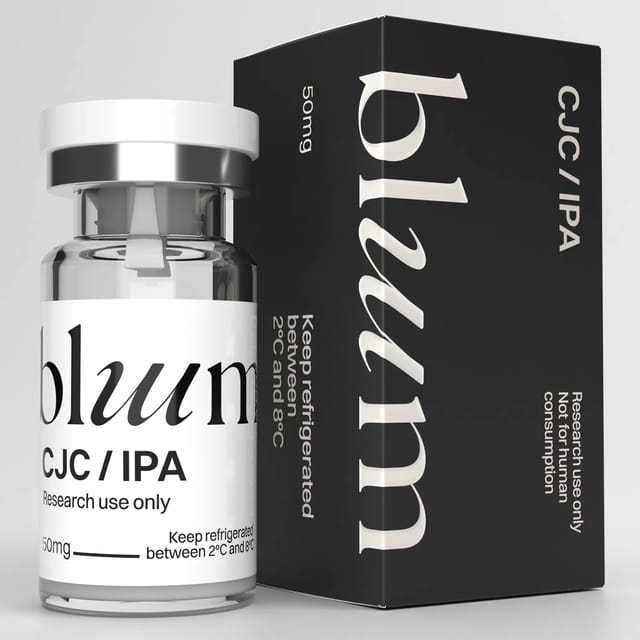
CJC-1295 No DAC / Ipamorelin Blend
Rated 5.0 out of 5 from 2 reviews
 Money Back
Guarantee
Money Back
Guarantee Satisfaction
Guarantee
Satisfaction
Guarantee Easy Returns
 Secure
Ordering
Secure
Ordering 2-Day
Shipping
2-Day
Shipping Third Party
Tested
Third Party
Tested Batch & Lot
Tracking
Batch & Lot
TrackingLab results
RESEARCH USE ONLY
These compounds are NOT intended for human consumption, clinical use, or veterinary applications. We are not affiliated with any pharmaceutical companies or their commercial medications. By placing an order, you certify these materials will be used exclusively for in vitro testing and laboratory experimentation only. Bodily introduction of any kind into humans or animals is strictly forbidden by law. This product should only be handled by licensed, qualified professionals. This product is not a drug, food, or cosmetic and may not be misbranded, misused or mislabeled as a drug, food or cosmetic.
About CJC-1295 No DAC / Ipamorelin Blend
Buy CJC-1295 No DAC + Ipamorelin blend from Bluum Peptides in this high purity formulation. Produced and processed under strict quality standards, every batch is third-party tested by an independent lab for purity, identity, sterility, endotoxins, and other analytical parameters.
CJC-1295 No DAC and Ipamorelin peptide blend is a two-peptide research formulation combining CJC-1295 without DAC, a modified growth hormone-releasing hormone (GHRH) analog, and ipamorelin, a synthetic pentapeptide that acts at the growth hormone secretagogue receptor (GHS-R1a). CJC-1295 No DAC (Modified GRF (1-29)) is investigated in research involving GHRH receptor activity and peptide structure, while ipamorelin is studied for its interaction with GHS-R1a. Because the two peptides engage complementary receptor systems, this blend is an ideal research material for investigating convergent signaling pathways and receptor pharmacology.
See the batch-specific Certificate of Analysis for exact analytical results for this batch. Sold for research use only; not for human or veterinary use.
What's Included
- CJC-1295 No DAC + Ipamorelin: 5 mg / 5 mg blend
- Product form: White to off-white lyophilized powder
- Packaging: Sealed 3 mL vial
- Documentation: Batch-specific Certificate of Analysis (COA)
- Intended use classification: Laboratory research only
CJC-1295 No DAC / Ipamorelin Blend Product Specifications
| Product name | CJC-1295 No DAC + Ipamorelin Blend |
|---|---|
| Blend composition | CJC-1295 No DAC 5 mg + Ipamorelin 5 mg (10mg total) |
| Molecule type | Two-peptide research blend |
| CJC-1295 No DAC | Modified GHRH(1-29) analogue |
| Ipamorelin | Synthetic pentapeptide |
| Primary CJC-1295 target | GHRH receptor (GHRHR) |
| Primary Ipamorelin target | Growth hormone secretagogue receptor 1a (GHS-R1a) |
| CJC-1295 molecular formula | C₁₅₂H₂₅₂N₄₄O₄₂ |
| CJC-1295 molecular weight | 3367.9 g/mol |
| Ipamorelin molecular formula | C₃₈H₄₉N₉O₅ |
| Ipamorelin molecular weight | 711.9 g/mol |
| Product form | White to off-white lyophilized powder |
| Packaging | Sealed 3 mL vial |
| Purity | See batch-specific COA |
| Intended use | Laboratory research only |
| Chemical grade | Laboratory |
Chemical Structure
Overview & Mechanism of Action
CJC-1295 No DAC and Ipamorelin are two structurally distinct peptides that interact with different receptors involved in growth hormone-releasing signaling.
CJC-1295 No DAC, also known as Modified GRF (1-29), is a modified analogue of growth hormone-releasing hormone (GHRH) that acts through the GHRH receptor.
On the other hand, Ipamorelin is a synthetic pentapeptide that interacts with the growth hormone secretagogue receptor (GHS-R1a), which is the receptor associated with ghrelin signaling.
CJC-1295 No DAC and the GHRH Receptor
CJC-1295 No DAC is based on the first 29 amino acids of GHRH and contains several structural substitutions relative to the native peptide. Research has characterized modified GRF analogues in relation to GHRH receptor activity and peptide stability. The GHRH receptor is a G protein-coupled receptor associated with the Gs/cAMP signaling pathway.
Unlike CJC-1295 with DAC, the No DAC form does not contain the Drug Affinity Complex responsible for albumin-binding chemistry. This makes it a chemically distinct research material from the DAC-containing form.
Ipamorelin and GHS-R1a
Ipamorelin is a synthetic pentapeptide and selective ligand of GHS-R1a, also known as the ghrelin receptor. The peptide was originally characterized in experimental pharmacology studies investigating growth hormone secretagogue activity and receptor selectivity. Its structure and receptor target are distinct from those of CJC-1295 No DAC.
Distinct Signaling Pathways
The research interest in combining CJC-1295 No DAC and Ipamorelin comes from their activity at different receptor systems. CJC-1295 No DAC is associated with GHRH receptor signaling, while Ipamorelin acts through GHS-R1a. Studying the two compounds together therefore provides a model for examining how signaling through these distinct receptor pathways interacts in experimental systems.
However, this mechanistic rationale should not be interpreted as evidence that the specific commercial blend produces a particular biological or clinical outcome.
Research Applications: CJC-1295 No DAC + Ipamorelin Blend
The two peptides in this blend provide distinct molecular targets for laboratory research. CJC-1295 No DAC is associated with the GHRH receptor pathway, while Ipamorelin interacts with GHS-R1a. Research involving these compounds can therefore examine different components of the signaling network associated with growth hormone-releasing pathways.
GHRH Receptor Research
CJC-1295 No DAC, also known as Modified GRF (1-29), is studied as a synthetic GHRH analog in experimental systems involving the growth hormone-releasing hormone receptor (GHRHR). Research can examine how structural modifications to the GHRH(1-29) sequence influence receptor recognition and ligand activity, as well as the downstream signaling associated with GHRHR activation. These studies provide a model for investigating the relationship between peptide structure, receptor binding, and GHRH receptor signaling. [1]
GHS-R1a Receptor Research
Ipamorelin is a synthetic pentapeptide studied as a selective ligand of the growth hormone secretagogue receptor type 1a (GHS-R1a). Research in this area examines how Ipamorelin interacts with GHS-R1a, including receptor binding, ligand selectivity, and the signaling responses that follow receptor activation. These studies provide a defined model for investigating peptide–receptor interactions and the molecular pharmacology of GHS-R1a. [2]
Comparative Receptor Research
Because the two components interact with different receptor systems, the blend can provide a research material for comparative studies of GHRH receptor and GHS-R1a signaling. Such studies can help researchers examine how structurally distinct peptide ligands interact with separate receptor pathways within related experimental systems.
Peptide Structure and Analytical Research
The blend can also be relevant to analytical research involving the identification and characterization of two peptide components within a single laboratory material. Appropriate analytical methods can be used to distinguish the individual peptides, assess their respective identities and purity, and investigate potential changes in peptide integrity under defined experimental conditions.
Modified Peptide Research
CJC-1295 No DAC and Ipamorelin represent structurally different approaches to peptide design. Studying them together can provide a comparative model for investigating how peptide sequence, structural modification, receptor selectivity, and molecular properties influence receptor-directed research outcomes.
CJC-1295 No DAC + Ipamorelin Blend vs CJC-1295 DAC vs Ipamorelin Comparison
CJC-1295 No DAC + Ipamorelin blend is a combination of two distinct peptide research materials with different primary receptor targets. Comparing the blend with the individual peptides and the DAC-modified form helps clarify the structural and pharmacological distinctions between these products.
Feature | CJC-1295 No DAC / Ipamorelin | CJC-1295 No DAC | CJC-1295 with DAC | Ipamorelin |
Molecular basis | Two distinct synthetic peptides | Modified GHRH(1-29) analogue | Modified GHRH analogue with DAC modification | Synthetic pentapeptide |
Primary research target | GHRH receptor and GHS-R1a | GHRH receptor | GHRH receptor | GHS-R1a |
Albumin-binding | Not present in either component | Absent | Present | Absent |
Research focus | Comparative GHRH and GHS-R1a receptor research | GHRH receptor and modified GRF research | GHRH receptor and albumin-binding chemistry | GHS-R1a receptor and peptide pharmacology |
Note: All materials listed for laboratory research use only
Related GHS-R1a Peptides
CJC-1295 No DAC + Ipamorelin can also be compared with research combinations pairing a GHRH analogue with other GHS-R1a ligands, such as:
These peptides share GHS-R1a as a principal research target but differ in structure, receptor pharmacology, and signaling characteristics. Ipamorelin is generally characterized as a more selective GHS-R1a ligand, while GHRP-2, GHRP-6, and hexarelin have broader pharmacological profiles.
IGF-1 LR3 is another related peptide that operates further downstream, acting primarily through IGF-1R, a receptor tyrosine kinase, with downstream PI3K/Akt and MAPK signaling.
These differences make them useful comparators when investigating how different GHS-R1a ligands influence receptor activity and downstream signaling in experimental systems.
Storage & Laboratory Handling
CJC-1295 No DAC / Ipamorelin is supplied as a lyophilized research material. Proper laboratory storage and handling can help maintain peptide integrity and minimize avoidable changes to the research material.
Keep the vial sealed: Maintain the original sealed container until the material is required for laboratory work.
Control temperature: Store the lyophilized material according to the temperature specified by Bluum Peptides and the applicable batch documentation.
Protect from moisture: Keep the vial in a dry environment and minimize exposure to atmospheric moisture.
Protect from light: Store the material away from direct sunlight and prolonged exposure to strong laboratory lighting.
Minimize temperature cycling: Avoid unnecessary movement between storage temperatures and repeated freeze-thaw exposure.
Allow cold vials to equilibrate before opening: A sealed vial should be allowed to reach an appropriate handling temperature before opening to reduce the possibility of condensation forming on the lyophilized material.
Maintain batch traceability: Keep the vial, lot number, Certificate of Analysis, and relevant laboratory records together so experimental materials can be traced to the tested batch.
Follow laboratory SOPs: Institutional, laboratory-specific, and study-specific handling and storage protocols should be applied in addition to the manufacturer's product guidance.
Storage requirements can vary according to the compound, formulation, packaging, and experimental conditions. When you buy CJC-1295 No DAC + Ipamorelin blend from Bluum Peptide, check for any product-specific handling instructions on the product documentation (CoA) or refer to institutional SOP’s.
CJC-1295 No DAC / Ipamorelin blend is intended for laboratory research only.
Certificate of Analysis & Quality Assurance
When you buy CJC-1295 No DAC + Ipamorelin Blend from Bluum Peptides, you get a high-purity formulation from a supplier that tests every new batch through independent third-party laboratories such as BioRegen and Freedom Diagnostics. Testing covers purity, identity, sterility, endotoxins, and other applicable analytical parameters, with results documented in a batch-specific Certificate of Analysis (COA).
You can use the Bluum Peptides Lab Reports page to access all available certificates and review the analytical results associated with individual batches. COAs can also be traced to the independent laboratory responsible for the testing, providing transparency into the reported analytical results.
For the most accurate information about a specific product lot, refer to the corresponding batch-specific COA.
Frequently Asked Questions
What is the CJC-1295 No DAC and Ipamorelin blend?
The CJC-1295 No DAC / Ipamorelin blend is a two-peptide research material containing 5 mg of CJC-1295 No DAC and 5 mg of Ipamorelin. CJC-1295 No DAC is a modified GHRH analogue, while Ipamorelin is a synthetic pentapeptide that interacts with the GHS-R1a receptor. The two peptides therefore represent distinct molecular research targets.
What is CJC-1295 No DAC?
CJC-1295 No DAC, also known as Modified GRF (1-29), is a synthetic analogue based on the first 29 amino acids of growth hormone-releasing hormone (GHRH). It has been investigated in research involving GHRH receptor activity, peptide structure, and receptor signaling.
What is Ipamorelin?
Ipamorelin is a synthetic pentapeptide that has been characterized as a selective ligand of the growth hormone secretagogue receptor (GHS-R1a). Research has examined its receptor interactions, ligand selectivity, and associated signaling mechanisms.
What is the difference between CJC-1295 No DAC and CJC-1295 with DAC?
Both are modified GHRH-related peptide analogues, but they are structurally distinct. CJC-1295 with DAC contains a Drug Affinity Complex modification that provides a reactive group for albumin conjugation, while CJC-1295 No DAC does not contain this modification. They should therefore be treated as separate research materials.
How should this blend be stored once it arrives?
Keep the vial sealed and refer to the storage conditions on the batch-specific Certificate of Analysis, which can vary by lot. As a general laboratory practice, lyophilized peptide material should be kept at the specified temperature, protected from light and moisture, and allowed to equilibrate before opening to avoid condensation. See the Storage & Laboratory Handling section above for full detail.
Can the two peptides in this blend be distinguished analytically once mixed?
Yes, appropriate analytical methods (e.g., HPLC or mass spectrometry) can resolve and identify each peptide component individually within the combined material. Batch-specific analytical results are documented in the Certificate of Analysis for each lot.
Does Bluum Peptides provide a COA for the CJC-1295 No DAC / Ipamorelin blend?
Yes. Bluum Peptides provides batch-specific Certificates of Analysis for research products. The Bluum Peptides Lab Reports page provides access to all available CoAs where you can review reported analytical results. The certificates can also be traced to the independent laboratory responsible for testing.
Where can I buy CJC-1295 No DAC and Ipamorelin for research?
You can buy CJC-1295 No DAC / Ipamorelin 5/5mg blend from Bluum Peptides as a laboratory research product. The blend is supplied as a lyophilized material with batch-specific analytical documentation and is sold for research use only, not for human or veterinary use.
Scientific References
1. Jetté L, Léger R, Thibaudeau K, Benquet C, Robitaille M, Pellerin I, Paradis V, van Wyk P, Pham K, Bridon DP. Human growth hormone-releasing factor (hGRF)1-29-albumin bioconjugates activate the GRF receptor on the anterior pituitary in rats: identification of CJC-1295 as a long-lasting GRF analog. Endocrinology. 2005 Jul;146(7):3052-8.
https://pubmed.ncbi.nlm.nih.gov/15817669/
2. Raun K, Hansen BS, Johansen NL, Thøgersen H, Madsen K, Ankersen M, Andersen PH. Ipamorelin, the first selective growth hormone secretagogue. Eur J Endocrinol. 1998 Nov;139(5):552-61.
https://pubmed.ncbi.nlm.nih.gov/9849822/
Related Peptides
Shop All PeptidesYou ask,
we answer.
Are these peptides quality tested?
Absolutely. Our analytical testing is conducted by Janoshik Analytical, BioRegen, or Freedom Diagnostics, independent third-party laboratories that verify the identity, purity, and composition of our research products. All products are guaranteed to test at 98% purity or higher. Each CoA includes purity analysis, peptide sequence confirmation, date of analysis, and an endotoxin report.
What are typical delivery times?
Free 2-Day Air shipping is available when qualifying merchandise totals reach $200. Overnight Air is also available. Please allow up to 24 hours for processing.
Every package comes with professional packaging and tracking updates via email.
How should these compounds be stored?
Our peptides are shipped in lyophilized form, which is stable at room temperature during transit. Once received, store unopened vials in a cool, dry place.
Are products stable during shipping?
Our peptides are shipped in lyophilized (freeze-dried) form, which ensures stability during transit. This powder form is highly stable at room temperature and resistant to temperature fluctuations that occur during shipping.
Research has shown no significant degradation or loss of purity when lyophilized peptides are exposed to room temperature during typical shipping timeframes. Each batch is verified for purity upon production, and our stability testing confirms maintenance of product integrity during standard shipping conditions.
What are your bulk ordering options?
For bulk inquiries and volume pricing, please contact us.
What is the shelf life/expiration of unopened vials?
Each lot lists a best-by/expiration on the vial label and COA. As general guidance, lyophilized peptides stored as directed are typically stable 12–24 months (often longer at –20 °C). Short shipping periods at ambient temperature are normal. Actual stability depends on sequence and storage conditions.