

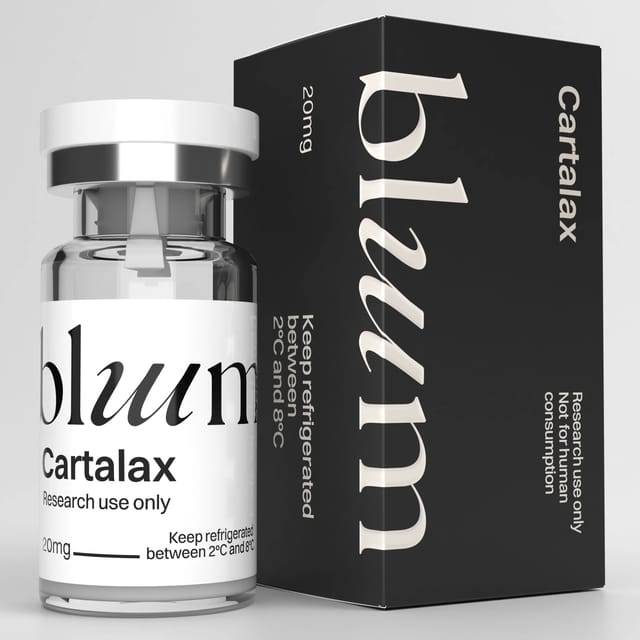
Cartalax




Lab results
RESEARCH USE ONLY
These compounds are NOT intended for human consumption, clinical use, or veterinary applications. We are not affiliated with any pharmaceutical companies or their commercial medications. By placing an order, you certify these materials will be used exclusively for in vitro testing and laboratory experimentation only. Bodily introduction of any kind into humans or animals is strictly forbidden by law. This product should only be handled by licensed, qualified professionals. This product is not a drug, food, or cosmetic and may not be misbranded, misused or mislabeled as a drug, food or cosmetic.
Cartalax Product Specifications
| Product names | Cartalax, alanyl-glutamyl-aspartic acid H-Asp-Glu-Asp-OH, AED, T-31 |
|---|---|
| Product strength | 20mg |
| Compound classification | Synthetic tripeptide |
| Amino acid sequence | Ala-Glu-Asp (AED) |
| Molecular formula | C12H19N3O8 |
| Molecular weight | 333.29 g/mol |
| CAS number | 85806-95-7 |
| PubChem CID | 87815447 |
| Product format | Lyophilised powder in a sealed vial |
| SKU | CTX20 |
Lab Testing and Certificate of Analysis
Bluum Peptides supports quality and purity standards for all products by conducting analytical testing through independent labs, such as Janoshik and BioRegen. Certificates of Analysis (COA) are available for every product batch so you can assess quality parameters such as identity, purity, and sterility, among others. For this batch:
Testing laboratory: Freedom Diagnostics
Lot number: CTX202610-155E
Test date: Sample received 20 October 2026; reported 21 October 2026
Report number / verification key: 2610209012 / Bluu2610209012
Reported purity and identity: 99.95% purity by HPLC-UV; identity confirmed as Cartalax by LC-MS; net content 22.98 mg per vial; endotoxins passed in two replicates (LAL assay per USP <85>, sensitivity ≤0.05 EU/mL)
Freedom Diagnostics report, lot CTX202610-155E
Find and review all Certificates of Analysis on our CoA Lookup / Lab Reports page.
Research on Cartalax
A 2023 study published in Advances in Gerontology examined the AED tripeptide in human mesenchymal stem cells undergoing replicative ageing. Researchers found changes in the expression and synthesis of proteins associated with cartilage formation, including SOX9, aggrecan, type II collagen and COMP. The findings suggest that AED may influence chondrogenic differentiation under laboratory conditions, warranting further investigation in models of cartilage disease. [1]
Another 2023 study investigated AED in relation to the senescence-associated secretory phenotype of ageing chondrocytes. Researchers reported changes in several markers associated with cellular ageing, including p16, p21, p53 and Sirt1. They also examined inflammatory signalling markers, although AED did not affect all measured markers in the same way. These results offer a further avenue for investigating the relationship between short peptides and age-associated changes in cartilage cells. [2]
Earlier research published in Molecular Biology Reports in 2020 examined AED alongside two related short peptides in ageing human embryonic bone-marrow mesenchymal stem-cell cultures. The researchers found that the peptides altered the expression of several genes associated with cellular ageing, including IGF1, FOXO1, TERT, TNKS2 and NFκB. These findings provide broader context for research into AED and gene regulation, but they do not establish cartilage regeneration or clinical benefits in humans. [3]
Storage and Shipping
Cartalax 20mg is commonly supplied by research-peptide vendors as a lyophilised (freeze-dried) powder in a sealed glass vial.
For long-term storage, it is generally recommended to keep unopened lyophilised Cartalax at −20°C (−4°F), protected from direct light and moisture. The sealed powder can tolerate short periods at ambient temperature during shipping, but greater care should be taken for storage.
Before opening a refrigerated or frozen vial, allow it to reach room temperature while still sealed. This helps prevent condensation from forming on the cold powder when exposed to humid air. Keep the vial tightly closed when not in use and minimise unnecessary exposure to moisture, heat and light.
Check the vial label and batch documentation for the manufacturer's expiry or retest date. Bluum Peptides typically processes orders within 1–2 business days, and available US shipping methods and estimated delivery times are displayed at checkout.
Cartalax FAQs
What is Cartalax studied for?
Cartalax has been investigated in preclinical research involving cartilage biology, cellular ageing and the regulation of gene expression. Studies have examined its effects in cultured human mesenchymal stem cells and ageing chondrocytes. These findings are preliminary and do not establish clinical benefits in humans. Researchers exploring other short peptides in the context of cellular ageing may also be interested in Epithalon, a research compound investigated in other biological pathways related to cellular ageing.
Is Cartalax the same as AED or T-31?
Cartalax is commonly associated with the short peptide Ala-Glu-Asp (AED) and is also described as T-31 in some research and supplier materials. However, its descriptions in research are not entirely consistent, so researchers should verify the exact molecular identity and sequence against the relevant product documentation and analytical data.
How should Cartalax be stored?
It is generally recommended to store unopened lyophilised Cartalax at −20°C ( −4°F), protected from moisture and light. If reconstituted, it can be refrigerated at 2–8°C for short-term storage. Follow general peptide handling instructions to maintain stability; you can check our Laboratory Safety Practices guide for more information.
Does Cartalax have an established shelf life?
Shelf life depends on the formulation, packaging, storage conditions and whether the material remains lyophilised or has been reconstituted. Check the product label and batch documentation for the applicable expiry or retest date. A general storage recommendation is 24 for most peptides when frozen and stored appropriately, but always check manufacturer guidelines to confirm.
How long does Bluum Peptides take to process an order?
Bluum Peptides typically processes orders within 1–2 business days, excluding weekends and public holidays. Available shipping options and estimated delivery times are displayed at checkout.
Where can I find Cartalax analytical testing information?
Bluum Peptides supplies research peptides, including Cartalax, with Certificates of Analysis available to provide third-party testing results. Confirm that the report corresponds to the product and batch being purchased, and review its stated methods and results rather than relying on a general purity claim. You can also find more about analytical methods from our research guide.
How does Cartalax differ from TB-500?
Cartalax and TB-500 are distinct research compounds associated with different areas of investigation. Cartalax is studied in relation to cartilage biology and cellular ageing, while TB-500-related research is commonly associated with actin-related cellular processes and cell migration.
How does Cartalax differ from BPC-157?
Cartalax is investigated in research involving cartilage biology and cellular ageing, while BPC-157 has been studied in various preclinical models involving tissue and cellular processes. They are distinct compounds, although they may be used in related research contexts.
References
Myakisheva SN, Linkova NS, Diatlova AS, Polyakova VO, Ryzhak GA. The influence of peptides on the chondrogenic differentiation of human mesenchymal stem cells during replicative aging. Advances in Gerontology. 2023;36(3):383–390. Russian. PMID: 37782646.
Myakisheva SN, Linkova NS, Kozhevnikova EO, Polyakova VO, Ryzhak GA. Peptides prevent the forming of secretory phenotype of chondrocytes associated with the aging. Advances in Gerontology. 2023;36(2):234–238. Russian. PMID: 37356100.
Ashapkin V, Khavinson V, Shilovsky G, et al. Gene expression in human mesenchymal stem cell aging cultures: modulation by short peptides. Molecular Biology Reports. 2020;47:4323–4329. https://doi.org/10.1007/s11033-020-05506-3.
Related Peptides
Reconstitution Solution
$15.00
BPC-157
From $35.00
GHK-Cu
From $45.00
Tesamorelin
From $69.00
KLOW Peptide Blend (GHK-Cu / BPC-157 / TB-500 / KPV)
$119.00
MOTS-c
From $39.00
NAD+
From $57.00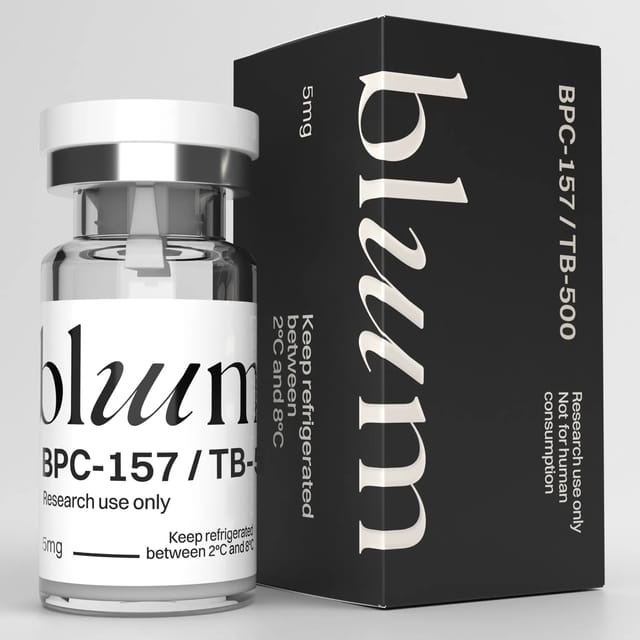
BPC-157 / TB-500
From $90.00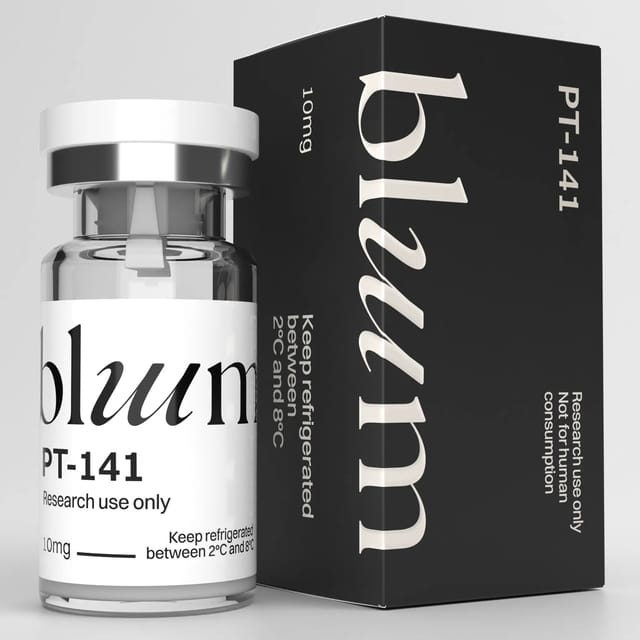
PT-141
$35.00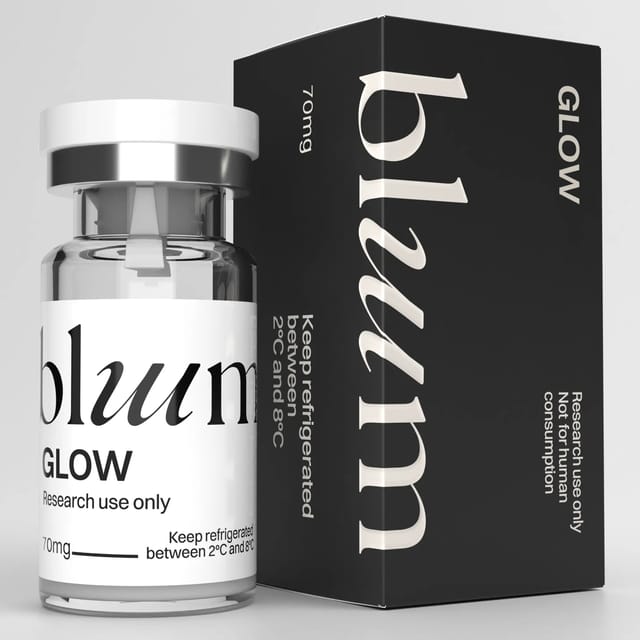
GLOW (BPC-157/TB-500/GHK-Cu)
$115.00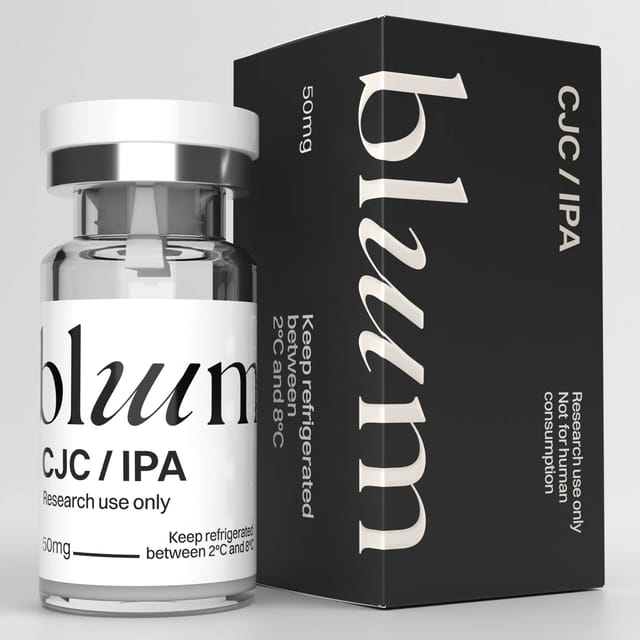
CJC-1295 No DAC / Ipamorelin Blend
$75.00
TB-500
From $35.00


You ask,
we answer.
Are these peptides quality tested?
Absolutely. Our analytical testing is conducted by Janoshik Analytical, BioRegen, or Freedom Diagnostics, independent third-party laboratories that verify the identity, purity, and composition of our research products. All products are guaranteed to test at 98% purity or higher. Each CoA includes purity analysis, peptide sequence confirmation, date of analysis, and an endotoxin report.
What are typical delivery times?
One-time U.S. orders ship free by 2-Day Air when merchandise totals $200 or more after discounts; below $200, 2-Day Air is $11.99. Overnight Air is $34.99. In-stock orders placed before 1 p.m. CT on a business day ship the same day; later orders ship the next business day. Subscriptions only: 2-Day Air is free once the subscribed items reach $50, on the first order and on every renewal.
Every package comes with professional packaging and tracking updates via email.
How should these compounds be stored?
Our peptides are shipped in lyophilized form, which is stable at room temperature during transit. Once received, store unopened vials in a cool, dry place.
Are products stable during shipping?
Our peptides are shipped in lyophilized (freeze-dried) form, which ensures stability during transit. This powder form is highly stable at room temperature and resistant to temperature fluctuations that occur during shipping.
Research has shown no significant degradation or loss of purity when lyophilized peptides are exposed to room temperature during typical shipping timeframes. Each batch is verified for purity upon production, and our stability testing confirms maintenance of product integrity during standard shipping conditions.
What are your bulk ordering options?
For bulk inquiries and volume pricing, please contact us.
What is the shelf life/expiration of unopened vials?
Each lot lists a best-by/expiration on the vial label and COA. As general guidance, lyophilized peptides stored as directed are typically stable 12–24 months (often longer at –20 °C). Short shipping periods at ambient temperature are normal. Actual stability depends on sequence and storage conditions.